Home Blog Page 1095

Empty promises not enough, Fiji PM tells COP26

0

By Pita Ligaiula in Glasgow

Fiji’s Prime Minister Frank Bainimarama took to the podium at the COP26 opening in Glasgow with another brusque and no-nonsense attack against leaders who make pledges without plans, or those he said pursue a policy of appeasement.

Bainimarama dropped no names in his fiery three-minutes address at the first part of the High Level Segment session for Heads of State and Government, which followed the opening ceremony where the heir to the British throne, Prince Charles and the United Nations Secretary-General Antonio Guterres were among the guest speakers, but it was easy to see who or which countries he was referring to.

“We cannot let them write out the urgency of accelerating action. Clean coal, responsible natural gas, and ethical oil are all figments of the selfish mind. No matter what they call them, carbon emissions are wrecking the climate. There’s nothing clean, natural or ethical about it,” said the Fijian leader.

“Other leaders pursue a policy of appeasement. They sit idly by as their high-emitting counterparts destroy our children’s futures. The science is clear, ladies and gentlemen, no city, no community, and no ecosystem will be spared from the reckoning that lies beyond 1.5 degrees of warming, including our oceans, the lungs of the planet.”

Bainimarama spoke soon after Canadian Prime Minister, Justin Trudeau, being one of only three Pacific leaders that are attending COP26 in Scotland this week.

The other two, Prime Minister Kausea Natano of Tuvalu and President Surangel Whipps Jr of Palau will speak later in the week.

“We have fallen so far off course that only bold and courageous action will suffice. 2060 is too late. Empty promises of mid-century ambition are not enough.

“All high-emitting countries must halve global emissions by 2030. The G20 nations who are prepared to make those commitments must demand the same from others.

“We have moral authority, you have a moral obligation. Together, our coalition of the willing can keep 1.5 alive, keep low-lying island nations above water, keep erratic and severe weather from devastating us all, and keep the trust between nations so that we can keep faith that our children and grandchildren will have a future.

“That includes making good on the promise of $100 billion in climate finance.”

Pacific nations like his Bainimarama told world leaders did not travel to the other end of the world to watch their future “sacrificed at the altar of appeasement of the world’s worst emitters.”

Existence of our low-lying neighbours is the Pacific is not negotiable either, he declared.

“1.5 is alive. It is possible. Humanity does not lack the resources, technology, projects, or innovative potential to achieve it.

“All that is missing is the courage to act –– the courage to choose our grandchildren’s future over shareholder greed and corporate carbon-driven interests.

“What more fitting place than the United Kingdom –– the birthplace of the industrial age –– to summon the will to secure the commitments that begin a cleaner, greener and bluer revolution, said Bainimarama.

PACNEWS coverage from Glasgow is possible with the assistance of the Pacific Islands Forum through the Office of the Pacific Ocean Commissioner (OPOC).

SOURCE: PACNEWS

Keeping the 1.5 degrees’ goal alive: World Leaders Summit at COP26

By Pita Ligaiula in Glasgow

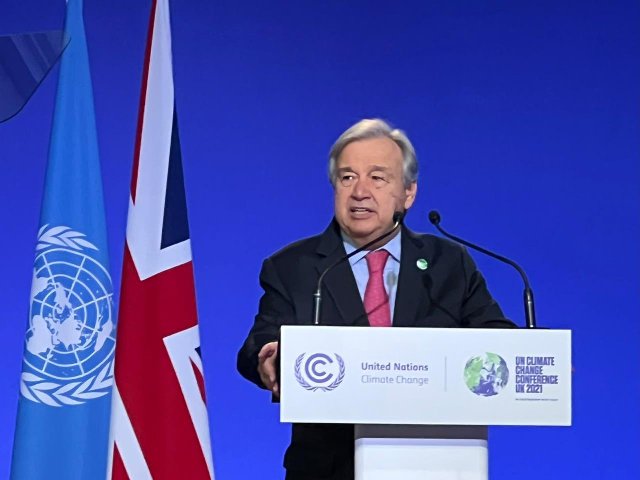
The two days World Leaders’ Summit on Climate change opened Monday with UN Secretary General António Guterres calling for greater ambition on mitigation and immediate concrete action to reduce global emissions by 45 percent by 2030.

“The science is clear. We know what to do.

“First, we must keep the goal of 1.5 degrees Celsius alive.

“This requires greater ambition on mitigation and immediate concrete action to reduce global emissions by 45 percent by 2030,” Guterres told World leaders.

He said G20 countries have a particular responsibility as they represent around 80 percent of emissions.

“According to the principle of common but differentiated responsibilities in light of national circumstances, developed countries must lead the effort.

“But emerging economies, too, must go the extra mile, as their contribution is essential for the effective reduction of emissions.

“We need maximum ambition – from all countries on all fronts – to make Glasgow a success,” he said.

Gutteres also urged developed countries and emerging economies to build coalitions to create the financial and technological conditions to accelerate the decarbonisation of the economy as well as the phase out of coal.

“Let’s have no illusions: if commitments fall short by the end of this COP, countries must revisit their national climate plans and policies. Not every five years. Every year.

“Until keeping to 1.5 degrees is assured. Until subsidies to fossil fuels end. Until there is a price on carbon. And until coal is phased out. But we also need greater clarity.

“There is a deficit of credibility and a surplus of confusion over emissions reductions and net zero targets, with different meanings and different metrics”, he said.

Gutteres also announced the establishment of a Group of Experts to propose clear standards to measure and analyse net zero commitments from non-State actors.

“That is why – beyond the mechanisms already established in the Paris Agreement – I am announcing today that I will establish a Group of Experts to propose clear standards to measure and analyse net zero commitments from non-state actors.

“Second, we must do more to protect vulnerable communities from the clear and present dangers of climate change.

“Third, this COP must be a moment of solidarity.

“The US$100 billion a year climate finance commitment in support of developing countries must become a US$100 billion climate finance reality. This is critical to restoring trust and credibility,” Guterres said.

He said that the effects of a warming planet were being felt “from the ocean depths to the mountaintops.”

“Sea level rise has doubled from 30 years ago,” he said. Oceans are hotter than ever, parts of the Amazon rain forest emit more carbon than they absorb, and in the last decade about four billion people were affected by events related to the changing climate.

“Enough of burning and drilling and mining our way deeper. “We are digging our own graves,” Guterres said.

UK’s Prime Minister Boris Johnson also made a comparison between the climate crisis and a doomsday device that featured in one of the James Bond movies.

“We need to make this COP26 the moment we get real about climate change. We can get real.

“COP26 will not, and cannot be, the end of the story of climate change,” PM Johnson said.

He also emphasised that the work will not end, even if the conference finishes with the needed commitments.

“We might not feel like James Bond, or look like James Bond, but COP26 must be the start of defusing that bomb. Yes, it is going to be hard, but yes, we can do it”, he explained.

U.S President Joe Biden in a speech at the summit said climate change is already ravaging the world.

He said this was also a moment of opportunity to reshape the way humans live in better harmony with nature.

“We are standing at an inflection point in world history,” he said, calling climate change an “existential threat to human existence as we know it.”

“None of us can escape the worst that is yet to come if we fail to seize this moment,” said President Biden.

COP26 people’s advocate David Attenborough also called on world leaders to work together to save the planet.

“We are, after all, the greatest problem-solvers to have ever existed on Earth. We now understand this problem, we know how to stop the number rising, and put it in reverse.

We must halve carbon emissions this decade. We must recapture billions of tonnes of carbon from the air. We must fix our sights on keeping 1.5 degrees within reach,” said Attenborough.

Samoan climate change activist Brianna Fruen also called on leaders for bold action.

“I don’t need to remind you of the reality of vulnerable communities. If you are here today, you know what climate change is doing to us. You don’t need my pain or my tears to know that we’re in a crisis.

The real question is whether you have the political will to do the right thing. To wield the right words and to follow it up with long-overdue action,” Fruen told world leaders.

The conference’s aim is to prevent the average global temperature from rising more than 1.5 degrees Celsius compared with levels before the Industrial revolution.

PACNEWS coverage from Glasgow is possible with the assistance of the Pacific Islands Forum through the Office of the Pacific Ocean Commissioner (OPOC).

SOURCE: PACNEWS

Pacific Ocean Commissioner calls for ocean protection at COP26

By Pita Ligaiula in Glasgow

Pacific Ocean Commissioner Henry Puna has called on everyone to work together to save the ocean, save ourselves, our children and our future. “This is our legacy.”

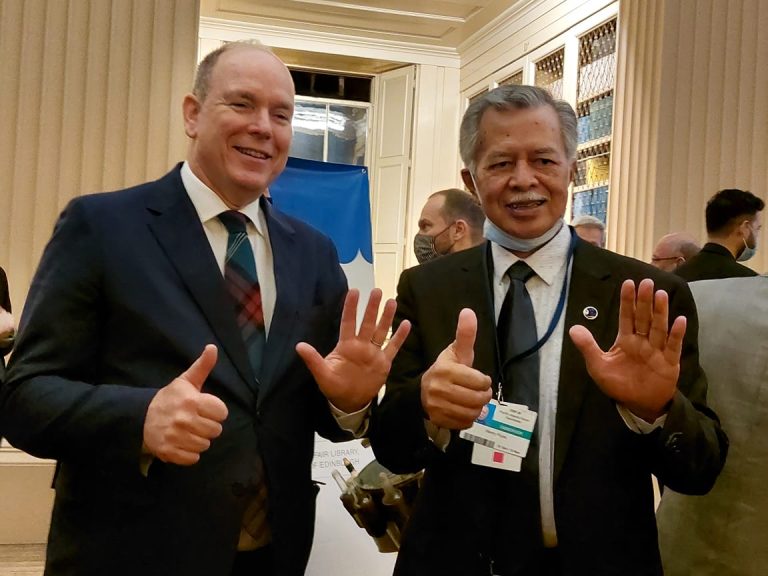
Puna made the remarks at the High level launch of the ‘Third Because the Ocean Declaration’ that was held at the University of Edinburgh on Sunday, as part of the COP26 event.

“We must maintain the health, productivity and resilience of our ocean and its ecosystems. The Pacific Islands Forum leaders have committed to responsibly and effectively manage 100 percent of the Blue Pacific Ocean within and beyond national jurisdictions based on the best available scientific information and traditional knowledge.

“This requires strong Ocean governance to be in place both within, and beyond, national jurisdictions of countries of the Blue Pacific. This will ensure the holistic and sustainable management of the Ocean,” said Puna.

In August, Forum Leaders endorsed a declaration to preserve maritime zones in the face of climate related sea level rise.

“They recognised that because the ocean provides us with so many life and societal supporting services, it is our greatest endowment fund. This means that, as its custodians, we must care for it, respect it, and nurture it to continue benefiting from its bounties. We must do this, not only for us, but for our children and our children’s children. We must do it for humanity,” he said.

Puna said this declaration represents the region’s formal collective view on how UN Convention on the Law of the Sea (UNCLOS) rules on maritime zones apply in the situation of climate change-related sea-level rise.

“It is rooted in the Convention’s underpinning legal principles, in particular those of stability, security, certainty and predictability. In essence, the declaration affirms that whether or not sea levels are rising, once maritime boundaries are set and deposited with the UN Secretary General, they shall not be altered.

“Our Declaration is a landmark instrument that will shape international thinking. It will put our region at the heart of international discussions to resolve this global issue. While the issue is of fundamental importance to our Blue Pacific continent, other Coastal States and countries in similar fashion require stability, security, certainty and predictability of their maritime zones. I call on all your countries to support the Declaration as a practical and considered solution to address a very complex and dire consequence of climate change,” Puna said at the launch.

Puna explained an ambitious treaty on biodiversity beyond national jurisdiction, BBNJ, will support the national and regional efforts.

“This is why our Leaders are strongly supporting the negotiations to successfully conclude in 2022, and for its entry into force as soon as possible.

“However, critical to ensuring success in all these policies and legal frameworks and initiatives is the need for an enabling environment. This can be attained through solid, mutually beneficial partnerships and fit for purpose targeting funding. This includes establishing a new climate finance goal for post-2025, with a better balance between adaptation and mitigation, and dedicated finance for loss and damage,” he said.

Puna also said climate change is the single greatest threat to the livelihoods, security and wellbeing of the peoples of the Blue Pacific and the world.

“We have been talking about climate change for decades now. Yet, there are still those who deny or will not act. You have seen the images of desolation and destruction caused by more severe and frequent climate induced disasters.

“You have heard our Blue Pacific calling for greater ambition and more action now, to the big economies and emitters. They must act now! We need to commit and stick to implementing all needed actions to keeping to the 1.5degrees target. In short – 1.5 to stay alive, not just the Pacific, but all humankind,” said SG Puna.

He said the recent IPCC report has clearly stated that it is Code Red for humanity.

“Our climate will keep changing. Our seas will continue to warm and to rise. Our coral reefs will continue to bleach and die. Our people will continue to suffer distress from more intense weather related events, loss of livelihoods and food security and a general reduction in wellbeing.

“We must all change how we live, our consumption patterns, our actions. We must change our thinking. We cannot continue with business as usual. Covid-19 has showed that we can change our habits, that we can act as one for the betterment of humankind. We must bring this unified global approach to bear on climate change and its impacts,” Puna said.

Fiji’s Permanent Representative to the United Nations in New York Ambassador Dr Satendra Prasad also delivered the country statement supporting the ‘Third Because the Ocean declaration’ with Prince Albert of Monaco.

The first and second Because the Ocean declaration has contributed to the broader reflection of Ocean issues into UNFCCC frameworks and policy development including the incorporation of the ocean into the climate change policy debate, the inclusion of ocean action into Nationally Determined Contributions (NDCs) under the Paris Agreement and more widely into climate strategies.

PACNEWS coverage from Glasgow is possible with the assistance of the Pacific Islands Forum through the Office of the Pacific Ocean Commissioner (OPOC).

SOURCE: PACNEWS

Disappearing islands force Tuvalu to demand compensation from world polluters

0

By Pita Ligaiula in Glasgow

Tuvalu’s disappearing islands has led to the tiny Pacific nation to sue major developed nations for the severe damage caused by climate change.

Tuvalu and Antigua and Barbuda signed a pact Sunday to hold large nations accountable for climate change damage.

The development comes as world leaders are meeting in Glasgow for the United Nations Climate Change Conference (COP26).

Tuvalu’s Minister of Finance and Climate Change, Seve Paeniu in an interview with PACNEWS said the issue of Loss and Damage is very important for his island nation.

“We are all here for one purpose and that is to raise climate ambition. Tuvalu and small island states in the Pacific are living the reality of the impact of climate change.

“Our islands are sinking and therefore we would like the international community to support us to save our livelihoods, our culture and our people.

“The islands are disappearing in Tuvalu, so the issue of loss and damage is very critical and very important for us and we wish the international community and industrialised world in particular to compensate for the loss and disappearing in the sinking of our lands,” Paeniu told PACNEWS.

Paeniu said the agreement establishes a Commission of Small Island States on Climate Change and International Law that will be tasked with developing and implementing fair and just global environmental norms and practices.

“We also are working on a new initiative that aims to get the polluter to compensate and pay the Pacific Island nations that are being affected due to sea level rise in particular. It is an initiative co- sponsored jointly by Antigua Barbuda and Tuvalu.

“To establish a commission on SIS on climate change and international law, our objective and our aim is to set a precedence in law where emitting countries would be responsible to compensate for the loss and damage that are inflicted on Small Island States such as Tuvalu.

“That initiative only requires two countries to sign an agreement or declaration and that would be than recognised under the international tribunal on the Law of the Sea and eventually that we aim to raise that as a platform for the International Court of Justice to advocate for the plight of the sinking islands,” said Paeniu.

Paeniu who is also the Pacific Islands Forum political champion for Loss and Damage is advocating the region’s priorities and influence decision-making in calling for urgent climate action.

PACNEWS coverage from Glasgow is possible with the assistance of the Pacific Islands Forum through the Office of the Pacific Ocean Commissioner (OPOC).

SOURCE: PACNEWS

Tonga’s main island going into lockdown

The Tongan Government has announced that the main island Tongatapu will go into lockdown from midnight after the discovery of the first case of Covid-19 in the Kingdom last week.

The island, where most of the population live, will be going into lockdown from one minute past midnight yesterday. It will stay in place until next Sunday.

RNZ Pacific’s correspondent in Tonga, Kalafi Moala, said businesses like the banks, the market and other essentials will stay open.

But he said the limits on gatherings are strict.

“In terms of gatherings, this is the most significant part of the lockdown. No schools, all schools are closed, no church gathering, no kava club, no entertainment or any kind of gathering,” he said.

“For funerals, you are allowed ten people inside the house and 20 outside, but it seems to me the restrictions are very much applied to gatherings of any kind.”

Kalafi Moala said there are to be no alcohol sales.

Meanwhile, he said the infected person who arrived on a flight from Christchurch last Wednesday remains asymptomatic, which the chief executive of health, Dr Sialo Akau’ola, has put down to the impact of the vaccine – the person is double vaxxed.

SOURCE: RNZ PACIFIC/PACNEWS

COP26: Enough of ‘treating nature like a toilet’ – Guterres brings stark call for climate action to Glasgow

As the World Leaders Summit opened on day two of COP26, UN chief António Guterres sent a stark message to the international community. “We are digging our own graves”, he said, referring to the addiction to fossil fuels which threatens to push humanity and the planet, to the brink, through unsustainable global heating.

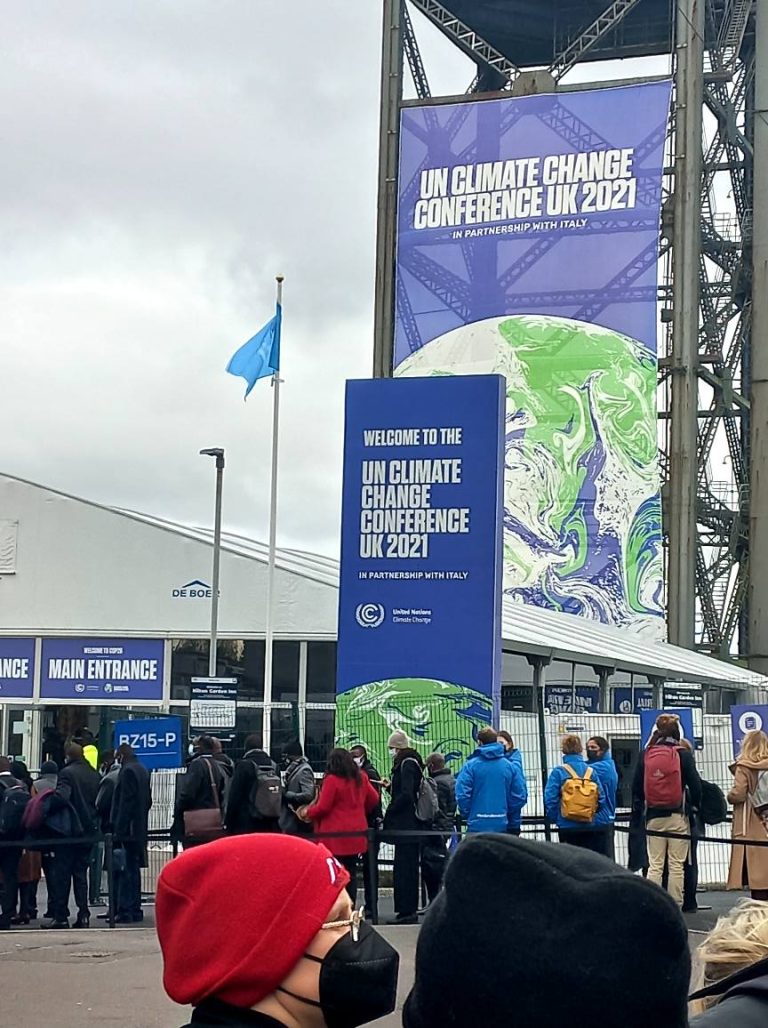
It was a grey and windy morning, as dozens of world leaders arrived at the Scottish Event Campus, of the key United Nations climate conference, in the city of Glasgow.

Since 6.30am, long lines of people gathered at the gates to get their accreditations, and pass through tight security, which included presenting proof of negative COVID-19 tests.

Journalists from all over the world set to work side by side in the event halls, armed with a host of microphones, cameras, lights and recording equipment.

The stage was set to hear from Heads of State as COP26 got underway, including the co-host, Prime Minister Boris Johnson, of the United Kingdom, US President Joe Biden, French president Emmanuel Macron, Indian Prime Minister Narendra Modi, European Commission President Ursula von der Leyen and German Chancellor Angela Merkel.

“We want the Heads of State to be real leaders, and for them to ignite change and step up during COP26”, Juan Pablo Sierra, a young climate activist from NGO United for Climate Action, told UN News just before the ceremony started.

Keynote speeches

A live performance by young Scottish piper Brìghde Chaimbeu kicked off proceedings this morning, in the main plenary hall.

The first to speak at the ceremony which started at 12.30 pm local time, was the UK’s Boris Johnson, who made a comparison between the climate crisis, and a doomsday device featured in one of the James Bond movies, shot on set in Glasgow.

“We need to make this COP26 the moment we get real about climate change. We can get real”, he said, advocating for the end of coal and the greening of transport.

“COP26 will not, and cannot be, the end of the story of climate change”, he added, emphasizing that the work will not end, even if the conference finishes with the needed commitments.

“We might not feel like James Bond, or look like James Bond, but COP26 must be the start of defusing that bomb. Yes, it is going to be hard, but yes, we can do it”, he concluded.

‘Agents of hope’

Two young activists followed on from the Prime Minister, calling on leaders for bold action.

“You all have the power together to be better, to remember that in your words you have the weapons that can save us or sell us out. You don’t need my pain or my tears to end the crisis. We are not just victims of this crisis, we are resilient agents of hope. We are not drowning, we are fighting”, they said.

Then, Secretary-General António Guterres took the podium with a blunt opening message: “The six years since the Paris Climate Agreement have been the six hottest years on record. Our addiction to fossil fuels is pushing humanity to the brink”

“We face a stark choice. Either we stop it – or it stops us”, he added, delivering five key messages to world leaders.

1. It’s time to say ‘enough’

“Enough of brutalising biodiversity, killing ourselves with carbon, treating nature like a toilet, burning, and drilling and mining our way deeper.”

“We are digging our own graves”, Guterres said, adding that our planet is changing before our eyes from melting glaciers, to relentless extreme weather events.

He reminded that sea-level rise is double the rate it was 30 years ago, that oceans are hotter than ever, and that parts of the Amazon Rainforest now emit more carbon than they absorb.

“Recent climate action announcements might give the impression that we are on track to turn things around. This is an illusion”, he stated, referring to the latest report on national plans to reduce emissions, known as NDCs, which indicates that even when fully met, the result would still condemn our world to a “calamitous” 2.7- degree increase.

“And even if the recent pledges were clear and credible – and there are serious questions about some of them – we are still careening towards climate catastrophe. So, as we open this much anticipated climate conference, we are still heading for climate disaster,” he emphasised.

2. Keeping the 1.5 degrees’ goal alive

The UN chief called for greater ambition on mitigation and immediate concrete action to reduce global emissions by 45 per cent by 2030; an effort that should be led by developed countries.

“G20 countries have a particular responsibility as they represent around 80 per cent of emissions”, he said, making clear however, that emerging economies must also go the extra mile.

“We need maximum ambition – from all countries on all fronts – to make Glasgow a success”, he added.

Guterres urged nations to build coalitions to create the financial and technological conditions to accelerate decarbonisation of the economy and the phase out of coal.

Also, referring to a key negotiating issue during this COP26, the Secretary-General said that countries must revisit their national climate plans and policies, not every five years, but every year, if commitments fall short by the end of COP26.

“There is a deficit of credibility and a surplus of confusion over emissions reductions and net zero targets, with different meanings and different metrics”, he said, announcing the establishment of a Group of Experts to propose clear standards to measure and analyse net zero commitments from non-State actors.

3. We must do more to protect vulnerable communities

Over the last decade, nearly four billion people suffered climate-related disasters, and the devastation will only grow, said the UN chief.

Guterres highlighted that adaption measures work, and that early warning systems as well as climate-smart agriculture and infrastructure, save lives and jobs.

“All donors must allocate half their climate finance to adaptation. Public and multilateral development banks should start as soon as possible”, he said.

4. COP must be a moment of solidarity

The UN chief reiterated his call for a $100 billion climate finance commitment in support of developing countries, to become a reality.

He said delivering on that promise made at COP15 in Copenhagen, was critical to restore trust and credibility, but beyond that, developing countries need far greater resources to fight COVID-19, build resilience and pursue sustainable development.

“Those suffering the most – namely, Least Developed Countries (LDCs) and Small Island Developing States (SIDS) – need urgent funding. More public climate finance. More overseas development aid. More grants. Easier access to funding”, he urged.

5. Build on progress

A number of countries have made credible commitments to net zero emissions by mid-century, may have pulled the plug on international financing of coal, and over 700 cities are leading the way to carbon neutrality, he said.

The Secretary-General said the private sector is also waking up and building new alliances to catalyse change.

“The climate action army – led by young people – is unstoppable. They are larger. They are louder. And, I assure you, they are not going away. I stand with them”, he said.

Guterres warned that we are fast approaching tipping points that will trigger escalating feedback loops of global heating, but investing in the net zero, climate-resilient economy, will create feedback loops of its own — virtuous circles of sustainable growth, jobs and opportunity.

“On behalf of this and future generations, I urge you: Choose ambition. Choose solidarity. Choose to safeguard our future and save humanity”, he concluded.

‘We are the greatest problem solvers to have ever existed’: Attemborough

Following the UN Chief, COP26 people’s advocate David Attenborough delivered a passionate speech which was accompanied by clips of activists around the world.

“We are, after all, the greatest problem-solvers to have ever existed on Earth. We now understand this problem, We know how to stop the number rising, and put it in reverse. We must halve carbon emissions this decade. We must recapture billions of tonnes of carbon from the air. We must fix our sights on keeping 1.5 degrees within reach”, he said.

The famous environmental activist and broadcaster said that if working apart we are a force powerful enough to destabilise our planet, working together, we are powerful enough to save it.

“In my lifetime, I have witnessed a terrible decline, in yours, you could, and should witness a wonderful recovery. That desperate hope, ladies and gentlemen, delegates, excellencies, is why the world is looking to you and why you are here”, he underscored.

Biden: ‘decade of ambition’ needed

Later in the day as leaders made national statements, U.S President Joe Biden, said that world leaders could keep the goal of limiting global warming to 1.5 degrees if they come together and commit.

“Glasgow must be the kick-off of a decade of ambition and innovation to preserve our shared future”, he said, reminding that climate change is already costing nations millions of lives and dollars.

The US leader said that his country will be announcing new commitments over the next few days to mobilise action. These will include measures on the agriculture, oil and gas, and forestry sectors.

He also announced that he will release soon a long-term plan enabling the US to become net zero by 2050.

“We’re still falling short…there is no more time to hang back or sit on the fence or argue amongst ourselves. This is a challenge of our collective lifetime”, he emphasised.

SOURCE: UN NEWS CENTRE/PACNEWS

Moana Blue Pacific to make waves at COP26

Pacific Island delegations at COP26 have a “home away from home” within the venue. Known as the Moana Blue Pacific, this hub will support our 140 island delegates as they strategise and plan across the two weeks of climate change negotiations.

The Twenty-Sixth Conference of the Parties to the UN’s Framework Convention on Climate Change (COP26) is reported to have 25,000 delegates attending. The Moana Blue Pacific will provide our Pacific Island delegates with a base to coordinate their teams and conduct meetings.

The Moana Blue Pacific also hosts 14 side events amplifying the Pacific voice. These events will highlight a range of Pacific climate change experiences, showcasing the leadership that is being demonstrated in addressing these challenges.

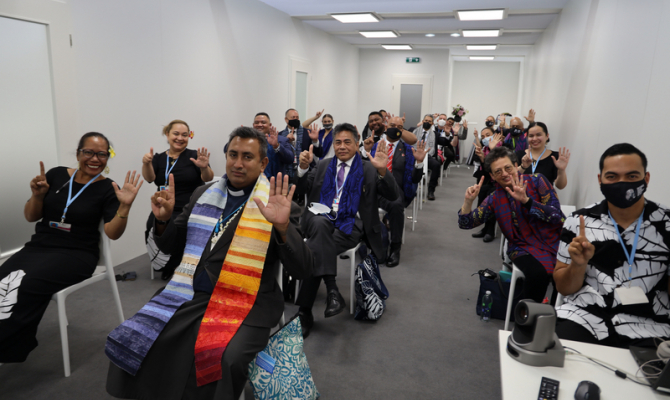
Opening today with a special blessing in Glasgow, the Moana Blue Pacific is a partnership with Aotearoa New Zealand managed by the Secretariat of the Pacific Regional Environment Programme (SPREP).

“As we look around here this morning– our numbers are indeed small. Many of our leaders, negotiators and colleagues could not make the journey, but their hopes and voices guide and inspire our collective work here,” said Fatumanava Dr. Pa’o Luteru, Ambassador and Permanent Representative, Permanent Mission of Samoa to the United Nations.

Ambassador Luteru is also Chair of the Pacific Small Islands Developing States.

“The Moana Blue Pacific Space is the Pacific heart of the COP. It is the meeting point of all Pacific voices in the UNFCCC from leaders and champions to our technical negotiators, our youth and climate advocates and activists – it is our Islands in this ocean of COP.”

The Moana Blue Pacific office, meeting room and side events are an adaptation of the Pacific Pavilions that were held at COP24 in Poland and COP25 in Spain. These familiar, popular sights at the UNFCCC Conferences welcomed over 10,000 people in 2018 and then again in 2019, across the two weeks of negotiations.

Due to COVID-19 restrictions, the Pacific Pavilion has had to be adapted for COP26.

In line with safety precautions, it was decided there would not be an “open door” Pacific pavilion scheduled with daily events at COP26. Instead, a private safe space for Pacific Island delegates to hold bilateral meetings, and strategise, was opted for. Social distancing, mask-wearing, daily testing and limited numbers permitted per rooms are a strong feature across the COP26 venue in Glasgow, Scotland.

This year, the Moana Blue Pacific aims to amplify the Pacific voice, safely.

“We came because we have a job to do, together, and this space is for us to work together. Our job is to bring a vision of the other side of the planet, our job is to help the people of this side of the planet understand and imagine the immensity of the Blue Pacific,” said H.E Kay Harrison, Climate Change Ambassador of New Zealand.

“He Waka Eke Noa – there is just one canoe, and we are all in it together and we need all of the people out there to understand He Waka Eke Noa and if we are not in the same canoe, paddling in the same direction caring for one another then we understand what that means.”

Access to the office and meeting room will be coordinated through minimal contact and cleaning will take place in between each gathering.

The Moana Blue Pacific side events at COP26 will take place in a shared pavilion. Attendance will be preassigned to support contact tracing and the slots for the Pacific islands will be held after deep cleaning has been completed.

To keep informed of the events from the Pacific at COP26, a Moana Blue Pacific app is available for cellphones. By downloading the Attendify App, searching Moana Blue Pacific and registering – you will have access to Pacific events and activities at COP26.

The Moana Blue Pacific Office is located next to the Aotearoa New Zealand/Tokelau Office with a shared meeting room between the two. This is situated in Hall 3 at the Scottish Event Campus (SEC).

The Moana Blue Pacific side events will be held on 3, 4, 5, 10 and 11 November in Hall 4 at the SEC. Further information can be found in the Moana Blue Pacific App.

The Moana Blue Pacific at COP26 is a partnership with Aotearoa New Zealand managed by SPREP.

The Twenty-Sixth Conference of the Parties to the UN’s Framework Convention on Climate Change is held in Glasgow, Scotland from 31 October to 12 November 2021.

For further information, please email moanabluepacific@gmail.com;

SOURCE: SPREP/PACNEWS

“World must act now to keep 1.5 degrees alive” says Forum SG

By Pita Ligaiula in Glasgow

Pacific Islands Forum Secretary General Henry Puna says the world must act now to keep 1.5degrees alive”.

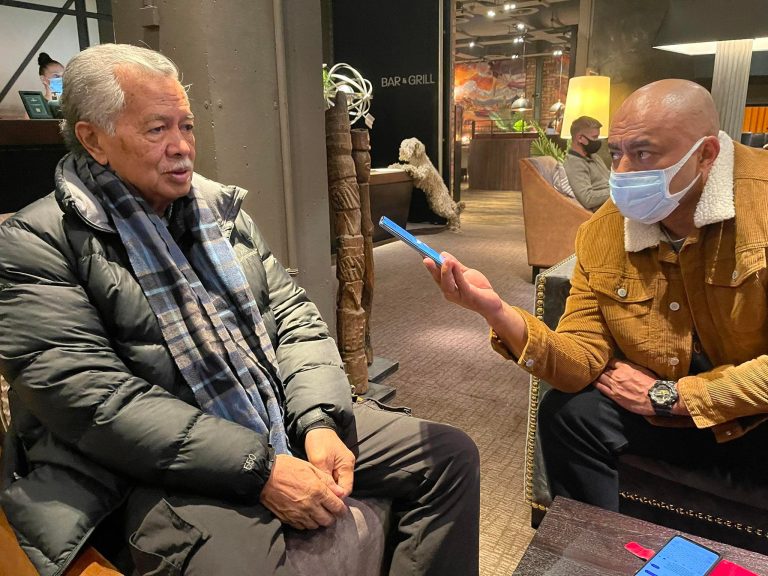
Speaking to PACNEWS in Glasgow, Puna said Forum Island Countries (FICs) are calling for more ambitious targets from major polluting nations to ensure that carbon emission cuts keep temperature rise at no more than 1.5 degrees.

“That is really the main core that we are coming to COP26 with that everybody needs to step up to the mark. We can’t afford to leave COP26 without a commitment. We need to stay within 1.5 degrees.

“For me that is really the overriding important core that we must come away from here onwards. Today everybody must agree to do whatever is required to stay within… and again science is telling us and its very disappointing that some of the developed countries are not taking this seriously

“I think because it affects their normal life, normal business and that really is a challenge but that’s what we come for COP26… an agreement that we must do what we need to do in order to stay within 1.5 degrees. We can’t afford to not to achieve that,” Puna told PACNEWS.

The former Cook Islands Prime Minister said the involvement of climate champions shows that the region is serious about dealing with the effects of climate change.

“Yes my first COP as Secretary General for the whole region and I’m pleased to be here with our leaders particularly with our climate champions… because I think that takes our advocacy to another level and I do hope that the countries that will be here and those who are not here will take this seriously for the sake of not just the Pacific, for the sake of mankind. We have to do what we must do here.

“This is something new that we are doing for the first time here. I think it’s an excellent idea to allow the world to realise that we in the Pacific are very serious about climate change to the point where we designating each of our leaders championing a particular cause in climate change. I’m very hopeful and optimistic that political climate champions will make a lot of difference,” SG Puna told PACNEWS.

COP26 President Alok Sharma said Sunday the world “must act now to keep 1.5 alive”.

“Six years ago, in Paris, we agreed our shared goals”

“COP26 is our last best hope to keep 1.5 in reach,” Sharma told delegates here in Glasgow.

“I believe we can move negotiations forward and launch a decade of ever increasing ambition and action but we need to hit the ground running.

“If we act now and we act together we can protect our precious promise and ensure where Paris promised, Glasgow delivers.”

Sharma said during the pandemic “climate change did not take time off”.

He told delegates a recent UN report which said the past five years had been the hottest on record since 1850 was a “wake up call for all of us and it made clear that the lights are flashing red on the climate’s ‘s dashboard.

“It told us that human activity was unequivocally the cause of global warming and the window to keep this warming limited to 1.5 was closing,” he said.

UNFCCC Executive Secretary Patricia Espinosa told the opening session of COP26, the world stand at a pivotal point in history.

“Humanity faces several stark but clear choices.

“We either choose to achieve rapid and large-scale reductions of emissions to keep the goal of limiting global warming to 1.5C— or we accept that humanity faces a bleak future on this planet.

“We either choose to boost adaptation efforts to deal with current extreme weather disasters and build resilience to address future impacts — or we accept that more people will die, more families will suffer, and more economic harm will follow.

“We either choose to recognise that business as usual isn’t worth the devastating price we’re paying and make the necessary transition to a more sustainable future — or we accept that we’re investing in our own extinction.

“It is about much more than environment, it is about peace, stability and the institutions we have built to promote the wellbeing of all. It is for these reasons and more that we must make progress here in Glasgow.

“We have no choice but to make COP26 a success. For that, we need unity of purpose. We need to leave Glasgow with a balanced package of decisions that reflects the positions of all countries. With a willingness to compromise among the many perspectives we can arrive at workable, ambitious solutions that will help us keep the 1.5C goal within reach. We stand ready to work with all Parties and to leave no voice behind to reach this important goal,” Espinosa said.

PACNEWS coverage from Glasgow is possible with the assistance of the Pacific Islands Forum through the Office of the Pacific Ocean Commissioner (OPOC).

SOURCE: PACNEWS

Forum SG welcomes Australia’s net zero emission target by 2050

0

By Pita Ligaiula in Glasgow

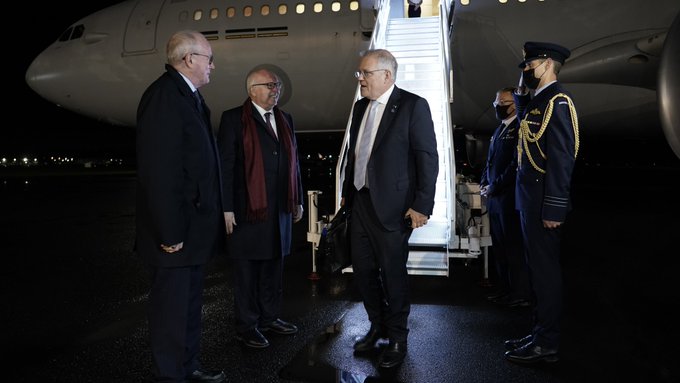
Pacific Islands Forum Secretary General Henry Puna has welcomed the new climate policy announced by Australian Prime Minister Scott Morrison.

Morrison announced last week that Australia will join the developed world in pursuing a net zero emissions by 2050 but its formal target for 2030 remains unchanged – a reduction in 26-28 percent in emissions

Forum Secretary General Henry Puna told PACNEWS the Pacific region want world leaders to pledge carbon emission cuts of 50 percent or more by 2030 during COP26 in Glasgow this week.

“Yes, we are always celebrating when one of the big countries makes changes and make announcements, come up with numbers and of course Australia is one of the family, it’s the moment for celebration,” Puna told PACNEWS.

This week’s climate talks have been described as the point of no return and the world’s last chance to stop rising temperatures and to avoid catastrophic climate events.

There is fears Australia’s lack of ambition might set the stage for other countries to water down the commitments to be reached at the COP26 talks in Glasgow.

“I think Australia still needs to do a lot more instead of relying on the net zero by 2050 because the science is saying that we must particularly by 2030 have ambitious climate targets and actions so that we can begin to make a difference leading in to 2050. I’m very happy that PM Morrison is here or will be after the G20 to support the Forum with us in our quest to ambitious climate action here at COP26,” Puna told PACNEWS.

At the climate talks that start on Sunday — the Pacific region would continue to push for high-emitting nations to halve emissions by 2030.

The COP26 summit will bring parties together to accelerate action towards the goals of the Paris Agreement and the UN Framework Convention on Climate Change.

PACNEWS coverage from Glasgow is possible with the assistance of the Pacific Islands Forum through the Office of the Pacific Ocean Commissioner (OPOC).

SOURCE: PACNEWS

Pacific region scale back attendance at COP26 due to COVID-19 pandemic

By Pita Ligaiula in Glasgow

Pacific nations are on the frontlines of climate change because of rising sea levels risk having the smallest voice at the crucial COP26 talks this week due to COVID-19 pandemic.

PACNEWS understands only three Pacific leaders from Fiji, Tuvalu and Palau are in Glasgow this week for climate change talks.

Low-lying Pacific islands are being battered by the climate crisis – not just from rising temperatures and changing weather patterns, but more urgently by rising sea levels which could lead to whole countries being submerged.

Covid-19 restrictions, long visa processes, soaring hotel prices and changing quarantine policies mean that many would-be delegates have stayed at home.

Forum Secretary General Henry Puna told PACNEWS, the world is not taking seriously the issue of climate change.

“It’s a very difficult mission and I think the problem is the world is not taking seriously the issue of climate change. I guess it’s very different from the pandemic because everybody is affected by… I mean people are dying, people are getting sick and there is real urgency among the world community to do something about it and yet climate change is heading in the same direction,” said Puna.

Current climate commitments put the world on track for a 2.7C rise in temperature this century, the United Nations said, well above the 1.5C target of the Paris Agreement which will already be catastrophic for many Pacific island nations.

“While we in the Pacific and all small low lying island states are feeling the impacts now, the rest of the world doesn’t seem to think that it’s something they should be concerned about and that really is the challenge we face.

I think it’s the matter of convenience for them that they don’t want to change because the economy is based on it and its very difficult for it to change and yet everybody agrees that we need to take science seriously that’s what governs our life, but they don’t seem to take it seriously and that really is a challenge we face,” Puna told PACNEWS in Glasgow.

SG Puna said Covid-19 pandemic has affected many Pacific nations participation at the COP26.

“The pandemic has prevented a lot of our leaders to be here but yes for us… from the Forum Secretariat, this is one of the biggest delegations and it’s a matter of having to be here so that we can support our leaders and climate champions and offer them technical support where necessary,” said Puna.

More than 30,000 people are expected to attend, from world leaders to NGOs, businesses, journalists, lobbyists, negotiators and protestors.

PACNEWS coverage from Glasgow is possible with the assistance of the Pacific Islands Forum through the Office of the Pacific Ocean Commissioner (OPOC).

SOURCE: PACNEWS