Home Blog Page 1068

Anti-independence ads accused of ‘profound racism’ against indigenous New Caledonians in court action

0

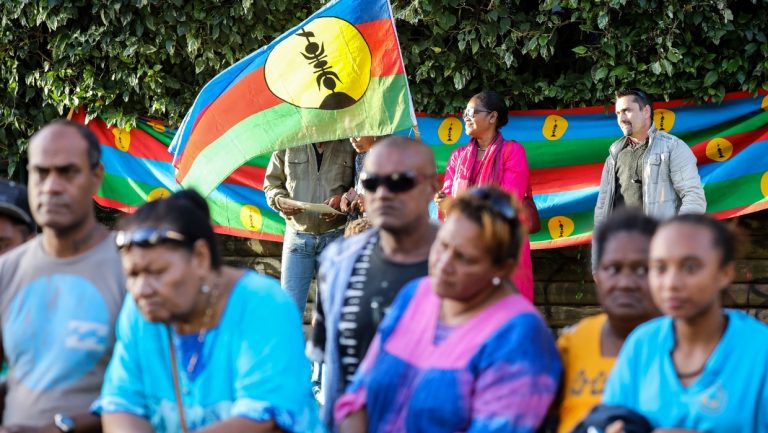
Cartoons urging New Caledonians to vote no to independence from France in this weekend’s referendum have been accused of “profound racism and ridicule towards Pacific Islanders, especially the [indigenous] Kanak people”, in a legal submission lodged with France’s highest judicial body.

An urgent appeal has been lodged against the broadcast of the animations, which have been running on television in New Caledonia and online, with the Council of State in France.

The cartoon clips are run by Le Voix du Non – a grouping of various anti-independence parties – with themes such as the future of passports, environment, education, health and money under an independent New Caledonia.

They have been accused of portraying non-whites in a degrading and humiliating way, presenting them as having no mastery of the French language and with accents “that signify their primitive and uncultivated state,” the 12-page legal appeal has alleged.

The appeal from the pro-independence FLNKS, the non-aligned Let’s Build party and an individual, Lueisi Waupanga, a member of the Polynesian community, to the Council of State follows unsuccessful calls to the Audiovisual High Council (CSA) to stop the broadcasts.

The legal appeal is signed by four citizens of New Caledonia, including Professor Mathias Chauchat, Professor of Law at the University of New Caledonia. The appeal argues the animations contravene the CSA broadcasting rules, and are racist, degrading and humiliating.

“Is this how you see us after 30 years?” said Waupang in the appeal. “Common growers of yams and manioc, incapable of thinking for ourselves, generally incapable?”

The referral to the Council of State alleges the animations portray a hierarchy of races, with the mixed-race settlers (Caldoches), then Pacific Islanders and lastly the Kanak people. The non-Kanak authoritative character in the animations warns that independence will deplete services such as health, education and police and speaks French with a cultivated accent, whereas the pro-independence characters speak with distinctively childlike voices.

Philippe Wakaine, a retired public servant, said the animations, which began airing on 29 November, are “truly degrading, the way in which Kanaks, long-term settlers (Caldoches) and Pacific Islanders are portrayed, especially through their accents. They are making fun of us.”

In reply to the calls for cancellation of the animations, Les Voix Du Non-campaign director, Christopher Gygés said that “no particular community was targeted”. He told France.tv in Noumea that the aim had been “to render complex matters simple through the use of colloquial language from all communities”.

In response to questions from the Guardian, Le Voix Du Non sent an interview given by Gygés with Radio Rythme Bleu (RRB), in which Gygés said he was very surprised by the reaction.

“We wanted to win those who might abstain, we wanted a serious message without taking ourselves too seriously. I note that the pro-independence people lack a sense of humour… what upsets them is really the message. To justify their non-participation in the poll they are finding enemies everywhere.”

Asked about the controversy the cartoons caused, Gygés said he was “very surprised” and said there was “absolutely no racism.”

“We didn’t go too far … I worry about a society which doesn’t have a sense of humour.”

This Sunday’s referendum was to have been the country’s third and final vote on independence, with support for independence increasing over the last few years.

The lead-up to the vote has been fraught. France has refused calls from the FLNKS and Pasifika parties to postpone the referendum, due to the customary mourning responsibilities of Kanaks and Islanders, who suffered the majority of the 277 deaths and 10,700 Covid cases in the territory. FLNKS have urged people not to participate in the vote.

The campaign against independence from France has been marked by racism in the past. When the pro-independence parties formed a governing coalition with centrist non-Kanaks in 1982 the city of Noumea was covered with anonymous leaflets announcing “Planet of the Apes”

SOURCE: THE GUARDIAN

Call for independence dividing Malaita: Maelanga

0

Solomon Islands Deputy Prime Minister and MP for East Malaita, Manasseh Maelanga says Malaita’s push for independence is dividing the province and its people.

Maelanga made the statement during his contribution to the motion of sine die in Parliament Wednesday.

“There is now a southern region group being pushed. What is happening in Malaita is bringing division.

“South Malaita is now pushing for a province, we the MPs from Malaita we have to think, and ask ourselves, are we ready for independence?” Maelanga said.

Maelanga said the question of whether Malaita is ready for independence should not be taken lightly especially by the Premier, Daniel Suidani.

“Are you ready to take 168,000 people back to Malaita? Are you ready to give them job? These things cannot happen overnight,” Maelanga said.

He declared that the independence push by the Premier is not on his agenda, and it is not on the agenda for the people of East Malaita.

Maelanga said that there is room to discuss and dialogue on decentralization or the devolution of powers, but not on independence.

He says the federal system is part of the Townsville Peace Agreement (TPA) so he will put his support behind the transition to a federal system of government.

Premier of Malaita Province, Daniel Suidani, had on Monday made a public call for self-autonomy for Malaita. Premier Suidani made the statement to a crowd that was gathered in Auki to listen to the motion of no confidence being debated that day.

He said a survey will be conducted to gauge people’s thoughts on the idea of self-autonomy. He says he wants a report of the survey presented by the end of January 2022.

SOURCE: SOLOMON TIMES

Date for Final Referendum in New Caledonia Not Free or Fair: MSG

0

The Melanesian Spearhead Group (MSG) Secretariat has briefed MSG Leaders on the current political situation in New Caledonia with regards to the third and final Independence Referendum, scheduled for 12 December 2021.

In a letter to MSG Leaders, the Acting Director-General, George Hoa’au said that the third referendum is a unilateral decision by France to hold the referendum on 12 December 2021.

He said despite the MSG and the Kanak and Socialist National Liberation Front (FLNKS) petition through the Chair of the MSG Permanent Representatives to the United Nations, who presented a statement to the Fourth Committee highlighting the significant political situation in New Caledonia as well as the challenges relating to the organisation of the referendum due to the COVID-19 pandemic in October 2021, it, unfortunately, did not deter France’s stand, who still insisted that the 3rd Referendum goes ahead on 12 December 2021.

Hoa’au said the situation in New Caledonia is not at all conducive for a free and fair referendum given the ongoing challenges and lockdowns throughout the year as a result of COVID-19 measures.

“The situation has made it impossible for FLNKS to undertake extensive campaigning given the current ‘State of Emergency’ and restrictions of movement of people currently enforced in New Caledonia as a result of the outbreak of the delta variant of COVID-19 in the territory,” he said.

He said these facts alone pose great difficulties for FLNKS to organize community meetings, rallies and popular gatherings, making it impossible to engage in political campaigning. Sadly, this is common knowledge to France.

The acting head of the MSG Secretariat said there is no way for the indigenous people to participate freely and meaningfully, without fear and intimidation in the third referendum and it is only appropriate for the administering power, France, to heed the call of the pro-independence parties to defer the referendum to a later date, preferably in 2022.

According to information released to the Secretariat by the FLNKS to date, it said there are about 274 COVID-19 related deaths mostly indigenous Kanak people; and the Melanesian communities are still undergoing customary mourning ceremonies. In this regard, the international community must understand that customary and traditional ceremonies relating to the passing away of loved ones are the most sacred in Melanesian societies and religiously must be respected.

It is understood that the FNLKS has called for non-participation in the referendum given the very reasons that had been stated above. The MSG Secretariat had been convening a number of bilateral meetings with FLNKS on the political situation in New Caledonia and is concerned about the way in which the third referendum is being progressed.

The current state of affairs in New Caledonia is not favourable to the future political aspirations of the FLNKS and Kanak people as it will pose negative implications on the outcome of the referendum. Hence the MSG Secretariat is calling on MSG Members to lobby the support of the international community to support the call by FLNKS for the deferment of the 3rd referendum to a later date, when the conditions in New Caledonia improves, preferably in 2022.

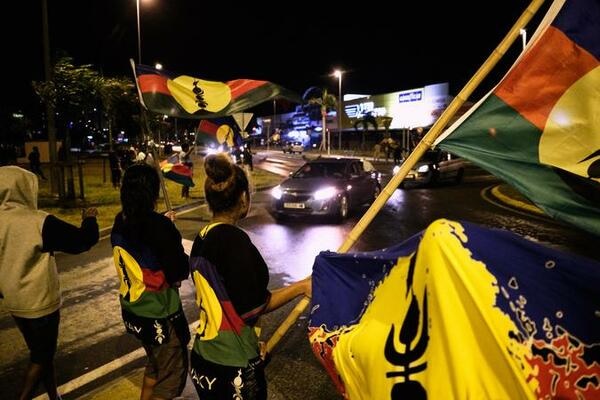
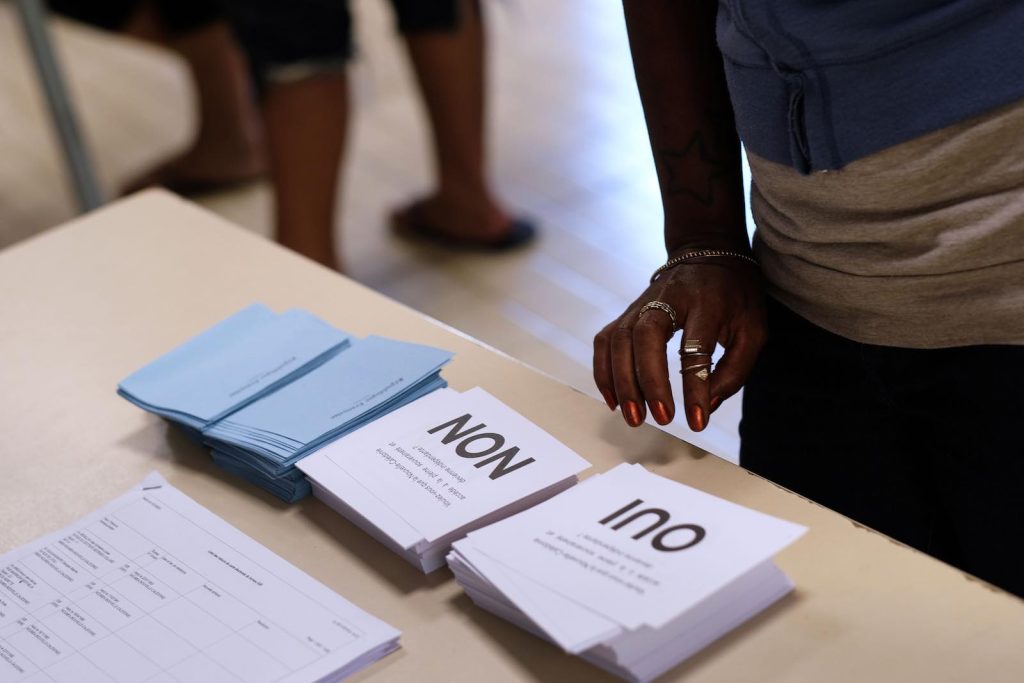
 (Photo credit should read THEO ROUBY/AFP/Getty Images)

Official letters were dispatched yesterday to the Offices of the Prime Ministers of Fiji, Papua New Guinea, Solomon Islands and Vanuatu, through their respective Foreign Affairs Ministries, from the office of the Acting Director General (ADG) of the MSG Secretariat. Comparing the results of the previous two referendums that were held in 2018 and 2020 respectively, the percentage of votes in favour of independence had drastically increased by 20 per cent while the percentage of votes against had decreased by 3.5 per cent.

The MSG leaders were informed that the majority of the population that voted against independence come from the “Southern Province” where the capital Noumea is located. It is also the most populated province which consists predominantly of other ethnic backgrounds and residents making up about 27.1 per cent of the total population in New Caledonia.

“Therefore, for the third referendum, the FLNKS will need to undertake extensive campaigning efforts in the southern province and continue to maintain the trend of voting in favour of independence in order to achieve their aspiration for independence,” he stated.

Hoa’au said the leaders’ vision for MSG solidarity in spearheading the FLNKS cause for political independence for New Caledonia from France, is now very crucial hence the Secretariat is seeking Member’s usual unwavering commitment in providing necessary support to the FLNKS, through international advocacy.

“There is an urgent need for MSG Leaders to engage France through the various diplomatic channels available on the wish of FLNKS to defer the third referendum and call for greater transparency and fairness in the conduct of the referendum particularly given the difficulties posed by COVID-19,” the ADG stated.

This is a crucial time for Melanesian People in New Caledonia to decide their own future but unfortunately, MSG sees France unilateral decision against the Noumea Accord as not facilitative and unfair. The referendum date should be agreed by both parties in the spirit of consultation and dialogue under the Noumea Accord.

The MSG Secretariat is urging its Leaders and those who commit themselves to support the total eradication of colonialism around the world, consistent with United Nations resolution, not to recognise the outcome of the third referendum on 12 December 2021 if France pursues without the participation of the indigenous people.

SOURCE: MSG SECRETARIAT

Fiji National Rugby League and FMF seal five-year deal

0

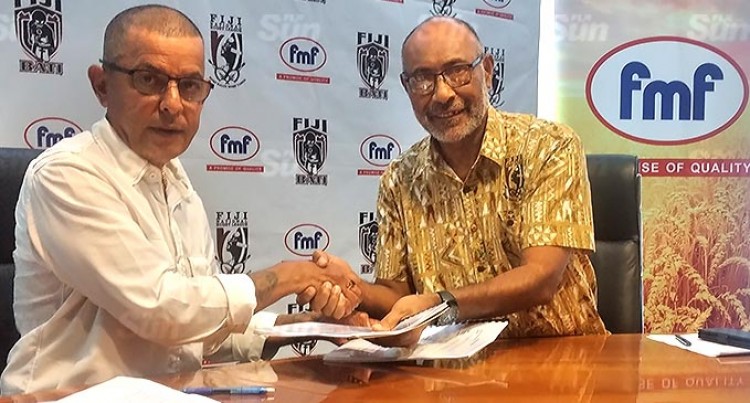
Christmas came early to the Fiji National Rugby League yesterday following an undisclosed five-year sponsorship by FMF and the sealing of the Ram Sami partnership.

FMF is now a major sponsor of the Vodafone Fiji Bati and an official partner of FNRL’s community and pathway programmes.

FNRL chairman Viliame Naupoto said: “In spite of the impact of this pandemic, we remained optimistic about the future of the sport.”

“We stood committed to bringing in genuine partnerships to grow and develop our game.”

“FMF shares our vision to reach and enrich our diverse Fijian communities and today they’re confident to work with us to another chapter of World Cup history,” he said.

Last week, Sun Sports highlighted national coach Jo Rabele and a team of officials who have been giving free lunches to players on the FNRL High Performance Unit programme.

FMF stepped on board to sponsor the Vodafone Fiji Bati’s World Cup and HPU unit preparations.

Speaking to Sun sports, Rabele said: “We are thankful that the sponsorship with FMF has been secured.

“This sponsorship will assist us in our 2022 World Cup preparation and HPU programmes.”

“We are so grateful that the meals and other logistics are taken care of; now we can concentrate on the core programmes.”

“This includes preparations and build up to the 2022 and 2025 RLWC and the 2023 Youth World Cup.”

“Rabele disclosed that their plan is to have 40 per cent of those in the next World Cup to be made up by local based players.”

“We have some in the Kaiviti Silktails and some here at home,” Rabele said.

FMF Managing Director Sanjay Punja said: “In the past we have sponsored some prominent names like Lote Tuqiri.”

“The substantial amount we are now going to give is to support more of those in the coming years.”

“This partnership is long term; it goes beyond the coming Rugby League World Cup.”

Meanwhile, another Fijian business, Ram Sami has also come on board as partners with FNRL.

They are supplying official jerseys and will provide eggs as part of the HPU meals.

FNRL acting chief executive officer Don Natabe said Ram Sami stepped in at the right time.

“We thank Ram Sami for coming on board.”

“We hope to secure a commercial partnership with them come next year,” Natabe said.

The 2021 Rugby League World Cup will be held in England from October 15 to 19 November, 2022.

SOURCE: FIJI SUN

Fiji withdraws from World Swimming Championship

0

Fiji Swimming has withdrawn from the 15th FINA World Championship in Abu Dhabi this month.

Olympians Taichi Vakasama and Cheyanne Rova including United States-based Netani Ross and Moana Wind were due to participate at the Games.

Due to financial constraints and the adverse effects of the pandemic on training and logistics, the federation has decided to miss out on the World Championships.

Fiji Swimming confirmed Fiji’s participation was partially met by FINA but the logistics were not economically affordable for the national side.

Meanwhile, following the Fiji Swimming special general meeting held over the weekend, Ben Rova has been re-elected as President with Karen Lobendhan as the vice-president for East and Martin Coffin the vice-president for the west.

Olympian Cheyanne Rova is the newly elected swimmers delegate.

SOURCE: FBC NEWS

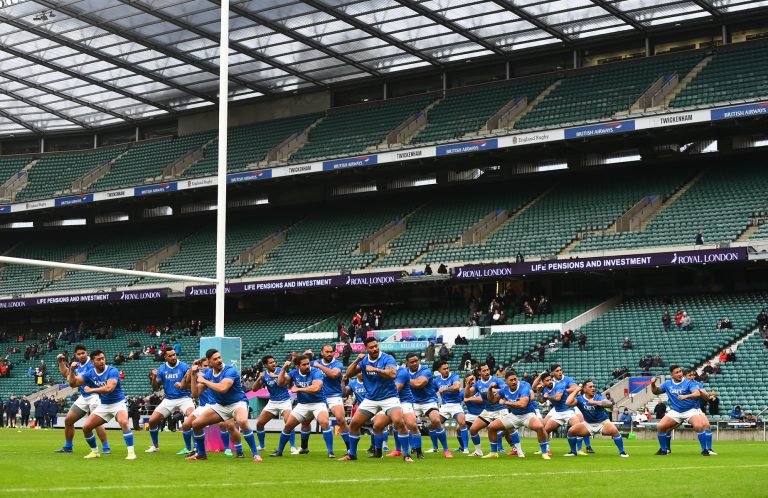
Manu Samoa hoping for government green light to re-join World Rugby Sevens series

0

The strictest of COVID-19 regulations in Samoa have been causing problems for the country’s international rugby teams all year.

Manu Samoa’s recent tour of the northern hemisphere was abandoned, apart from one game against the Barbarians in London, only for that to be scrapped too, at the very last minute, when several of the opposition players tested positive for coronavirus.

Since then the World Rugby Sevens Series has kicked off with two rounds in Dubai, but Samoa was absent from both, so the team has been out of action since the Olympic repechage played in Monaco in June.

However, there may be light at the end of the tunnel, although the plan Lakapi Samoa have in mind will be tough for everyone involved.

Chief Executive Vincent Fepuleai has told Pacific Beat the union has put in a request to the government to allow the team to participate in the last eight legs of the current world series, by setting up a temporary base in Dubai for three months.

Coach Brian Lima believes it’s the only workable option, as the alternative of flying to and from Samoa for tournaments, even with the government’s permission, would mean prolonged periods of quarantine and no time to train.

If the Dubai plan is approved it will be tough on the players who will have to spend months away from family and home, but Coach Lima has left the final decision in the players’ hands.

“So it’s up to them to come up with a decision that’s good for them and their families.”

CEO Vincent Fepuleai is quietly confident of a positive response from the government because without it he has warned that the team’s status among the world’s sevens elite could be in jeopardy.

“There is a huge consequence for us in the future, if we do not attend the tournaments, as such, over the next couple of legs.”

Brian Lima is also confident that the Dubai plan will get the all-clear, and he expects all the players in his squad will put their hands up to go.

“The players are really keen to go, they’ve been waiting for this opportunity after long days and weeks of training. You know our players are all new at this level, and it’s a good exposure for them to go and play and test themselves at this level, said Lima.

SOURCE: ABC

New Caledonia to hold tense final vote on independence from France

The Pacific territory of New Caledonia goes to the polls on Sunday for a third and final referendum on independence from France with campaigning marked by angry demands to call off the vote because of the Covid pandemic.

The territory, some 2,000 kilometres (1,250 miles) east of Australia, was allowed three independence referendums under a 1988 deal aimed at easing tensions on the island group.

Having rejected a breakaway from their French former colonial masters in 2018 and then again last year, the territory’s 185,000 voters will be asked one last time: “Do you want New Caledonia to accede to full sovereignty and become independent?”

The vote comes against the backdrop of increasingly strained ties between Paris and its allies in the region.

France regards itself as a major Indo-Pacific power thanks to overseas territories like New Caledonia.

Australia infuriated France in September by ditching a submarine contract in favour of a security pact with Britain and the United States.

Behind the recent spat looms China’s growing role in the region, with experts suspecting that an independent New Caledonia could be more amenable to Beijing’s advances, which are partly motivated by an interest in the territory’s mining industry.

China is already the biggest single client for New Caledonia’s metal exports, especially for nickel.

“If the French safeguard disappears, all elements would be in place for China to establish itself permanently in New Caledonia,” said Bastien Vandendyck, an international relations analyst specialising in the Pacific.

Other nations in the Melanesia region, which also includes Fiji, Vanuatu, the Solomon Islands and Papua New Guinea, had already become “Chinese satellites”, Vandendyck told AFP.

“All China needs now to complete its pearl necklace on Australia’s doorstep is New Caledonia,” he said.

Pro-independence campaigners are boycotting Sunday’s vote, saying they want it postponed to September because “a fair campaign” is not possible while coronavirus infection numbers are high.

New Caledonia’s 270,000 inhabitants were largely spared Covid infections during the first phase of the global pandemic, but have suffered close to 300 Covid deaths since the appearance of the Delta variant in recent months.

The French government has rejected the demand, saying the virus spread had slowed down with the infection rate down to a relatively modest 80 to 100 cases per 100,000 people.

The pro-independence movement has still threatened non-recognition of the referendum outcome, and vowed to appeal to the United Nations to get it cancelled.

The French minister in charge of overseas territories, Sebastien Lecornu, said that while it was “a democratic right” to refuse to vote, the boycott would make no difference to the referendum’s “legal validity.”

The pro-French camp, meanwhile, has called on its supporters to turn out in numbers, fearing that the boycott by the pro-independence parties may prompt them to stay at home since victory may look like a foregone conclusion.

“It is important that the mobilisation of the no-independence supporters remains absolute, to show that they are in a majority and united in their wish for New Caledonia to remain part of the French Republic,” Thierry Santa, president of the conservative Rassemblement-LR party, wrote in a letter to voters.

In June, the various political parties agreed with the French government that Sunday’s referendum, whatever its outcome, should lead to “a period of stability and convergence” and be followed by a new referendum by June 2023 which would decide on the “project” that New Caledonia’s people want to pursue.

But hopes for a smooth transition were jolted when the main indigenous pro-independence movement, the FLNKS, deemed the government’s insistence on going ahead with the referendum “a declaration of war”.

Observers fear that renewed tensions could even spark a return of the kind of violence last seen 30 years ago, before the feuding parties reached successive deals to ensure the island group’s peaceful transition.

The pro-Paris side won the 2018 referendum with 56.7 percent of the vote, but that percentage fell to 53.3 percent in the 2020 election.

The archipelago has been a French territory since 1853.

SOURCE: AFP/PACNEWS

Pacific NGOs and movements call on France to defer referendum vote to 2022

A coalition of Pacific civil society organisations (CSO) and movement leaders, has called on the French Government to postpone the third independence referendum in Kanaky/New Caledonia, which was “hastily” announced to go ahead on 12 December

The French Minister for Overseas Territories, Sebastien Lecornu, told French journalists in Paris that the third self-determination vote would take place, as it “serves the common good to hold this consultative referendum as soon as possible.”

The French-occupied territory of New Caledonia is currently in a State of Emergency, and is struggling to cope with the impacts of the COVID-19 pandemic. In the past month alone, this new outbreak has infected over 10,000 people and caused over 200 COVID-related deaths. It is understood that 60 percent of the reported COVID-19 related deaths have occurred within Kanak communities, reflecting inequalities in New Caledonian society between Kanaks and other communities.

Given the serious outbreak in infections, the State of Emergency and the COVID-19 protocols that are in place, pro-Independence political parties and groups in Kanaky have called for the postponement of the third referendum until 2022.

Union Caledonienne, Union Nationale pour l’independence Party (UNI), Front de Libération Nationale Kanak et Socialiste (FLNKS) and other nationalist groups in the New Caledonia Congress have written to the Minister for Overseas Territories expressing their grave concerns and requesting a postponement of this third and final referendum.

“We argue that the decision by France to go ahead with the referendum on 12 December ignores the impact that the current health crisis has on the ability of Kanaks to participate in the referendum and exercise their basic human right to self-determination.

“We understand the Noumea Accord provides a timeframe that could accommodate holding the last referendum at any time up to November, 2022. Therefore, we see no need to hastily set the final referendum for 12 December 2021, in the middle of a worldwide pandemic that is currently ravaging Kanaky/New Caledonia, and disproportionately impacting the Kanak population.

“We are concerned that the referendum on 12 December, 2021 will exacerbate the health crisis in the country. More concerning, is the worrying signs that it will put at further risk, the tenuous human rights situation and the security environment, created by France deploying over 2000 troops into Kanaky for the referendum,” said a statement from the Pacific civil society organisations.

The Noumea Accord of 1998 ended a deadly civil conflict between the mostly pro-independence Indigenous Kanak population and the descendants of European settlers. It set out a clear path for France to consult with the indigenous population on political independence in a series of three referendums, two of which have been held – the first in November 2018 and the second in October 2020.

“We believe that it is critical, for the Kanak people, that the final referendum on self-determination be conducted in the true spirit of the Noumea agreement and “under conditions that ensure transparency, fairness and legitimacy”.

“We also call on the Chair of the Pacific Islands Forum, Prime Minister Frank Bainimarama to disengage the Observer PIF delegation led by Ratu Inoke Kubuabola. The Pacific Islands Forum’s engagement in this upcoming referendum vote as observers ignores the concerns of the Kanak people. Rather the delegation should act as mediators to bring about a more just and peaceful resolution to the question and timing of a referendum.

There is no reason for France to hold this last referendum on Kanak independence in the middle of a State of Emergency and a pandemic,” said the statement.

SOURCE: PANG/PACNEWS


The ‘gals’ behind Samoa’s first woman PM

By Megha Mohan and Yousef Eldin

There are fewer women in politics in the Pacific Islands than in any other part of the world, according to UN Women. But this year Samoa elected a woman as its head of government – only the second Pacific Island nation to do so – thanks in part to a network of women friends who supported her every step of the way.

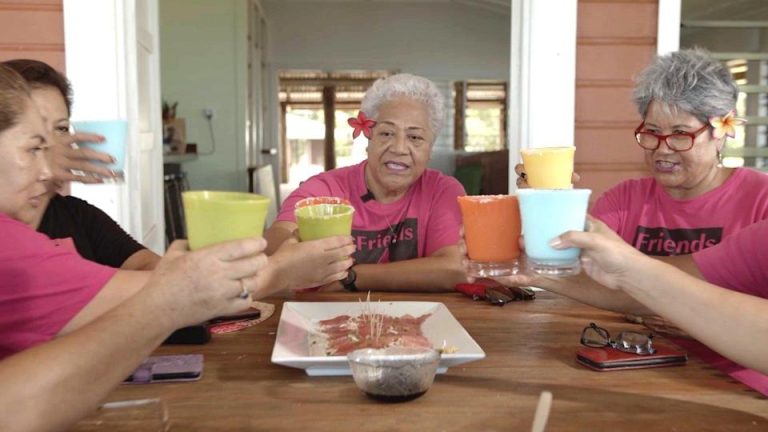
“This is the margarita circle,” the first woman prime minister of Samoa says, raising a salt-rimmed cup. “It’s a place for honest confessions.”

Her friends raise their glasses.

“Manuia!” they reply – “Cheers!”

It’s a Sunday afternoon and a group of around 10 have just left the village church to gather for a buffet lunch on the veranda of Fiame Naomi Mata’afa’s family home in Lotofaga village.

Behind them, the clear South Pacific Ocean twinkles just beyond a strip of white sand.

“Do you remember how this particular journey started for us?” asks Tauiliili Alise Stunnenberg, an independent tourism consultant and Fiame’s distant cousin.

“It was just over a year ago,” replies the prime minister, “the day after I resigned”.

On 11 September 2020, Fiame Naomi Mata’afa quit her position as deputy prime minister for Samoa’s governing Human Rights Protection Party (HRPP), objecting to controversial plans to remove the right of appeal against rulings of a traditional Samoan court dealing with land ownership and chiefly titles.

As she left office, the most senior woman in Samoa’s government told the media she feared the country was “sliding away from the rule of law”.

The next day she went to a friend’s house for their “Foodie Club” evening – an occasion when a group of girlfriends either visit a restaurant or cook each other a meal.

“As she walked in we started playing the Helen Reddy song, I Am Woman – Hear Me Roar,” recalls Alise. “And we said, ‘It’s time for you to take charge now.’”

“Give me a break, I only just resigned!” was Mata’afa’s reply.

Within nine months she would win enough seats to be declared – eventually – the only woman head of government in the Pacific Islands.

Lotofaga village was home to Naomi Mata’afa’s father, one of Samoa’s senior chiefs and its first prime minister, who shepherded the country towards independence in 1962. Her mother was a member of parliament and later Samoa’s High Commissioner to New Zealand.

Brought up in the capital, Apia, Mata’afa would often visit Lotofaga with her family. Thatched-roof houses lined the coast and people cast their fishing nets by moonlight – which in Fiame’s memory was as bright as daylight.

“It was magical,” she says.

“Now most of that community have moved to higher ground, away from the rising sea level,” she adds. “Most of our villages are based on the coast and more and more [people] are relocating.”

In some Pacific Island countries, sea levels have risen at nearly four times the global average rate, and the region has seen extreme weather events increasing in frequency as a result of climate change.

“We in the Pacific Islands contribute the least to carbon emissions and are the most affected,” Mata’afa says.

At the age of 11, she moved to New Zealand to go to boarding school. She remembers that her parents would still make an effort to come watch her sports days and tease her about her splashy swimming style.

In 1975, when she was 18, her father died and Naomi Mata’afa was granted his chiefly title, Fiame. She was now the leader of her clan, or matai.

“I remember asking her how she felt then, with this sudden weight of responsibility now thrust on her,” says Alise Stunnenberg. Mata’afa replied: ‘It’s always been in me.’”

Sensing that the path her parents had taken in national politics would be her future, Mata’afa moved to Lotofaga village after her return from New Zealand.

“The Faa Samoa (Samoan culture and customs) revolves around the matai framework in rural communities,” says Fiame. “And I wanted to understand those leadership structures and how decisions are reached at local community levels.”

In her spare time, she would sit by the Lotofaga beach shore and speak to the local fishing community – largely led by women – about their concerns.

Often these were to do with “their journey as women, which included the cultural, the biological, the political and economical”, Fiame says.

In 1985 she entered politics, and by 1991 she had become Samoa’s first woman cabinet minister.

Mata’afa and her friends try to see each other a few times a month.

“We do a lot of activities together; salsa, cooking and supporting each other’s work,” says Nynette Sass, a businesswoman and chair of Samoa Women in Sport.

“We all have careers but we’re there for each other. After Mata’afa resigned as deputy prime minister, we were there for her.”

The group rallied round, informally calling themselves Friends 4 Mata’afa.

Over dinners at each other’s houses or drinks in a bar nearby, they discussed Fiame’s political future. It was time to think about the highest elected office in the country, they told her.

In 2021 when Fiame decided to run for Prime Minister with Samoa’s new opposition party Faʻatuatua i le Atua Samoa ua Tasi (Fast), which means Samoa United in Faith, her friends sprang into action.

Joining forces with Fast party campaigners, Friends 4 Mata’afa helped organise a national roadshow to reach voters in villages.

“It was all a learning curve. We, her friends, are political virgins,” says Alise.

“It was hilarious to watch the reactions as these good-looking and glamorous women, my friends, turned up with me to village council meetings with male chiefs and religious leaders,” says Mata’afa. “The men definitely sat up straighter when they arrived.”

The women organised a series of talanoa – a Pacific Island form of inclusive and open dialogue, where people are encouraged not to hold back.

“We have a rich oratory culture in Samoa where elders and chiefs, who are mostly men, speak to the community, but this was to include everyone, especially younger women and rural women,” Mata’afa said.

The strength of support they heard for the idea of a female prime minister, especially from younger women, was unexpected and encouraging.

Samoa’s election results on 9 April 2021 were a dead heat – 25 seats for the HRPP, which had governed for nearly 40 years, and 25 for the new Fast party.

A single independent candidate then sided with Fast, but the election commission noted that only 9.8 percent of MPs were women, fractionally below the obligatory quota of 10%, and appointed an additional female MP – from the HRPP party.

Then things got chaotic. After the Supreme Court ruled in Fast’s favour, Fiame went to parliament to be sworn in, and found that the HRPP had locked her out. The ceremony went ahead in a tent outside, but Fiame’s rivals argued it was illegal.

As further court cases took place, Samoans asked Siri and Alexa who their prime minister was, and posted videos of the answers on social media; even the voice assistants refused to be drawn into the political crisis, naming both candidates.

The impasse came to an end only on 23 July when Samoa’s court of appeal ruled that Fiame was the legitimate leader, and that the creation of an extra MP had been unconstitutional.

Congratulations to Mata’afa from New Zealand’s Jacinda Ardern and Australia’s Scott Morrison followed, and the man who had been Samoa’s prime minister since 1998, Tuila’epa Sa’ilele Malielegaoi, finally conceded.

Independent Samoan journalist Lagipoiva Cherelle Jackson says that Mata’afa appeared calm throughout the constitutional crisis, not resorting to attacking her opponent in the media.

“It was almost as if she was unbothered by the frivolity of the opponents’ grasp for power.”

“Samoa is a family,” Mata’afa told the BBC at the time. “I’m not worried. I know it will be OK and we will work out a way peacefully.”

The Pacific Islands have the lowest representation of women in politics in the world. Just six percent of MPs are women, on average, and three countries – Papua New Guinea, Vanuatu and Micronesia – have no women in parliament at all.

Mata’afa is only the region’s second elected woman leader, behind Hilda Heine, president of the Marshall Islands from 2016 to 2020. This, say political watchers, comes with intense and often unkind scrutiny.

Journalist Lagipoiva Cherelle Jackson says that there was a deluge of “vile and ugly gendered online trolling” on social media, which seemed to focus on her status as an unmarried woman.

“People questioned her sexuality and leaders made veiled remarks about her marital status and the fact she does not have children,” she says, adding that she never saw her opponent trolled in this way when he was in power.

Mata’afa says she doesn’t dwell much on it.

“Hopefully they’ll move away from asking those kinds of silly questions,” she says.

But there were legitimate questions too, about the kind of leader Mata’afa will be for women.

She has, for example, appointed a man to serve as minister for women.

When challenged, Mata’afa replies: “I don’t necessarily have a problem with men being ministers for women’s issues – in fact, I think I’m the only woman who has ever served as a Minister for Women in Samoa, we have so many more men in politics – as long as they’re able to recognise the policy needs.”

Samoa is in 97th place on the UN’s gender equality index, and gender-based violence is a major area of concern. Although 46 percent of women in Samoa report physical or sexual intimate partner violence at least once in their lives, according to UN Women, the country only has one women’s shelter.

Does this mean that violence against women is not a priority for this government?

“We have a small economy, we have to pay for health, we have to pay for education, so when it comes to social protection, where do you get extra money to do that?” Mata’afa responds.

“We have to work out strategies by which we can work in partnership with our village councils and our NGOs to begin to really address those issues, because the government does not have the resources.

“It’s not just a matter of priorities, it’s just a matter of scarcity.”

These days Fiame has less time to cook for her friends but she does do the washing up, they say. When they meet, conversation often turns to women’s issues.

“Take my mother’s village,” says architect Lauano Lauina Grace, one of Mata’afa’s closest friends, “women are not allowed to take a matai title so there isn’t a voice.”

In Samoa, only a matai – a family or clan leader – can be elected to parliament.

“We have to take a step outside our comfort zone and think what we can do to hear that voice,” Lauina says.

Alise Stunnenberg agrees. “It may be time for us to start looking at what we can do to help improve the status and livelihoods of women in our country,” she says.

It’s thought that the government may be planning to launch initiatives in 2022.

There are more big battles ahead for Fiame, including ongoing advocacy for global funding to tackle climate change and reviving Samoa’s economy, which has taken a brutal hit as the country (which has remained Covid-free) closed its border as soon as the pandemic was declared.

The “gals”, as Mata’afa calls them, will continue to be a big help.

“They aren’t my shadow cabinet, but I value their opinion on issues,” she says.

“We’re not an organisation and we’re not a registered charity, we’re a support system,” says Alise. “Every powerful woman needs a support system of powerful women,” she says.

SOURCE: BBC 100 WOMEN/PACNEWS

Urgent appeal filed with French Court to postpone New Caledonia referendum

Lawyers of the petitioners demanding the postponement of the auto-determination referendum of New Caledonia on 12 December has filed an urgent appeal at the France’s highest court in Paris.

“On 03 December 2021, Bourdon and Associes introduced a petition for the protection of fundamental liberties (référé-liberté) at the Council of state, France’s highest admonitive court, on behalf of 146 individuals and three NGOs. The petition demands the postponement of the referendum for New Caledonia’s independence which is supposed to be held on 12 December 2021.

“Indeed, this date not only ignores the requests by the independence movement to postpone the referendum, but also the health conditions which have not been improving.

The referendum cannot be adequately held as it would affect free democratic expression. The circumstances do not allow the campaign to run its normal course, which could have a deterring effect on voters,” the lawyers said in a statement.

It said the health conditions are even more worrying today with the emergence of the Covid variant Omicron, as its transmissibility and mortality are still unknown.

“In addition, considering the restrictions put in place limiting meetings and movement, the mourning ceremonies, essential to Kanak culture, cannot be performed, or else, in the rare occasions that they can be, are organised in degraded conditions with considerable risks for the participants.

“Seeing New Caledonia’s sensibilities, as a year of mourning has recently been announced, it cannot be considered that the referendum should be maintained on 12 December 2021,” the lawyers of the petition said.

The lawyers argue that the free expression of the right to vote and the principle of equality regarding the right to vote are gravely and illegally violated.

The hearing in front of the Council of state was held on Monday 06 December 2021. The judge should take her decision today or tomorrow.

Meanwhile, a pro-independence delegation from New Caledonia has left for New York to raise its opposition to the 12 December independence referendum with the United Nations.

New Caledonia has been on the UN decolonisation list since 1986.

Because of the pandemic, the pro-independence parties say they will neither take part in the vote, nor recognise its result.

France has refused to postpone the vote despite repeated pleas by pro-independence parties to defer it.

New Caledonia’s public broadcaster said the Congress president, Roch Wamytan, left Noumea at the weekend after the pro-independence parties said they would not respect the referendum outcome.

Wamytan was a signatory for a pro-independence party of the 1998 Noumea Accord which provided for three referendums by 2022.

The pro-independence parties wanted the third referendum to be held next year, but Paris decided to hold it this month.

In last year’s second referendum, just over 53 percent voted against independence.

French presidential candidate Jean-Luc Melenchon said it’s not too late to postpone the referendum.

Melenchon said by refusing to defer it to next year, President Emmanuel Macron risks breaking New Caledonia’s equilibrium and recreating the conditions of its conflict now kept in check with the Noumea Accord.

He said endangering the peace in New Caledonia could be an election strategy for Macron to appear as a law-and-order candidate.

Melenchon has urged him to put a postponement of the referendum on Wednesday’s government agenda.

France, which deems the pandemic to be under control, has flown in almost 2,000 extra police, including riot squads, to provide security for the referendum.

The call to postpone the vote is being backed by civil society figures internationally.

SOURCE:PCF/RNZ PACIFIC/PACNEWS

Stay connected

529FansLike
172FollowersFollow
156SubscribersSubscribe
- Advertisement -