Home Blog Page 1063

Two People’s reps nominated for Tonga PM

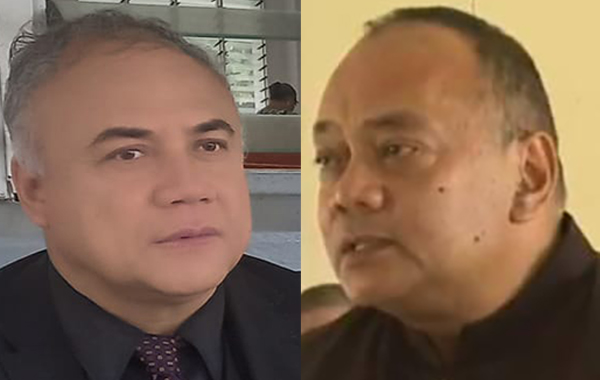
Two People’s representatives Siaosi Sovaleni and Dr ‘Aisake Eke have been nominated for Tonga’s Prime Minister designate.

Their names will be announced during a meeting today, when elected representatives to the Tonga Legislative Assembly will choose one of them as the new leader.

At the close of nominations at 4.30pm Tuesday, two nominations had been received at the Office of the Interim Speaker of Parliament, Lord Tangi.

The first nomination was received on Monday 13 December and the second nomination was received Tuesday.

After the Prime Minister designate is declared, the nominations of candidates from the Nobles’ representatives for the positions of Speaker and Deputy Speaker of Parliament will be made verbally by elected representatives from the floor.

The meeting will then elect the Speaker and Deputy Speaker of Parliament.

SOURCE: TONGA WIRES/PACNEWS

France’s New Caledonia policy labelled a ‘catastrophe’

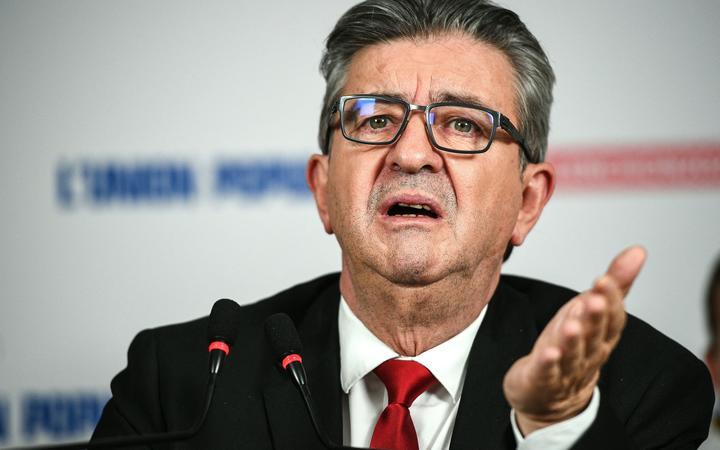
A leftwing candidate in the French presidential race Jean-Luc Melenchon says the outcome of New Caledonia’s independence referendum is a catastrophe.

He held a news conference after several leading French politicians welcomed Sunday’s overwhelming rejection of independence, with just 3.5 percent voting for it.

Melenchon said the government destroyed the consensus process of the 1998 Noumea Accord by imposing a referendum date and triggering a huge abstention by the pro-independence side.
The third and last vote was marked by a turnout of 43 percent, which was about half of last year’s figure and meant an illegitimate outcome of a meticulous, decades-long decolonisation process.

He said he now hoped the government wouldn’t go from what he described as one ‘brutality’ to the next and warned against imposing change.

Melenchon said President Emmanuel Macron was wrong to claim right after the plebiscite that the Accord was no longer legally valid.

“The current statute of New Caledonia is in the French constitution. it cannot be changed without changing the constitution. Therefore the territory’s government and assembly remain the legitimate institutions,” he said.

Melenchon said by pushing through the referendum, the government made a serious error and returned the territory to the rifts of the late 1980s.

“We are now it what is being considered a conflict zone by the Anglosaxon alliance of New Zealanders, Americans and Australians. If the French government thought it could get rid of a problem by being more present and quicker in the Cold War it wants to have with China, it has made a big mistake.”

The French overseas minister Sebastien Lecornu said the binary dimension of New Caledonia’s politics, as seen after Sunday’s independence referendum, satisfies no-one.

Speaking in Noumea, he said the legal validity of the vote could not be questioned because under the Noumea Accord, there was no obligation to vote and no quorom.

However, he said politically speaking, the abstention by the pro-independence camp showed a division.

The minister, who set the referendum date despite objections by pro-independence leaders, said the vote was a historic moment.

Lecornu planned to meet the New Caledonian government and Congress this week to discuss the government’s financial situation.

SOURCE: RNZ PACIFIC/PACNEWS

Rainbo Paita steps aside as PNG National Planning Minister

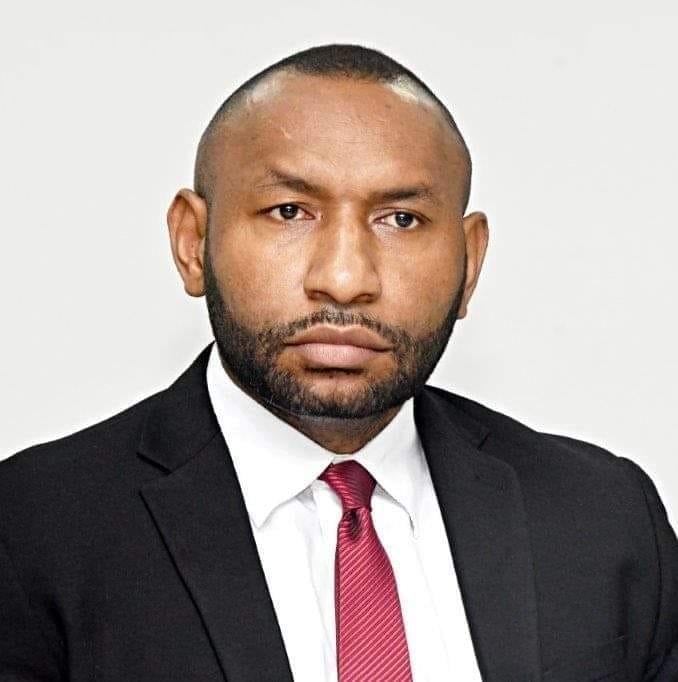
Papua New Guinea National Planning and Monitoring Minister and Finchafen MP Rainbo Paita, has announced that he is stepping aside from his Ministerial portfolio indefinitely, as of Tuesday.

Paita in a statement said that he is stepping aside to allow for an investigation to be carried out, after a video he was featured in and firing a shot from a high powered gun, went viral on social media and the main stream media as well.

He said that he personally wrote to the Prime Minister, and requested that he be allowed to step aside as Minister, to allow for a proper, free and unbiased investigation to be carried out.

Paita also said that he has decided to learn the basic and safe rifle handling skills from his own Close Protection Officer (CPO), who is also a certified trainer, because his official vehicle was shot at by criminal elements around the Waigani area in September of this year.

The Finschafen MP also said that he has decided to learn the skills, so he can personally use the weapon to defend himself, in the event that his CPO is critically wounded.

He said that the video was shot during a private training session with his CPO in a private property, and never endangered anyone’s life or property, but he is stepping aside to preserve the integrity of the office he occupies.

Paita has also used the occasion to apologize to the people of PNG, it’s development partners, and his people of Finschafen for any embarrassment he may have caused, which he says were unintentional.

SOURCE: NBC NEWS PNG/PACNEWS

Solomon police arrest opposition party figure

Police in the restive Solomon Islands said Tuesday they had arrested a leading member of the opposition in connection with deadly riots that rocked the country last month.

United Party president John Kwaita was reportedly arrested by armed police at his home late Monday on unspecified charges.

“We can confirm that a prominent Solomon Islander has been arrested yesterday evening in relation to the rioting,” a police spokesman told AFP.

Late last month anti-government protests sparked widespread looting and arson in the capital Honiara, causing US$67 million worth of damage and leaving the city’s Chinatown district in ruins.

At least three people died in the violence, which also caused the snap deployment of around 200 peacekeepers from Australia, Fiji, New Zealand and Papua New Guinea.

The protests were sparked by opposition to veteran Prime Minister Manasseh Sogavare, who is keen to forge closer ties with Beijing.

His rule is opposed by the leaders of Malaita — the Solomons’ most populous island.

Kwaita is from Malaita and his United Party’s two members of parliament had backed a failed vote of no confidence against Sogavare earlier this month.

Ally Peter Kenilorea told supporters late Monday that Kwaita, “one of our nation’s prominent leaders”, was in police custody.

“I call for calm at this time. I am still trying to ascertain further details and what charges are being laid against him,” he added.

Meanwhile, Kenilorea has confirmed that Kwaita was released Tuesday afternoon.

“I am pleased to inform that he has been released and is now back with his family at their family home after spending last night at central police station and a good part of today(Tuesday) being interviewed by police investigators.

“I have spoken with him and he is in high spirits.

“I have since sighted that John was charged for offenses under the SOPE regulations and Penal Code for unauthorised public assembly and public Procession.

“I stand with John in maintaining his innocence.

“But given that the matter is an active and ongoing police investigation, I will not be commenting on the matter further at this time,” said Kenilorea.

SOURCE: AFP/PACNEWS

Blinken vows more U.S military might in Indo-Pacific

The United States will expand its military and economic relationships with partners in Asia to push back against China’s increasing assertiveness in the Indo-Pacific, U.S Secretary of State Antony Blinken said Tuesday.

Blinken said the Biden administration is committed to maintaining peace and prosperity in the region and will do that by boosting U.S alliances, forging new relationships and ensuring that the U.S military maintains “its competitive edge.”

“Threats are evolving, our security approach has to evolve with them. To do that, we will lean on our greatest strength: our alliances and partnerships,” Blinken said in a speech in Indonesia, outlining the administration’s Indo-Pacific plans.

“We’ll adopt a strategy that more closely weaves together all our instruments of national power — diplomacy, military, intelligence — with those of our allies and partners,” he said. That will include linking U.S and Asian defence industries, integrating supply chains and cooperating on technological innovation, he said.

Later he signed a series of three agreements with Indonesia’s foreign minister, including one that extends until 2026 an existing maritime cooperation pact that among other issues calls for enhanced joint U.S -Indonesian naval exercises.

“It’s about reinforcing our strengths so we can keep the peace, as we have done in the region for decades,” he said. He did not elaborate further but the administration made waves earlier this year by agreeing to a pact that will see Australia produce nuclear-powered submarines.

Blinken insisted that the U.S is not trying to force countries to choose between the United States and China, or seeking conflict with China. But he laid out a litany of complaints about “Beijing’s aggressive actions” from “Northeast Asia to Southeast Asia and from the Mekong River to the Pacific Islands.”

At a daily briefing, Chinese Foreign Ministry spokesperson Wang Wenbin said Blinken’s latest comments showed the U.S was contradicting itself by “playing up the so-called China threat on the one hand while claiming that it has no intention to seek conflict with China on the other.”

Wang criticiSed the U.S for “frequently sending ships and aircraft to the the area to flex muscles and stir up trouble.”

Blinken is in Indonesia on the first leg of a week-long, three-nation tour of Southeast Asia that will also take him to Malaysia and Thailand. Countering China’s growing aggressiveness in the region, particularly in the South China Sea, in Hong Kong and against Taiwan is prominent on his agenda.

“Countries across the region want this behaviour to change,” he said. “We do too.”

“We are determined to ensure freedom of navigation in the South China Sea,” he said. “It is also why we have an abiding interest in peace and stability in the Taiwan Strait.”

Blinken said the U.S “will forge stronger connections” with its five treaty allies in the region — Australia, Japan, the Philippines, South Korea and Thailand — boost ties between them and cultivate a stronger partnership with the Association of Southeast Asian Nations, many of whose members feel threatened by China.

“A strong and independent ASEAN has long been central to tackle urgent crises and long-term challenges,” Blinken said, in particular calling out the military rulers of Myanmar, also known as Burma, for their February takeover and subsequent crackdown on protesters.

“We will continue to work with our allies and partners to press the regime to cease its indiscriminate violence, release all of those unjustly detained, allow unhindered access, and restore Burma’s path to inclusive democracy,” he said.

Chinese foreign ministry spokesperson Wang countered by accusing Washington of policies that “sow discord, undermine solidarity and disrupt cooperation.”

“If the U.S really wants to play a constructive role for the peaceful development of the Asia-Pacific region as it claims, it should earnestly respect the ASEAN-centered regional cooperation structure,” Wang told reporters in Beijing.

China-U.S relations have hit a new low over a range of issues, including Beijing’s increasingly assertive claim to virtually the entire South China Sea that includes the construction of manmade islands topped with military infrastructure. That claim overlaps with those of four ASEAN members.

Many Southeast Asian countries are economically dependent on China but see the U.S as a counterweight to Beijing.

Blinken confined his remarks to the Indo-Pacific and China although he began his current overseas journey in Britain at a Group of Seven foreign ministers meeting that delivered a stern warning to Russia over Ukraine.

On arriving in Indonesia on Monday, Blinken found that a top aide to Russian President Vladimir Putin, national security adviser Nikolay Patrushev, was already in Jakarta for security talks. Asked why he had not sought out Patrushev to expand on Sunday’s G7 warning, Blinken replied that the administration’s top diplomat for Europe, Karen Donfried, who is currently in Ukraine, would be traveling to Moscow in the coming days to deliver that message.

SOURCE: AP/PACNEWS

Fiji and Australia expand cooperation post-pandemic

0

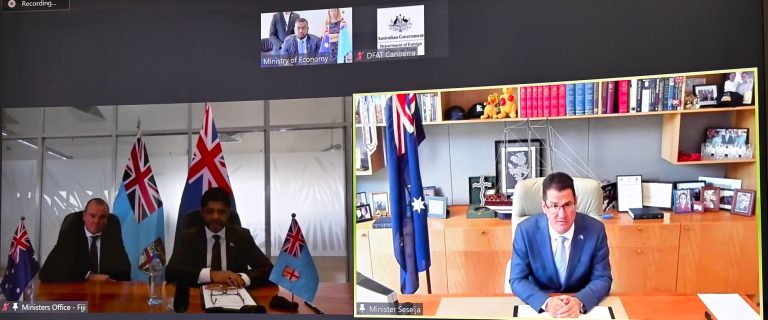
Fiji’s Attorney-General and Minister for Economy, Aiyaz Sayed-Khaiyum Tuesday signed an additional $85 million (FJD$ 129.5 million) Funding Arrangement with the Australian Government under the Fiji Sustainable and Resilient Budget Support Programme.

The programme is co-financed with the Asian Development Bank (ADB) with the overall goal to support the Fijian Government in achieving an agreed set of economic and fiscal policy reforms.

This funding builds upon last year’s commitment of $83.5 million (FJD$127 million) and its additional support will help the Fijian Government finance critical expenditures to support economic recovery, with a focus on fiscal management, private sector recovery, gender equality and social inclusion.

In thanking the Australian Government for all its support over the years, the A-G said “as a result of severe travel restrictions, the COVID-19 pandemic’s economic ramifications have been steep across the Pacific”.

“We appreciate Australia’s confidence in Fiji’s financial management through this direct budgetary support that will help alleviate the socioeconomic burden on Fijian society,” he added.

“With more than 90 percent adults in Fiji now fully vaccinated – owed in significant part to Australian-donated vaccines – we look forward to a normalisation of trade and tourism that reconnects our region and allows our recovery to begin in earnest.”

This package reflects Australia’s ongoing commitment to support the Pacific’s COVID-19 response and recovery efforts, including through the Pacific COVID-19 Response Package – a total commitment of more than $304.7 million (US$218 million) to the region over two years.

Australian Minister for International Development and the Pacific, Zed Seselja, said that the Fijian Government’s effective COVID-19 health response and successful national vaccine rollout has allowed Fiji to emerge from the worst of the pandemic.

“By helping each other get through the pandemic, we’ll all be better off. I’m thrilled to see Australian tourists getting back to Fiji, and Fijian businesses getting back on their feet,” Minister Seselja added.

SOURCE: FIJI GOVT/PACNEWS

Fiji can become billion dollar industry again, says tourism chief

0

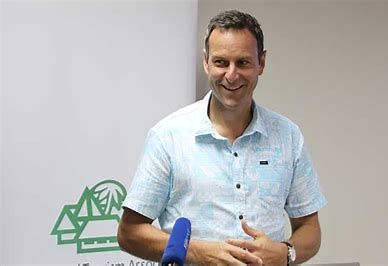
Tourism Fiji says if the booking numbers continue to come through, then the Pacific island nation is well on its way to becoming a billion-dollar industry again.

Tourism Fiji has confirmed 75,000 bookings for hotels and resorts until the end of next month.

Hill said there had been a ‘massive increase’ in hits on the Tourism Fiji website since the Pacific island nation reopened to the world on 1 December.

This included the launch of the industry’s ‘Open for Happiness’ campaign.

“These numbers reflect the marketing and publicity that Tourism Fiji and our industry are doing is having a really strong impact,” Hill said.

“At TF (Tourism Fiji) we are very focused on ROI (survey) for the spend that we put out and it’s fantastic to see the immediate impact.

“The website hits show that people are seeing our marketing and are going onto our web and social pages, looking at the advertising and getting information on Fiji.”

Hill said operators are not only receiving family travellers, but luxury and adventure travellers as well.

He said these tourists are also making bookings in hotels and resorts outside of Fiji’s main island of Viti Levu.

Hill said if these 75,000 people spend an average of around US$1,600, they are looking at close to US$120 million coming into the Fijian economy in just a couple of months.

“We are very hopeful that we will get to that. That’s the hope that we have based on the numbers that we are actually getting now.

“We have seen some resorts do exceptionally well,” Hill said. “Places like the Shangri-la, the Marriott on Momi Bay, Intercontinental, all the Denarau resorts are doing very well.

“But what’s really pleasing is people are travelling and booking into places like Vanua Levu, Taveuni and even some of the places in the Mamanucas,” Hill said.

Fiji Airports acting CEO, Isei Tudreu, said the past two weeks have been very special for workers in the industry as “they have been waiting for 20 months to welcome visitors to Fiji.”

The Fiji Commerce and Employers Federation said business activity is improving and it was reflected in the Reserve Bank of Fiji’s changing their forecast.

The federation’s CEO Kameli Batiweti said over 70,000 visitors booked to travel to Fiji in December was a good thing, as the country could earn around 60 percent of pre-covid times with the economic activity generated from tourism.

Tourism Fiji is also working with local cruise operators to expand the market next year – focusing on the infrastructure and opportunities available.

“A lot of the conversations has been with our existing cruise providers, Captain Cook, South Seas and some of the LiveAboard dive operators.

“So they have a slightly different protocol that the tourist is able to come in, they can either stay overnight in Denarau and join the boat the next day but they have to test negative in order to then get on the boat.

“So they can test inside those 48 hours in order to get onto the boat because obviously, if you wait 48 hours, that boat might be five nautical miles offshore.”

Hill said if somebody were to test positive then they would be stuck in a port or a cabin.

Majority of visitors to Fiji since 01 December arrived from Australia, its biggest market, and the United States while New Zealand’s first commercial flight to Nadi resumed on 6 December.

Tourism operators have been urged to stay the course and drive their businesses well throughout December and January.

The Fiji Hotel and Tourism Association said the Northern Division would open up for tourism in the next few weeks, with resorts around the country expected to gradually open in the months ahead.

The association’s chief executive Fantasha Lockington said there were some initial teething issues, but now the bulk of arrivals are going straight into normal arrangements.

“The biggest day recorded 13,000 arrivals, with 10 turn-around flights and the social media traffic has been up by 20 percent.”

The use of digital wallets by January is expected to ease Covid-19 travel regulations, Tourism Fiji said.

The proposed digitalisation of processes in the hotel and tourism sector aims to do away with the three-day stay at designed resorts and hotels for travellers to Fiji.

A three-day hotel stay for travellers are applicable for Non Travel Partner countries, Hill said.

Lockington said they are working to fine tune testing mechanisms against Covid-19.

“It’s work in progress, but so far, so good. Fingers crossed, the results will continue to be negative.”

Tourism Fiji said the ‘Open For Happiness Campaign’ featuring Hollywood actress Rebel Wilson has generated a lot of interest

The ‘Open for Happiness’ videos, featuring the Australian star, have been viewed more than five million times – reaching over nine million people around the world, Tourism Fiji said.

But the project has been heavily criticised for its ‘all-white’ team coming together to design the tourism marketing strategy for Fiji.

The video was produced by ad agency Saatchi & Saatchi and tells the story of a white female, played by Wilson, drifting in a raft off the shores of Fiji in search of happiness.

Brent Hill has defended Tourism Fiji’s decision to feature Wilson in the campaign, which was launched to coincide with the reopening of the country’s borders.

Hill, who also hails from Australia, was appointed CEO of Tourism Fiji in August this year.

He said the criticism is well taken, but that the intent was not to paint a ‘white saviour kind of scenario’.

“It’s not about you’re coming here to save Fiji; actually, and if you look at the ads Fiji has saved her. She has discovered and found happiness in Fiji,” Hill told the travel industry site, Skift.

He said Wilson was also selected because she is representative of the tourist who comes to Fiji.

“She’s talking to a largely white, largely affluent, largely burnt out kind of audience in Australia, in the U.S and going you know in a post-Covid world, where actually are we going to find happiness? What is actually really making us happy?,” he said.

SOURCE: RNZ PACIFIC/PACNEWS

Who will pay for the damage caused by climate change?

By Isabelle Gerretsen

Talking about who is responsible for climate change is a fraught debate – even more so when it comes to who ought to pay for the damage it causes.

In September 2017, John Mussington was forced to evacuate his home and leave behind his animals when the small Caribbean island of Barbuda was hit by category 5 Hurricane Irma, at 185mph (300km/h).

“It was devastating,” says Mussington, a marine biologist and a high school principal on Barbuda. “People were traumatised, there were many buildings without roofs and we had no electricity. Our immediate concern was: how do we survive the next day?”

Every building was damaged by Irma, with 23% completely destroyed. A 2018 study concluded that climate change worsened destructive hurricanes, including Irma, by increasing rainfall by between five and 10 percent.

The initial shock was compounded when all of Barbuda’s 1,800 residents were ordered to evacuate to their sister island, Antigua, for one month. Mussington says this completely upended his life.

“That was the most traumatic of all, sitting there in Antigua, worrying about our farms, animals and businesses instead of starting the recovery,” he recalls. “I’m a beekeeper and all my colonies were knocked down – I lost my business, as did many farmers and fishermen.”

“When countries lose their islands because of sea level rise and extreme events, they are losing their culture and traditions. There is no adapting to that,” says Le-Anne Roper, coordinator for loss and damage at the Alliance of Small Island States (AOSIS).

For Barbudans, the destruction of the biodiversity and local environment is a direct violation of their way of life. “Our whole culture, identity and way of life is linked to the environment and natural resources,” says Mussington, adding that many Barbudans spend their spare time outdoors, fishing, hunting and camping in the wild. “It is part of who we are as Barbudans.”

Damaged buildings and job losses aren’t the only victims of extreme weather events caused by climate change. From Barbuda to Fiji, entire cultures are at stake. But with more awareness, new technologies and strong calls for international support, these small island nations are fighting back.

AOSIS, which carries out advocacy at global climate negotiations on behalf of 39 small island nations, first raised the issue of loss and damage in 1991, shortly after it was founded, when it called for support for islands facing rising sea levels. Rich nations have strongly resisted these calls, insisting that humanitarian aid is enough to deal with the issue.

For the next 30 years, low-lying small island states and other climate vulnerable countries have continued to ask rich nations to help them cope with extreme events, such as heatwaves, hurricanes and floods, as well as slow-moving climate threats, such as rising seas. They argue that rich countries should pay for the climate-induced losses and damages they are suffering because they are responsible for almost 80% of historical emissions.

At the United Nations’ global climate talks in Glasgow in November, developing countries fought hard for a dedicated loss and damage funding facility, a formal body set up under the United Nations Framework Convention on Climate Change to provide new financial support to affected nations. But the final Glasgow climate pact made no reference to climate finance to address the rising costs of losses and damages in developing countries. Instead, rich nations said they would establish “a dialogue” to discuss “arrangements for the funding of activities to avert, minimise and address loss and damage”

At the climate talks, Barbados’ Prime Minister Mia Mottley told world leaders that asking countries on the frontlines of the climate crisis, like small island states, to pay for climate damages is “like asking the passengers of a car crash to pay for damages, rather than the driver”.

“Failure to provide critical finance is measured in lives and livelihoods in our communities,” Mottley said, adding that she felt it was “Immoral” and “unjust”.

Vulnerable countries say they urgently need finance and technical support now as they already face deadly climate impacts, which will intensify as the planet gets hotter. According to the latest report by the UN Intergovernmental Panel on Climate Change (IPCC), “…every additional 0.5C of global warming causes clearly discernible increases in the intensity and frequency” of extreme events such as heatwaves, heavy rainfall and droughts.

“We can’t ignore [these impacts] anymore,” says Adelle Thomas, senior Caribbean research associate at Climate Analytics. “It’s happening now in developed countries [too],” she says, referring to the floods in Germany in July which killed more than 200 people and caused up to €5bn (£4.2bn/US$5.8 bn) in economic losses.

A study by Christian Aid highlights the devastating economic impact climate change will inflict on the world’s 65 most-vulnerable countries: if global temperatures were to rise by 2.9C, their average GDP will fall by 20% by 2050 and 64% by 2100. After the United Nations’ global climate talks in November, policies now put the world on a path towards 2.4C.

Preventative approach

Every year Fiji deals with extreme events, ranging from powerful cyclones to prolonged droughts, says Dr Satyendra Prasad, Fiji’s Ambassador to the United Nations. “One-tenth of our economy was wiped out by three events last year alone, when we were also fighting Covid-19. That is the difference between small and large states,” says Prasad.

In 2021, Fiji launched a parametric insurance scheme, in partnership with United Nations agencies, that offers immediate payouts to poor women and other vulnerable communities after a disaster. This targeted finance helps them rebuild their lives following a catastrophe, says Prasad.

The government is also relocating 20,000 people living in 45 coastal communities inland to protect them from rising sea levels, with funding raised by Fiji’s environment and climate adaptation tax. “It’s not only about moving homes,” says Prasad. 2We have to build new roads, move schools and provide electricity – all the things that make life possible.”

The constant pressure to rebuild after extreme events makes it almost impossible for Fiji to invest in education, healthcare and infrastructure. “We are spending more money repairing and rebuilding schools than on expanding education,” says Prasad, adding that money for healthcare is diverted to social services to help vulnerable communities recover.

Meanwhile in Pakistan, a pilot project launched by the Start Network, a coalition of 50 aid agencies and nonprofits, aims to take early intervention a step further. The network is trying to prevent extreme weather from leading to hunger and poverty by spotting the signs of risk early and acting fast.

Using satellite images and statistical modelling, the tool predicts when extreme events, such as droughts or floods, are about to hit and activates an alert for early intervention – providing both money and crucial technical expertise. This allows vulnerable communities to develop early response plans and minimise the impacts as much as possible. This model, which predicts a fall in crop yields, has allowed communities in Pakistan to switch to planting drought-resistant crops, preserve water and immunise their cattle up to one month ahead of a drought.

“It is a very effective, targeted and fast response, before a hazard has occurred on the ground,” says Amjad Ahmad, the network’s disaster risk financing coordinator in Pakistan.

The initial results are positive, says Ahmad. Fewer children have dropped out of school and families haven’t been forced to move to urban slums in search of work. Communities have also been able to access funding before droughts and other climate shocks hit.

“We don’t need to see suffering for the funding to be released,” says Sarah Klassen, Start Network’s policy and advocacy advisor. “We really see anticipatory action as one of the practical ways that humanitarians can address and minimise loss and damage caused by climate change,” says Klassen.

The liability problem

These kinds of interventions require technological expertise and, crucially, the money to finance them. But the big question is, who should foot the bill?

Rich nations, who typically have the largest historic emissions, are concerned that they could be held liable for the decades of pollution they have caused. When loss and damage was included in the Paris Agreement in 2015, the U.S pushed for a clause to be added which stated that the accord “does not involve or provide a basis for any liability or compensation”.

The liability and compensation debate has made loss and damage “a political taboo” and stalled negotiations, says Thomas.

Despite signing up to a “high ambition coalition” with small island states and vulnerable nations at the November climate talks in Glasgow, the U.S and EU blocked their proposal for a loss and damage funding facility. When asked why the US opposed establishing such a facility, Washington’s special climate envoy John Kerry told reporters: “We remain always thoughtful about the issue of liability and where this goes.”

Fijian Ambassador Prasad says the political negotiations need to move beyond this conundrum. “It should be about problem solving long-term, not about retribution and who is responsible for which share,” he says.

Providing loss and damage support isn’t purely altruistic, says Olivia Serdeczny, a research analyst at Climate Analytics, specialising in loss and damage. “At some point developed countries could act out of self-interest. They don’t want political systems in developing countries to become destabilised and to be faced with climate migrants,” she says.

How much is needed?

Campaigners say vulnerable nations need at least US$300bn (£225bn) a year to respond to loss and damage in 2030. Developing countries say this recovery finance should be in addition to money set aside for climate mitigation and adaptation, which falls under a global climate finance pledge.

“The volume and scale of resources [needed] is beyond what countries like ours can afford,” says Prasad. “We need dedicated, ring-fenced resources for loss and damage.”

At the UN climate talks in November, Scotland became the first country in the world to set aside specific funding for loss and damage, pledging £2m (US$2.7m) to help communities on the frontlines of the climate crisis. Although a small amount, the pledge was considered highly symbolic. But other countries resisted opening up a new channel of climate finance.

One area where progress was made at the talks was rich countries agreeing to fund the Santiago Network, a mechanism established in 2019 to provide technical assistance to countries experiencing loss and damage. The plan is to get this network up and running before the next United Nations climate meeting, which will be held in Egypt in November 2022.

“It is expected to provide demand-driven technical assistance and solutions to countries,” says Harjeet Singh, senior advisor to Climate Action Network International. “Such support will help generate knowledge and information for countries who need technical assistance in dealing with the increasing intensity and frequency of extreme weather events and new challenges like rising sea levels, melting of glaciers and oceans turning acidic.”

But vulnerable countries say the network alone does little to relieve the challenges they face. “[Climate disasters] are our lived reality,” says Prasad. “Every year that we are delaying action, we are increasing the scale of problems around loss and damage.”

“We are at a real tipping point,” says Thomas. “We are reaching our limit of waiting and fighting.”

After Hurricane Irma, loss and damage finance would have helped Barbuda rebuild faster and in a resilient way, so that the island can withstand future hurricanes, says marine biologist Mussington. The funds could be used to switch Barbuda’s main power supply to renewable energy, like wind power, which is not only more sustainable but can be adapted to better withstand storms and keep the lights on after a severe storm, he says.

International support would also allow for more investment in Barbuda’s mangroves, coral reefs and beaches – all core ingredients of cultural life in Barbuda – and which act as critical barriers for storm surges, he adds. “If we do not maintain these, we do not maintain our culture and identity,” he said.

SOURCE: BBC NEWS/PACNEWS

Bringing the Indian and Pacific Oceans together on IUU fishing

0

By Anthony Bergin

The issue of IUU fishing provides ample scope for Indian Ocean and Pacific Ocean fishing management to collaborate and mitigate these challenges

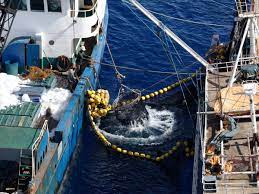
The Bay of Bengal is a hot spot for illegal, unregulated, and unreported (IUU) fishing. Unauthorised tuna longlining and transshipment takes place on the high seas in contravention of Indian Ocean Tuna Commission’s conservation measures. There is underreported and/or non-reporting to the authorities, vessels operating under flags of convenience, stateless vessels using falsified registry documentation, vessels obscuring markings or failing to have vessel documentation. This is all part of the wider problem in the Indian Ocean of IUU fishing. At the other end of the spectrum is the western central Pacific Ocean, which, in many ways, represents the gold standard of combating the problem of IUU fishing. As in other oceans, IUU fishing comes in many shapes and forms in the Pacific islands but is especially concerning because the Pacific Islands Forum Fisheries Agency (FFA) members cover 28 percent of the world’s Exclusive Economic zones (EEZs) and 55 percent of global tuna production valued at US$2.5 billion. Naturally, the Pacific offers many lessons for the Indian Ocean to curb this pressing problem and in effect bring the two oceans together for a stronger Indo-Pacific. But before the lessons are delineated, it is important to comprehend the problem in all its nuances.

Nature of IUU fishing

The term IUU fishing has those three components built into its name: Illegal, unregulated, unreported. Each of those three components are not necessarily mutually exclusive. If a rogue vessel is fishing illegally, it is very unlikely that that vessel will record its activities for accountability. Hence, it is unreported. Similarly, rogue vessels are usually either stateless or operating under flag states that have lax regulatory environment. Hence, they are unregulated activities as well. Thus, there is an enormous crossover between each of the three components. At the global level, it is the unreported aspect which is the most insidious and largest component of the IUU risk. Unreported also includes underreporting, misreporting, and non-reporting. Unreported fishing, thus, crosses into unregulated fishing and illegal fishing.

There are a range of commercial incentives for misreporting or non-reporting or underreporting of activities and catch. It may be to avoid quota restrictions, or to get around fees and charges and levies. It may be to hide interactions with protected species, or mask activities in areas that they are not supposed to be taking place. So, if that underreporting and/or misreporting is taking place intentionally or even recklessly—simply by the industry not exercising the care and attention it should—then it falls squarely into IUU fishing. An additional issue is compromised data, which impacts the accuracy of the stock assessments and undermines the ability to monitor and implement management arrangements. Unreported fishing has the potential to rob communities of economic and social benefits that they should be gaining from the fisheries resources that they own. Unregulated fishing is the most frustrating part of the formula because it points to a failure of governments to get together and cooperate and develop management regimes and arrangements that will govern a fishery.

A few key messages from this before looking at the Pacific experience and its lessons for the Indian Ocean. First, IUU fishing is a global problem and hence needs a global solution. Second, one can’t afford to only focus on the illegal fishing component of IUU fishing. Third, unreported, including misreported fishing activities, are greater risks to fisheries management regimes than illegal fishing, through the compromise of data. Fourth, unregulated fishing must be dealt with at the government level. Fifth, each country needs to keep an eye on what IUU fishing risks they are facing. While it is not possible to respond to every single component of IUU, it is important that the most significant ones are addressed. Lastly, cooperation is key as each coastal state relies on support from one another to be able to adequately address IUU fishing risks.

The key lesson for the Indian Ocean from the Pacific in combatting IUU fishing is that a region can multiply monitoring control and surveillance (MCS) effectiveness through regional cooperation amongst coastal states. There is a significant opportunity for Pacific information exchange with organisations in the Indian Ocean region on vessel monitoring systems and data information sharing standards. The Pacific is now moving forward on electronic monitoring systems used to complement and enhance fisheries observers.

There is a real opportunity for the Indian Ocean to learn here from the Regional Fisheries Surveillance Centre in Honiara, Solomon Islands. The Indian Ocean could learn much from the Pacific about standardised observer training of independent observers at a national level; it is much less developed in the Indian Ocean than the Pacific. The Group of 16 Like-Minded Coastal States of the Indian Ocean Tuna Commission (G16), is the closest group in the Indian Ocean to the Pacific Islands Forum Fisheries Agency. G-16 could take up the IUU issue as a major challenge and build capacity and trust amongst its members through engagement with the Pacific fishing bodies.

In the Indian Ocean, there is a lot of overlap in limited fisheries reporting. Some reporting species within various Indian Ocean fishing bodies go to three different entities. There are opportunities in the Indian Ocean to collaborate with the Pacific in this sphere, potentially assisting on options to establish one central management of reporting data.

The Indian Ocean could also benefit from greater interaction with the Pacific fisheries bodies on the development of harmonised minimum terms and conditions for fisheries access to coastal states EEZs. This helps to prevent one island country being played off against another by major fishing states. Managing transhipment is another big issue in the Indian Ocean; information exchange with the Pacific on transhipment observer programmes would be useful.

Much more of the fishery takes place in the high seas in the Indian Ocean, not in EEZs, unlike the Pacific; for that reason, it is much harder for Indian Ocean coastal states to take control of their fishery. But Indian Ocean coastal states have port state control, to influence and unite their positions over what happens beyond 200 miles. The role of port state control is an area for useful cross-ocean information exchange.

Unlike in the Pacific, the Indian Ocean does not have a single independent provider of fisheries science. The Pacific has been fortunate to have that independent science capability through the Pacific Community regional organisation in Noumea. There are opportunities in the Indian Ocean to look at the Pacific model of independent science input. The Pacific has the advantage of having completed a comprehensive quantification study of IUU. A quantification study would provide an incentive and data for Indian Ocean coastal states to work together on the IUU fishing problem.

There is a useful role for non-government organisations in the Indian Ocean, such as Global Fishing Watch. Fish-I Africa brings together national enforcement authorities, regional organisations, and international experts to combat illegal fishing in the western Indian Ocean. The Stop Illegal Fishing group is working with African countries. These NGOs would benefit from interacting with Pacific regional fisheries bodies on the IUU issue. The Indian Ocean and the Pacific would also benefit from closer cooperation in relation to global discussions on IUU in fora such as the FAO’s Committee on Fisheries.

However, these lessons cannot be implemented overnight and the best place to start in the Indian Ocean would be to build informal networks of trust amongst fisheries MCS officers across the region. It is probably easier for the Indian Ocean to cooperate on IUU than some of the thornier issues on fisheries management. That is true even if at a later point, the region ends up formalising its own fisheries coastal states group into a treaty arrangement.

SOURCE:OFR/PACNEWS

Reports Sovaleni has garnered noble backing in Tonga PM race

Tongan voters will shortly find out who their new prime minister will be, with nominations closing today.

There are two candidates for the MPs to vote on, possibly later this week.

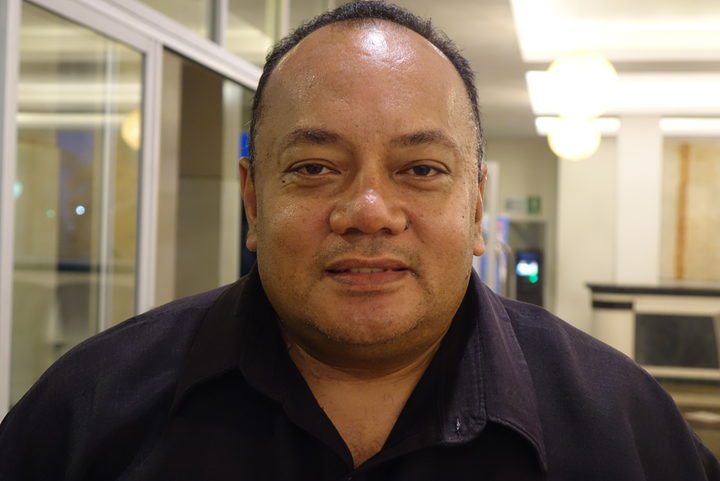
RNZ Pacific correspondent Kalafi Moala said in the past 24 hours the chances of caretake education minister, Siaosi Sovaleni, appear to have firmed.

He said Sovaleni has gained support at the expense of his rival, former finance minister, ‘Aisake Eke.

Moala said Sovaleni now has 12 MPs backing him with Eke’s numbers slipping to five, but he said the way the nine nobles vote remains the key.

He said there are reports that two nobles are preparing to back Sovaleni, which give him the crucial 14 votes.

“So it looks absolutely unlikely that the nobles will stand together in their vote for Eke, particularly when you see such a gap in numbers,” he said.

“For them to vote for Eke would show that they are really manipulating the choice for prime ministership, they are not going with the popular vote. They have their agenda,” said Moala.

SOURCE: RNZ PACIFIC/PACNEWS

Stay connected

529FansLike
172FollowersFollow
156SubscribersSubscribe
- Advertisement -