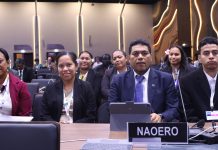

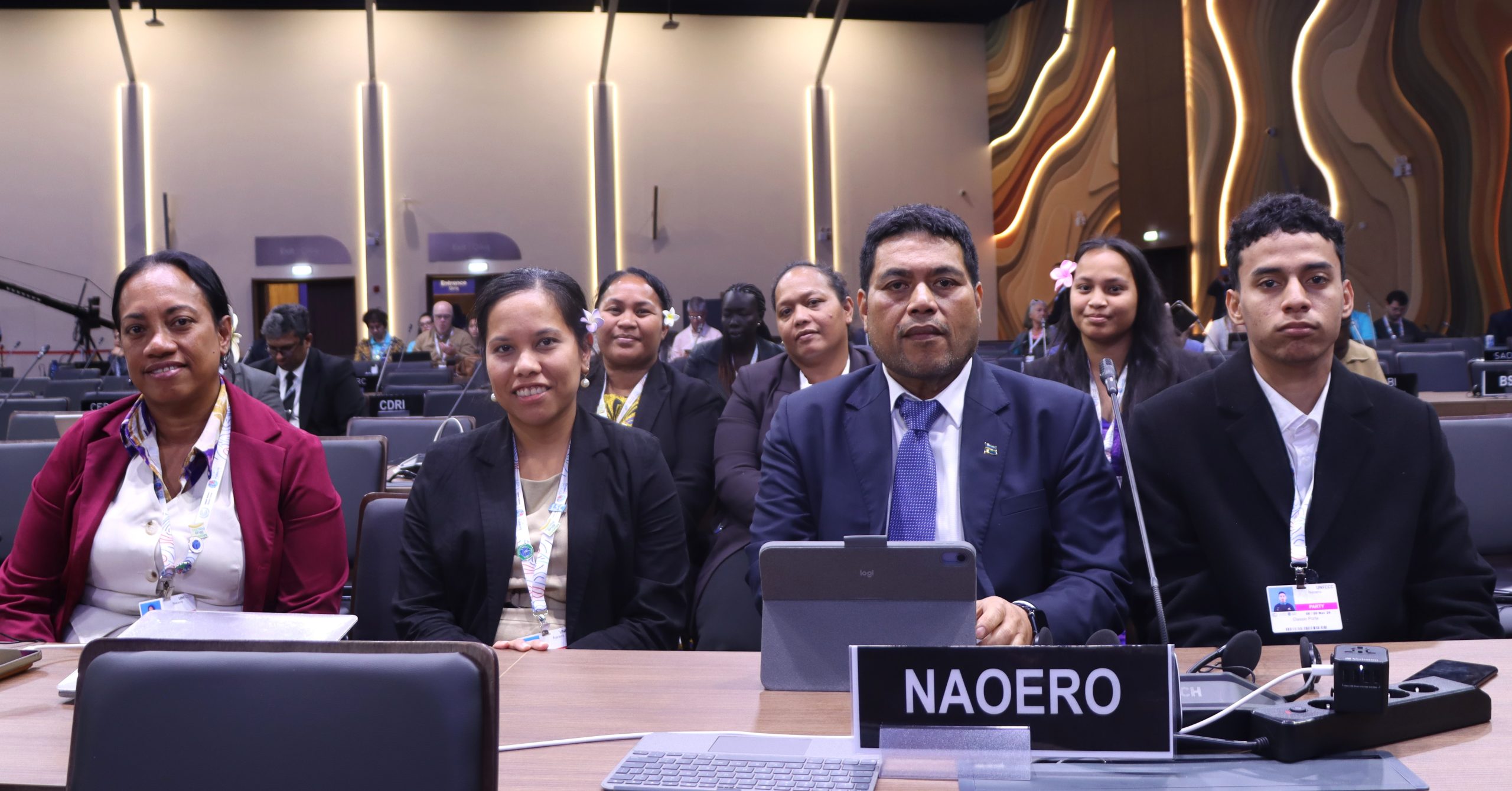
The Republic of Naoero lamented a bittersweet moment at COP31 in Antalya Türkiye on Wednesday.
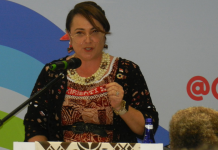
“Today marks our first COP under our traditional name, Naoero,” said Reagan Moses.
“Yet, what becomes of our identity if the world continues on a pathway that overshoots 1.5°C? The very identity we, Dei-Naoero, celebrate today remains under threat from a climate crisis we did little to create.”
Moses, Secretary for Climate Change and National Resilience, of Naoero, was speaking during the resumed High-Level Segment of the climate conference at the Antalya Expo Centre, where for two weeks, leaders, ministers and climate negotiators have been locked in, to negotiate and discuss key climate change decisions.
COP31 is taking place at a time when the UNEP Limiting Overshoot report has warned that global warming will overshoot the headline limit of 1.5 °C. Discussions in Türkiye have largely been about how to deal with the overshoot. Along with cutting emissions, this includes practical ways of removing massive volumes of carbon dioxide from the atmosphere.
“We have heard 1.5°C described as a dream. Yet in Paris, we agreed to act. For countries like ours, 1.5°C is a matter of survival,” said Moses.
“Dismissing it as a dream sends a message that our future is expendable. Honour the promise made in Paris. Keep 1.5°C within reach. Our future cannot be written off.”
For Moses and his Naoero delegation, they have travelled for days to get to Türkiye with many questions.
“Will we have enough water to sustain our people through the next drought?” he asked. “Will our communities and essential services withstand the growing impacts of climate change? Can our children build a future in the country they call home? These are not distant concerns. They are responsibilities we carry today at COP31.”
As COP31 heads towards the final days, the message from Naoero echoed the call from all Pacific countries in Antalya: turn commitments into action.
Naoero called to strengthen efforts to defend 1.5°C through urgent and substantial emissions reductions.
“The transition away from fossil fuels must accelerate. It must be just and equitable, with developed countries leading the way and providing the necessary support to enable developing countries to act.”
Vulnerability should be at the centre of discussions, especially in financing decisions, Naoero urged.
“The special circumstances of Small Island Developing States must be fully recognised, and meaningfully addressed, not diluted, reinterpreted or gradually eroded,” said Moses.
“The Multidimensional Vulnerability Index must strengthen the established recognition of SIDS vulnerability, not become another threshold we must overcome to prove our eligibility for support.”
He added: “Our vulnerability is recognised. It is time for that recognition to shape how finance is delivered.”
On climate finance, Naoero called for predictable, grant-based adaptation finance, accessible funding arrangements and reliable support to address loss and damage.
“Accountability is essential,” Moses noted. “But funding procedures must reflect the capacity of the countries they are meant to serve, not create further barriers. Every year spent navigating application requirements is another year that a community remains exposed. We should not have to wait for a disaster to prove the need for finance that could have helped prevent it.”
Naoero is amongst 14 Pacific countries, who are parties to the UNFCCC, engaging in discussions and amplifying national and Pacific priorities in negotiation rooms, pavilion spaces and the plenary.
“Antalya calls for Dialogue, Consensus, Action,” said Moses.
“Let these words define our outcome, because for Naoero and other vulnerable island nations, the measure of this COP cannot be the language we negotiate, but the action we deliver.
“Our people cannot afford another cycle of weakened commitments while their security, livelihoods and future remain at risk.”