A humpback whale leaving the Southern Ocean for the warm waters of Tonga, Fiji, Vanuatu or Niue crosses the high seas and several ocean jurisdictions.
It travels without any restrictions through these countries.
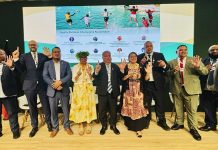
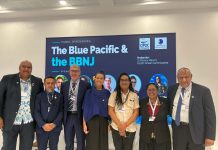
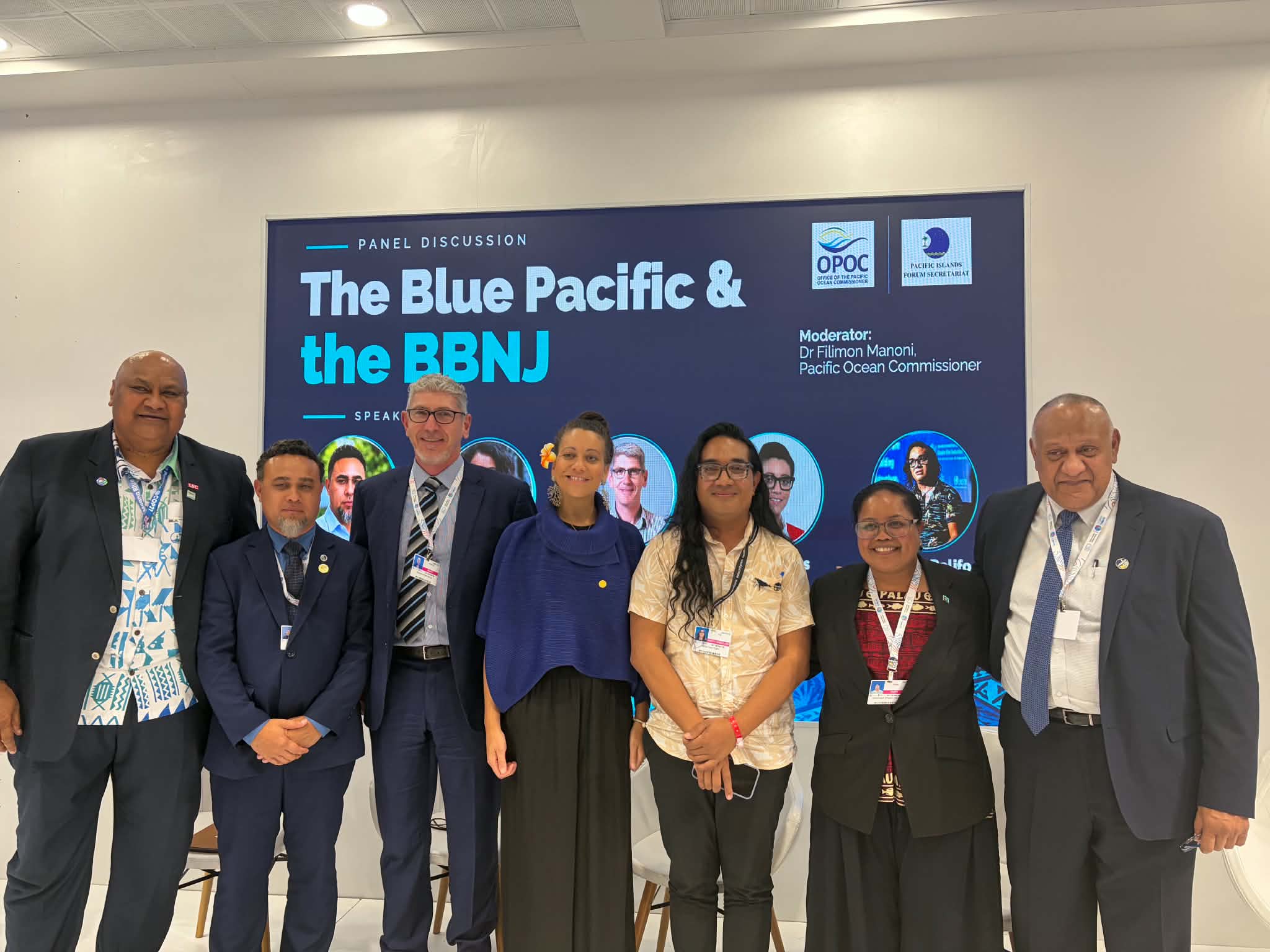
That image framed a Moana Blue Pacific Pavilion side event, where speakers emphasised that the new High Seas Treaty, the Agreement on Biodiversity Beyond National Jurisdiction (BBNJ), is the region’s best chance to protect the ocean’s “invisible highways” before climate change redraws them.
The event – The Blue Pacific and the BBNJ was moderated by Dr Filimon Manoni, Pacific Ocean Commissioner. His office is coordinating Pacific preparations from the Treaty’s first Conference of the Parties in January 2027.
One of the panelists, Alfred Ralifo, WWF-Pacific’s Conservation Director had some good news. He said in October 2025, the green sea turtle moved from endangered to least concern on the International Union for the Conservation of Nature (IUCN) Red List, after more than forty years. Humpback whales are recovering too.
“This proves one thing. When we all act together in harmony, nature recovers. But recovery only lasts if we protect the whole journey,” he said.
Tracking shows some turtles feeding in Papua New Guinea hatched in the Marshall Islands. But their behaviour is now shifting. And they are not the only animal species to change behavioural patterns. For instance, Western Pacific tuna are projected to move east towards international waters. Protection is challenging as this becomes “a food-security and sovereignty issue too,” he said.
“With a 1.5 degree overshoot looming, we are running out of time to protect these pathways.”
With Palau as the first country to ratify the BBNJ Agreement, Gwen Sisior, Principal Advisor to the AOSIS Chair said “Island states look after about 50 million square kilometres of ocean, 20percent of the world’s total, which is the largest blue lung on the planet.”
She added that “Our sustainable management cannot end at a line next to chaos.” Well-managed Pacific waters next to unregulated high seas would only weaken the region’s work.
The Treaty finally gives small islands a voice offshore. “For too long, decisions about the high seas were made far away, often by those with the largest fleets and the deepest pockets,” she said.
Sisior warned that protection is no substitute for emissions cuts. She was adament that “ocean action and climate action have to move together.”
Minister Johanito Wamytan, Minister of Fisheries, Ocean affairs, Natural Park of the Coral sea, Climate, Research and Innovation compared the Coral Sea Natural Park to a placenta. “It shapes Kanak identity, feeds the people and absorbs carbon, but it is vulnerable to harm coming from outside.”
In 2014, New Caledonia declared its entire maritime area a marine protected area. In 2025, it passed a 50 year moratorium on deep-sea mining.
Wamytan said “Albacore tuna die of old age in our waters… because we practise responsible fishing.” He added that the reserves along the borders with Solomon Islands, Vanuatu, Australia and the high seas, was foundations form corridors that we can build together.
“This life-giving Ocean must be protected, respected and cherished. Everywhere. Including beyond national jurisdiction.”
Sefanaia Nawadra, Director General of the Secretariat of the Pacific Regional Environment Programme (SPREP) made the ocean-climate link the Pacific’s central message at COP31 in Antalya. “This time around, we need to get the ocean through as a formal item at COP. Climate change compounds other threats to the ocean such as acidification and illegal fishing,” he said.
Palau’s Sisior aptly reminded everyone, “The Blue Pacific is ready to lead. We ask the world to come with us.”