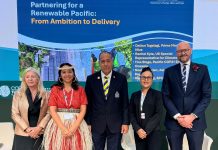


Pacific leaders are calling on governments, development partners and private investors to help raise US$500 million for the Pacific Resilience Facility (PRF), warning that climate-vulnerable island nations can no longer afford loans to recover from a crisis they did little to cause.
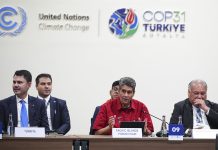
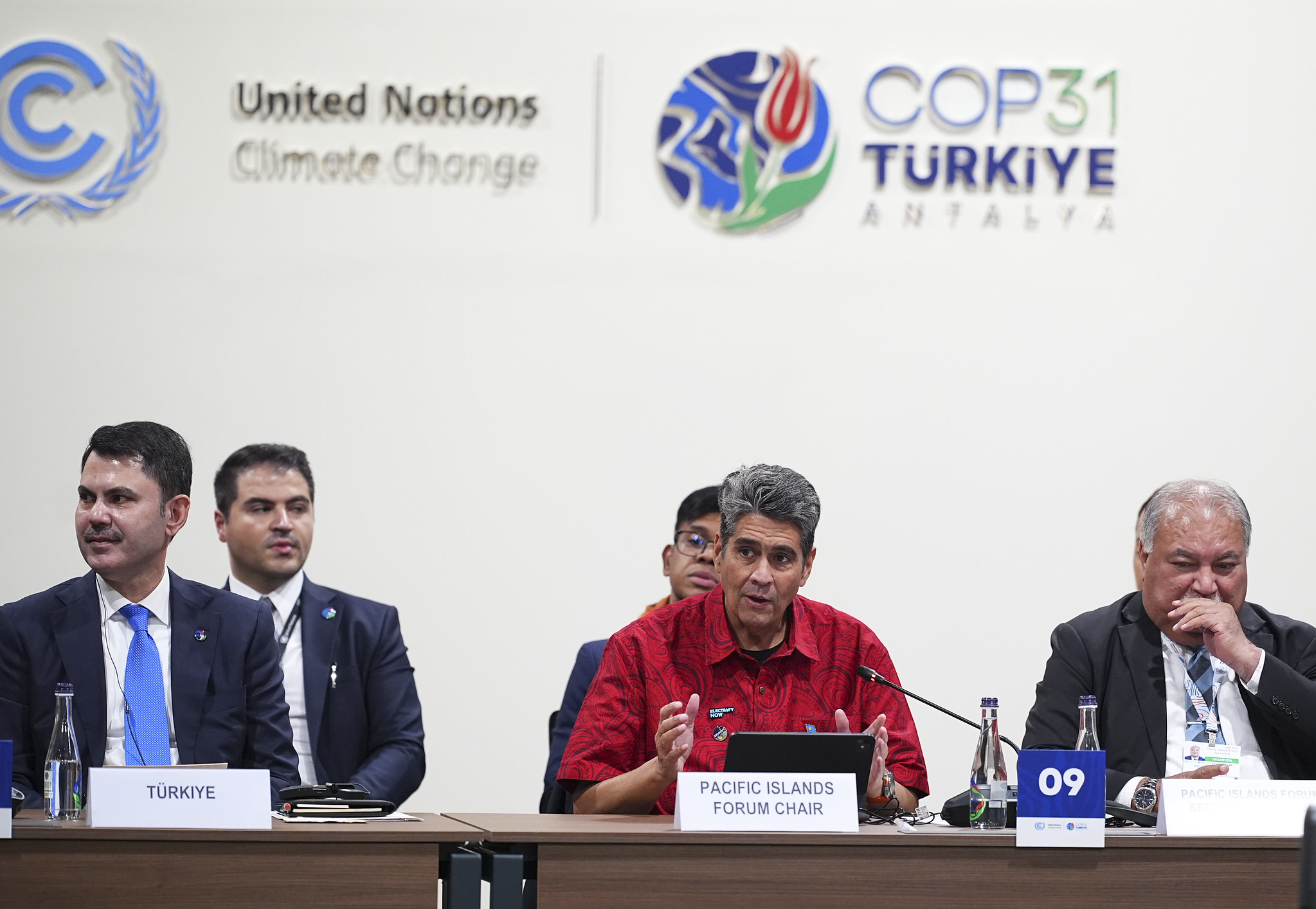
Palau President and Pacific Islands Forum Chair Surangel Whipps Jr said contributions to the Pacific-owned and Pacific-led fund had reached US$200 million, including commitments from Australia, New Zealand and other international partners.
The facility aims to deliver grants directly to communities most affected by climate change, with Pacific leaders insisting that funding must reach the people who need it most.
“It’s a Pacific-owned, Pacific-run facility to really get finance to the very last mile, the people that need it most, and it can’t be any more loans,” Whipps said at a joint press conference with Australian Prime Minister Anthony Albanese and Climate Change and Energy Minister Chris Bowen at COP31 in Antalya.
Whipps said Pacific communities continued to face rising seas, saltwater intrusion into farmland, destructive cyclones and growing threats to their livelihoods.
He recalled attending his first COP in Glasgow, where he questioned the value of repeated climate negotiations while island communities continued to face worsening impacts.
“It is a painful process to go through to watch your island drown. To watch your farms being inundated with salt. Your roofs getting blown off from the next typhoon. This is the reality that we live in,” he said.
Whipps said the Pacific had continued to push for climate finance despite the difficulties of accessing funding, but the establishment of the PRF represented progress towards a solution designed and managed by the region.
He said Pacific countries, together with Australia and New Zealand, had contributed US$100 million, with total commitments reaching US$200 million at COP31.
The target is US$500 million to make the facility fully operational and enable it to deliver grants to vulnerable communities.
Whipps said Pacific countries were also contributing to the fund, rather than relying solely on major economies and development partners.
He used the example of an island nation in a canoe being struck by a large ship to explain why loans were inappropriate for countries suffering climate impacts.
“It doesn’t make any sense for me. You know, there are island nations to be in a canoe and get run over by a massive ship, and then that ship owner telling you, ‘Hey, we’ll give you a loan to help repair your ship,’” he said.
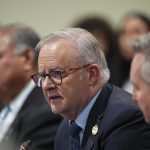
Australian Prime Minister Anthony Albanese said Australia supported the PRF and wanted other governments, financial institutions, investors and philanthropic organisations to contribute.
He said the facility was created by the Pacific for the Pacific and was designed to provide simple, timely and sustainable support directly to communities on the frontline of climate change.
“To date, we have 23 investors, investments not just from the Pacific, but from around the world as well.
“This is the entry fee for credibility in the Pacific,” Albanese said.
Albanese said climate change threatened the very existence of countries such as Kiribati and Tuvalu, while rising sea levels and increasing salinity were also damaging agriculture and Pacific economies.
He urged development partners and investors to back the regional initiative.
“Back this Pacific-owned and Pacific-led solution,” he said.
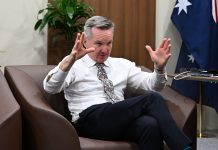
Bowen said climate change remained the Pacific’s greatest security threat and a direct challenge to the survival of some island nations.
He said Australia had made ensuring Pacific voices were heard at COP31 a priority, particularly on climate finance and keeping the 1.5-degree Celsius warming limit within reach.
Bowen highlighted a US$1 billion regional climate programme covering 14 countries, supported by the Asian Development Bank and the Green Climate Fund, following engagement at the Pacific Pre-COP meeting.
He also welcomed the opening of the Green Climate Fund’s first regional office in Fiji, describing it as an important step towards improving Pacific access to climate finance.
Bowen said only 0.2 percent of global climate finance for adaptation reached small island developing states, despite their vulnerability to climate impacts.
“The countries that need climate finance the most have been getting it the least,” he said.
He said Australia would ensure Pacific priorities remained central to COP31 discussions, including access to finance and the 1.5-degree target.
Bowen also acknowledged commitments to the PRF from Denmark, the Netherlands, Ireland and the United Kingdom following the Pre-COP discussions.
He said the facility would be promoted further to attract additional support from international partners.
The PRF is intended to strengthen the region’s ability to finance locally identified resilience projects through grants, with the aim of reaching vulnerable communities that often struggle to access existing international climate funding.
Whipps said COP31 must deliver practical commitments to strengthen resilience across the Pacific.
“The time to act is now. This is an implementation COP, and that’s what we expect,” he said.