

Pacific Island countries are receiving just 0.2 percent of global climate finance for adaptation, a figure COP31 President of Negotiations Chris Bowen says must change as he calls for faster, fairer access to funding for vulnerable nations.
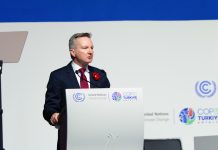
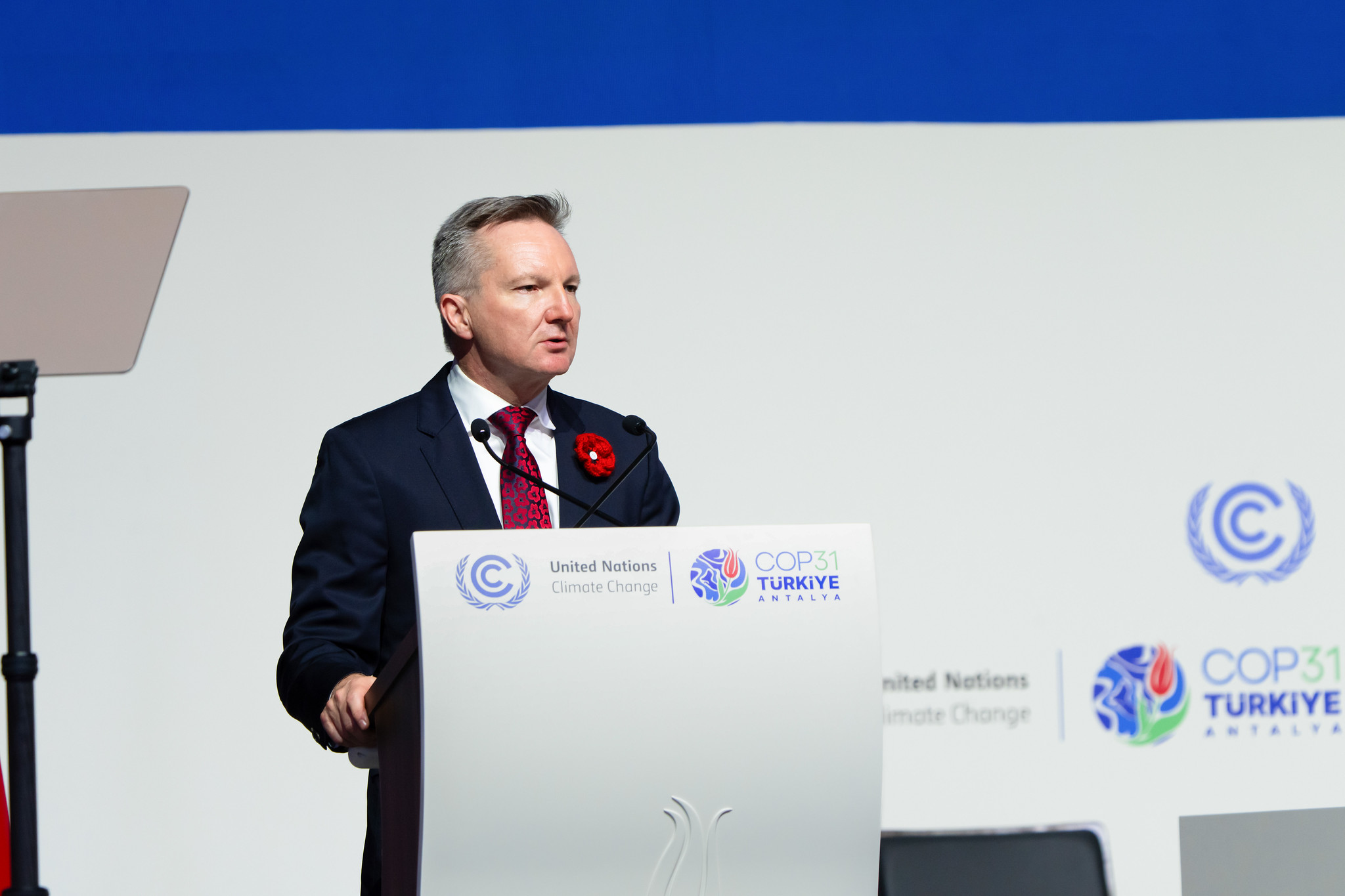
Addressing Heads of State and Government at the High-Level Segment of COP31 in Antalya, Türkiye, Bowen said the Pacific was already experiencing the devastating impacts of climate change, with the future of some island nations threatened by rising sea levels.
He highlighted Tuvalu, where he witnessed the impacts of climate change during the Pre-COP meeting, saying keeping global warming within 1.5 degrees Celsius was a matter of survival for Pacific communities.
“For the people of Tuvalu and other countries at the climate front, keeping 1.5 degrees within reach is not merely a concept,” Bowen said.
“It is the difference between continuing to have a home or not, of survivable sea-level rise or not.”
Bowen said the latest science indicated the world would overshoot the 1.5-degree threshold but stressed that every fraction of a degree mattered and countries must accelerate action to limit the damage.
“Every fraction of a degree matters to lives, communities, economic stability and the environment,” he said.
He warned that climate change was no longer a future threat, pointing to glacial collapse in Nepal, heat-related deaths in Europe and an intensifying super El Niño as evidence of worsening impacts.
Bowen said the global climate crisis was unfolding alongside energy insecurity, geopolitical tensions, wars, rising living costs and growing electricity demand driven by artificial intelligence and data centres.
He described the situation as a global “polycrisis”, arguing that countries needed stronger international cooperation rather than retreating from multilateral action.
He said renewable energy, electrification and more diverse energy systems could help countries address energy security while reducing dependence on vulnerable supply chains.
Bowen said international cooperation had already helped reduce projected global warming from about four degrees Celsius before the Paris Agreement to approximately 2.6 degrees today.
He said the progress had helped drive US$2.2 trillion in global clean energy investment last year, twice the amount invested in fossil fuels, while clean energy jobs now outnumbered fossil fuel jobs globally.
Turning to Pacific priorities, Bowen highlighted the Taku Pakasoa Declaration adopted at the Pre-COP meeting in Fiji, which called for keeping 1.5 degrees within reach, strengthening resilience, improving access to finance and elevating ocean action.
He said the Pacific was leading with practical climate solutions, including the proposed Pacific Resilience Facility (PRF), and urged countries supporting the region to engage with locally driven initiatives.
“And we ask countries supportive of the Pacific to engage fully with local, practical solutions like the PRF.”
The PRF is a Pacific-led initiative aimed at strengthening community resilience and improving access to funding for climate and disaster preparedness.
Bowen also welcomed Türkiye’s leadership on the Antalya Ocean Declaration, stressing the importance of protecting the ocean in global climate action.
He said the ocean absorbs almost 30 percent of human-generated carbon dioxide and more than 90 percent of the excess heat caused by global warming.
“COP31 can move ocean-climate action from dialogue to delivery, with practical, investable solutions,” he said.
Bowen outlined three key priorities emerging from consultations between Australia and Türkiye for COP31.
The first is accelerating electrification through the 35 by 35 pledge, which aims to increase electricity’s share of final energy consumption to one-third by 2035.
The second is strengthening adaptation and resilience, particularly as climate impacts become more severe under scenarios where global temperatures exceed 1.5 degrees.
The third is climate finance, with Bowen calling for funding to become faster, simpler and fairer so countries can translate their national climate commitments and adaptation plans into investable projects.
He said the Access to Finance Statement and Action Plan was an important step towards improving funding access, particularly for small island developing states (SIDS) and least developed countries (LDCs).
Bowen said the Australia-Türkiye partnership had listened to countries throughout the year, including during the Pre-COP consultations in Fiji, and recognised the expectation that COP31 must deliver practical progress.
He said the two presidencies had agreed to pursue a Presidency-led, Party-driven decision to accelerate climate implementation.
“We are accelerating, not stepping back.
“And we will act in solidarity to address the climate crisis,” he said.
Bowen said a successful outcome in Antalya must include progress across the full negotiating agenda and give governments, investors, businesses and communities confidence that the global climate response remained on track.
He said governments needed to send a clear signal that they remained committed to tackling climate change despite growing economic and geopolitical pressures.
“To every Party we must be ready to work, listen and compromise.
“We are here together to fight this urgent common threat, climate change, with collective resolve and purpose,” Bowen said.
He said COP31 was an opportunity to demonstrate that multilateral cooperation could still deliver results at a critical time for the global climate response.