


The world is failing to meet 22 of its 23 global biodiversity targets, with Fiji warning that inadequate funding and continued subsidies for activities that damage nature are undermining efforts to protect ecosystems.
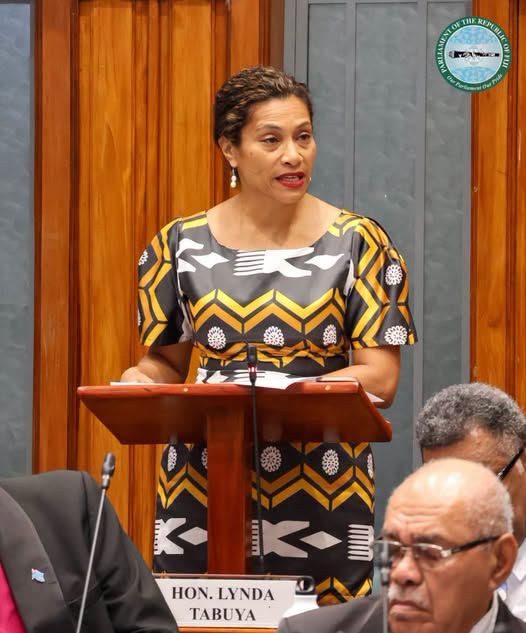
Minister for Climate Change Lynda Tabuya told Parliament Wednesday that the findings of the United Nations Biodiversity Conference (CBD COP17) in Yerevan, Armenia, exposed a major gap between global commitments and action.
The review found that fewer than half of countries submitted their national biodiversity plans on time, while current commitments would protect only about 26 percent of the world’s land and 12 percent of its oceans by 2030.
The international commitment to provide at least US$20 billion annually in biodiversity finance by 2025 had also not been met.
Tabuya said funding that damages nature continued to outpace investment in biodiversity protection by about 30 to one.
“The Pacific did not come to renegotiate its ambition; it came to secure the means to deliver it. Ambition without finance, technology and the capacity to use them is a promise on paper,” she said.
Tabuya said Fiji represented all 14 Pacific island parties as chair of the Pacific Small Island Developing States (PSIDS) during the conference, held from 19 to 31 October.
She highlighted four key outcomes from COP17, including the adoption of the Yerevan Pathway, which provides a global review of progress towards the Kunming-Montreal Global Biodiversity Framework.
The review confirmed that the 2030 targets would not be achieved without additional financial, scientific and technical resources for developing countries.
Fiji also pushed for harmful subsidies to be reformed and redirected towards biodiversity protection.
On financing, Tabuya said the ninth replenishment of the Global Environment Facility had recorded a 27 percent reduction compared with its previous funding cycle, leaving Pacific countries with smaller allocations to implement their national biodiversity strategies.
“Those with the ability to contribute should do so. The obligations of developed country Parties cannot be diluted,” she said.
Another key outcome was the operationalisation of the Cali Fund, which calls on companies using digital sequence information from genetic resources to contribute one percent of profits or 0.1 percent of revenue.
Tabuya said the fund would provide benefits to Indigenous peoples and local communities whose genetic resources were used in commercial products.
She said the decision reinforced Fiji’s Access and Benefit-Sharing Policy 2026 and its obligations under the Nagoya Protocol.
COP17 also agreed on operational arrangements for a permanent body under Article 8(j) of the Convention on Biological Diversity, which recognises and protects the traditional knowledge, innovations and practices of Indigenous peoples and local communities.
Tabuya said the Ministry of Environment and Climate Change would work with the Ministry of iTaukei Affairs to ensure Fiji’s communities were represented.
However, she acknowledged that not all Pacific priorities survived the negotiations, including a proposed reference to the International Court of Justice advisory opinion on climate change.
Fiji will now take the outcomes of COP17 into the UN Climate Change Conference (COP31), which runs from 09 – 20 November in Antalya, Türkiye.
Tabuya outlined six priorities for Fiji: keeping the 1.5 degrees Celsius warming limit within reach, accelerating the energy transition, securing accessible climate finance, increasing adaptation funding, addressing loss and damage, and strengthening the ocean’s place in climate negotiations.
She warned that coral reefs faced further declines of 70 to 90 percent at 1.5 degrees of warming, while more than 99 percent could be lost at 2 degrees.
“Every target agreed in Yerevan for our reefs, our mangroves and our fisheries will be decided, in the end, by whether the world holds warming to 1.5 degrees,” she said.
On climate finance, Tabuya said more than US$16 billion had been committed to Pacific countries since the Paris Agreement, but the pace of disbursement remained a major concern because of complex institutional requirements.
Fiji would push for grant-based finance, simplified application processes and direct access for small island developing states.
She also confirmed Fiji would continue advocating for the capitalisation of the Pacific Resilience Facility, which had received pledges of just under US$200 million against its US$500 million target at Pre-COP31.
Tabuya highlighted two recent Green Climate Fund approvals for Fiji, describing them as a major achievement for the country’s climate and biodiversity programmes.
The US$42.6 million Coral Reef Resilience Project, including US$35.2 million in GCF grants, will benefit more than 359,000 people, restore more than 3,300 hectares of mangroves and riparian forests, and bring about 2.5 million hectares of coral reefs and vulnerable coastal areas under sustainable management.
This follows the approval of a forest restoration project in July, which secured US$29.3 million in GCF grants.
Together, the two projects will mobilise US$64.5 million in grant financing and bring Fiji’s total GCF portfolio to approximately US$135 million.
“These are two back-to-back national project approvals at consecutive Board meetings, a first for Fiji since 2017,” Tabuya said.
She said Fiji would also press for a clear pathway to increase adaptation finance and ensure the Loss and Damage Fund received adequate contributions and was accessible to vulnerable island nations.
On the ocean, she said Fiji would support efforts towards an Antalya Ocean Declaration and push for ocean issues to be integrated across climate negotiations.
Tabuya said Fiji would work through PSIDS and the Alliance of Small Island States (AOSIS) to advance the Pacific’s priorities at COP31.
“The road to COP31 started in the Pacific. Fiji intends to see it delivered for the Pacific,” she said.