


Samoa and Antigua and Barbuda have called for urgent reforms to international climate finance, warning that vulnerable countries should not be forced into debt to recover from climate disasters they did little to cause.
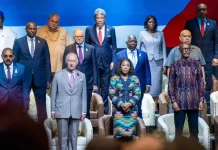
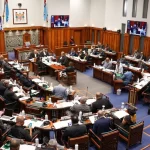
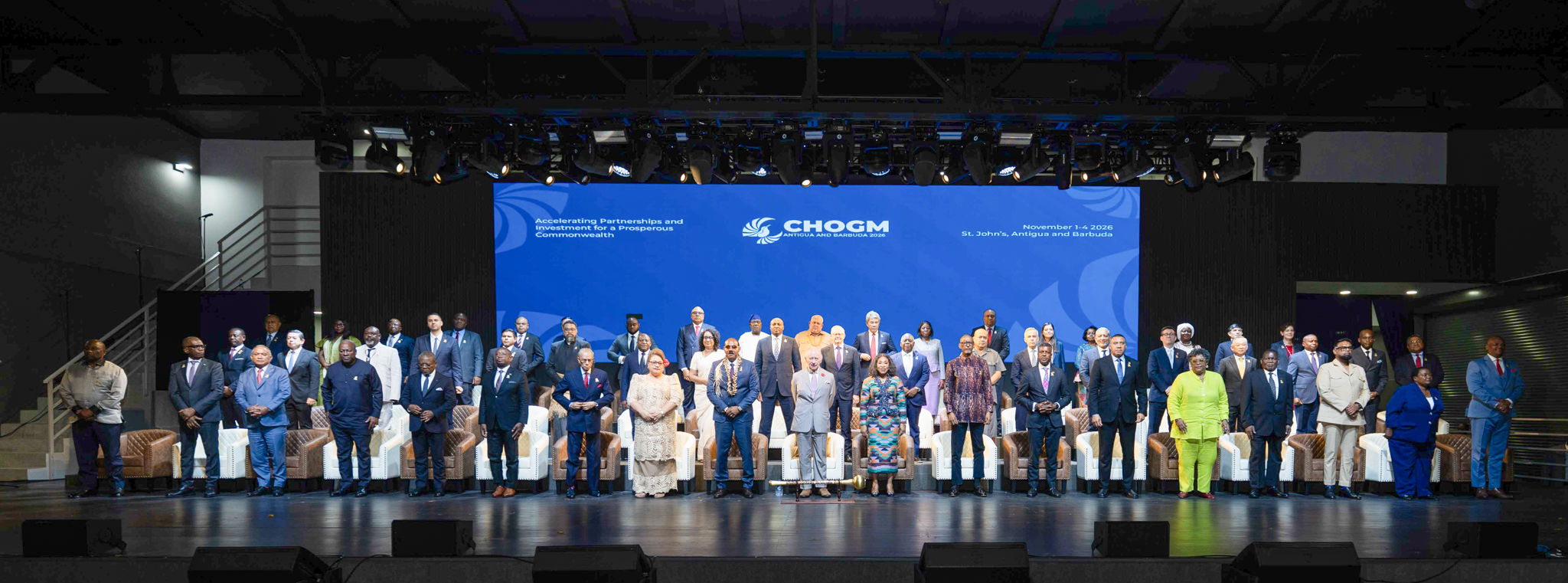
The call was made by Samoa’s Deputy Prime Minister Mulipola Anarosa Ale Molioo and Antigua and Barbuda Prime Minister Gaston Browne at the opening ceremony of the 2026 Commonwealth Heads of Government Meeting (CHOGM) in St John’s.
Mulipola urged Commonwealth leaders to provide accessible, predictable and grant-based climate finance, saying the world was already moving beyond the critical 1.5 degrees Celsius warming threshold.
“Many nations and communities are facing permanent losses. But overshoot must not become an excuse for delayed ambition or inaction,” she said.
She urged Commonwealth leaders to heed the calls from recent Pacific Pre-COP31 discussions in Fiji and Tuvalu.
“Accessible, predictable, and grant-based climate finance is the bridge between ambition and action. No nation should have to borrow its way out of a crisis it did so little to create,” she said.
Antigua and Barbuda Prime Minister Gaston Browne also called for changes to international financing arrangements, saying climate disasters could wipe out decades of development in a matter of hours.
“Our pursuit of prosperity must also recognise the vulnerabilities that threaten to erase decades of development in a matter of hours. A single hurricane can devastate infrastructure, destroy livelihoods and force governments to divert resources from education, healthcare and economic transformation towards recovery,” he said.
Browne said national income alone was not an adequate measure of a country’s vulnerability or its ability to withstand repeated climate shocks.
He called for wider use of the Multidimensional Vulnerability Index (MVI) alongside existing financing criteria, as well as faster access to climate finance and debt arrangements that would give vulnerable countries greater fiscal space to recover and rebuild.
“No nation should be forced to mortgage its future simply to survive the present,” he said.
He urged Commonwealth members with capital, technology and influence in international financial institutions to support reforms that would improve access to financing for vulnerable countries.
Browne also highlighted the importance of investing in renewable energy and resilient infrastructure to protect communities, reduce dependence on imported fossil fuels, strengthen energy security and create economic opportunities.
However, he said resilience measures alone would not address the climate crisis.
“We must also confront the causes of climate change by accelerating the transition to cleaner energy and reducing global emissions. Fairness also requires an honest engagement with our shared history,” he said.
Mulipola also called for stronger action to protect the ocean, describing it as central to Pacific livelihoods, economies and cultures.
“Our ocean is our lifeblood. It feeds our people, anchors our economies and carries our cultures,” she said.
She said implementing the Apia Commonwealth Ocean Declaration would help shift global approaches from ocean exploitation towards protection and sustainable stewardship.
The address marked Samoa’s final official duty as Commonwealth Chair-in-Office, with Mulipola formally handing over leadership to Prime Minister Browne.
Samoa hosted CHOGM in 2024 and served as Chair-in-Office during the intervening period, with Mulipola saying the country had worked to strengthen the organisation’s resilience agenda and support reforms to keep the Commonwealth relevant.
She said Samoa supported the leadership transition and the Secretary-General’s reform programme, arguing that the organisation could no longer rely on a business-as-usual approach.
“Profound and transformative changes are not only necessary, but inevitable if our organisation is to remain relevant and responsive to the needs of its members,” she said.
During its chairmanship, Samoa pushed for stronger global climate and ocean action, increased trade and investment, greater opportunities for women, young people and persons with disabilities, and efforts to bridge the artificial intelligence divide.
Mulipola said Samoa was also committed to defending multilateralism, democracy, human rights and the rule of law, while ensuring the concerns of small and vulnerable states remained central to Commonwealth decision-making.
She welcomed the integration of the resilience pillars outlined in the Samoa Communiqué into programmes across Commonwealth organisations.
The deputy Prime Minister also highlighted Samoa’s work on early childhood development, saying a five-year-old child’s Book of Dreams presented during CHOGM 2024 had helped inspire the development of Samoa’s Early Childhood Development Framework.
Early childhood development has since become a standing agenda item at Pacific Islands Forum Leaders’ Meetings.
She also pointed to the Adopt-a-Country campaign launched during CHOGM Samoa, which brought practical assistance to villages and strengthened people-to-people relationships between Commonwealth nations.
At the handover ceremony, Mulipola presented Prime Minister Browne with an ula fala, a traditional Samoan adornment woven from mature pandanus fruit.
She said the ula fala symbolised the transition from Samoa’s 2024 hosting of CHOGM to Antigua and Barbuda’s leadership of the Commonwealth.
“On behalf of the Prime Minister, the government and people of Samoa, Fa’amanuia le Atua i lou tulai mai. God bless your tenure as Chair-in-Office, Prime Minister Browne,” she said.
The 2026 CHOGM is being held under the theme, Accelerating Partnerships and Investments for a Prosperous Commonwealth.