

Agriculture, fisheries, and food production are critical to the economies of many Pacific Island Countries, yet each country faces unique challenges to ensure their agrifood sector is robust, resilient to global shocks and climate change, and can improve the wealth and livelihoods of its people.
To address these challenges, the Vanuatu Government and the Food and Agriculture Organisation of the United Nations (FAO) Tuesday opened the 2026 Pacific Small Island Developing States (SIDS) Solutions Forum in Port Vila, Vanuatu.
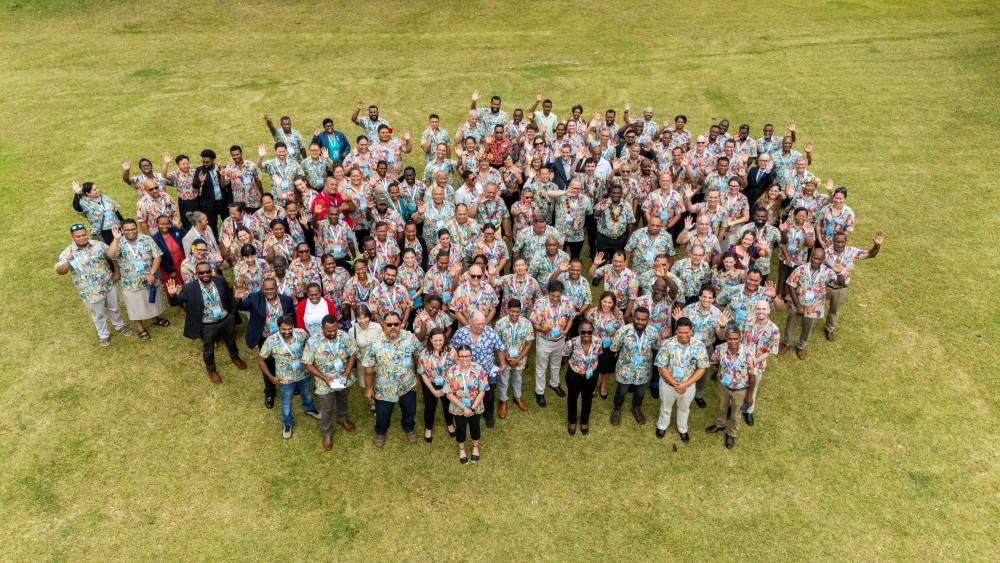
Under the theme, “Solutions for a Resilient Blue Pacific: Scaling Innovation and Financing Agrifood Systems Transformation”, the Forum will bring together leaders, development partners, investors, innovators and other high-level representatives from across the Pacific and beyond for four days of discussions, 12 side events, and exhibitions highlighting Pacific-led solutions for resilient and sustainable agrifood systems.
In his opening Johnny Koanapo Rasou, Deputy Prime Minister and Minister of Finance and Economic Management, emphasised that agrifood systems transformation is recognized by Pacific leaders as a key driver of sustainable development, resilience and economic growth.
“Our region does not lack ideas. What we need are the investments and partnerships that can take our best solutions from the pilot stage to every island community.
Vanuatu is ready to lead that effort together with our Pacific neighbours and partners,” he said.
He also highlighted recent climate-related shocks, including the impacts of El Niño across the Pacific and cyclones and earthquakes in Vanuatu, have exposed the vulnerability of food insecurity and supply chain disruptions, and reinforced the need for resilient local agrifood systems.
Following a traditional welcome and cultural ceremony, Ian Wilson Toagalana, Vanuatu’s Minister of Agriculture, Livestock, Forestry and Biosecurity welcomed participants on behalf of the Government and people of Vanuatu.
The 2026 Pacific SIDS Solutions Forum aims to move proven agrifood innovations from pilot projects to scale. Building on the success of previous forums in Samoa (2022) and Fiji (2024), which showcased more than 80 solutions, this year’s Forum focuses on linking investment-ready solutions with financing and partnerships.
It will also promote science- and innovation-based approaches to accelerate the transformation of more efficient, inclusive, resilient and sustainable agrifood systems across the Pacific.
In his statement to delegates, FAO Director-General QU Dongyu said that transforming agrifood systems requires three elements to come together: solutions that are identified, tested and adapted to local ecosystems, cultures and national priorities; partnerships that bring together public and private actors, scientific institutions and communities; and financing for implementation.
“Too many good ideas remain at the pilot stage, and too many innovators lack access to capital, technology, markets and infrastructure. An innovation that cannot be financed cannot be scaled,” said QU.
“This Forum is designed to explore pathways to close that gap by connecting investment-ready solutions with partners and resources, including through the FAO Hand-in-Hand Initiative, the One Country One Priority Product initiative, and public and private investment.”
He added, “Pacific SIDS have demonstrated that local solutions work. We must now work hand in hand to mobilise investment in these solutions so they can be scaled up and replicated across the Blue Pacific. By doing so, we can achieve better production, better nutrition, a better environment and a better life for all, leaving no one behind.”
Over the next four days, the Forum will bring together governments, development partners, international financial institutions, the private sector, academia and civil society for high-level dialogue and collaboration.
Discussions will focus on strengthening South-South and Triangular Cooperation, enabling countries to share and adapt successful solutions, and connecting investment-ready initiatives with financing opportunities, including through FAO’s Hand-in-Hand Initiative.
The Forum will also support national ownership by aligning solutions with country priorities and promoting inclusive, locally led development driven by youth, women and community enterprises.
Hundreds of participants are expected to attend, including policymakers, practitioners, development partners, community leaders, entrepreneurs, investors and private-sector representatives. Additionally, the forum will highlight innovative solutions with the potential to transform agrifood systems across the Pacific, many of which have been developed within the region itself.
By bringing Pacific leaders, innovators and investors together, the Pacific SIDS Forum places locally developed solutions at the centre of regional action. Scaling these innovations through increased investment can create jobs, strengthen food and nutrition security, preserve Indigenous food knowledge and cultures, improve food distribution across islands, protect terrestrial and marine ecosystems, and accelerate the adoption of digital and innovative technologies.
The Forum will conclude on 6 November with the adoption of an outcome document outlining agreed priorities and actions for the region.
The FAO delegation included Deputy Director-General Maurizio Martina; Chief Economist Máximo Torero Cullen; Alue Dohong, Assistant Director-General and Regional Representative for Asia and the Pacific; Mohamed Manssouri, Assistant Director-General and Director of the Investment Centre; QU Guangzhou, FAO Sub-Regional Coordinator for the Pacific Islands, and other senior FAO officials.
Together, they led discussions on mobilising investment and partnerships to scale up Pacific agrifood solutions.