
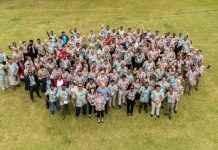
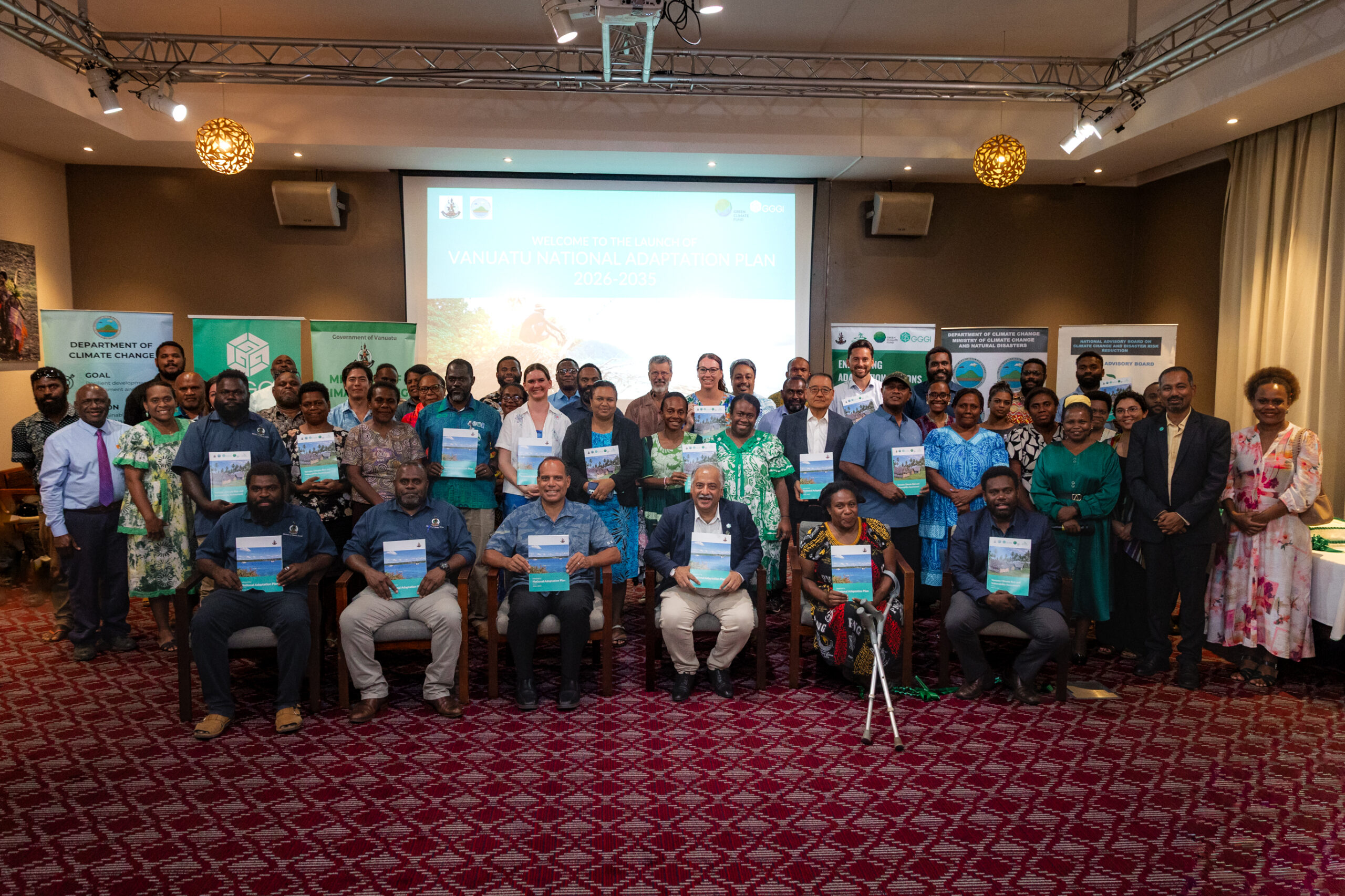
Vanuatu launched its National Adaptation Plan (NAP) 2026–2035 at a ceremony in Port Vila on 2 November, outlining a national strategy to protect communities, livelihoods, infrastructure and natural resources from the growing impacts of climate change.
The plan, together with six Provincial Adaptation Plans (PAPs), sets out adaptation priorities across all six provinces, from Torba in the north to Tafea in the south, and is expected to guide government planning, development investment and access to international climate finance.
Speaking at the launch, Minister for Climate Change, Ralph Regenvanu, said the plan reflected the priorities identified by the people of Vanuatu through extensive national and provincial consultations.
“This National Adaptation Plan draws from everyone’s input. So, the priorities we have in here are the priorities we have identified for ourselves. We now need to join together in a national effort to build resilience,” he said.
The plan identifies nine priority sectors requiring coordinated climate adaptation action: agriculture, forestry, fisheries, infrastructure, tourism, ecosystems, education, health and nutrition, and water, sanitation and hygiene. Across these sectors, the plan sets out 27 national priority adaptation actions, three for each sector.
These priorities were informed by a Climate Risk and Vulnerability Assessment and consultations involving government agencies, provincial representatives, civil society, development partners, and the private sector. The process included consultations in all six provinces, with close to 1,000 participant attendances, around 41 percent of them women.
Director General of the Ministry of Climate Change and National Designated Authority to the GCF, David Gibson, said the plan would provide a framework for managing climate risks while protecting the country’s development gains.
“The National Adaptation Plan is the Government’s strategy to manage climate risk, safeguard development progress, and guide resilient investment. It strengthens our climate rationale for accessing international climate finance and ensures that our climate adaptation efforts are aligned with national development objectives,” he said.
The plan was developed with funding from the Green Climate Fund (GCF) through its Readiness and Preparatory Support Programme, under the project Enhancing Adaptation Actions through the National Adaptation Plan of Vanuatu. The project is being implemented in partnership with the Department of Climate Change, with the Global Green Growth Institute (GGGI) serving as the delivery partner.
In a recorded message delivered at the launch, GCF Director for Asia and the Pacific, Hemant Mandal, reaffirmed the Fund’s commitment to supporting Vanuatu’s climate adaptation priorities.
“The Green Climate Fund stands ready to continue working with the Government of Vanuatu, National Designated Authority and partners, to turn the priorities in this plan into a strong pipeline of country-led adaptation investments,” he said.
GGGI Country Representative for Papua New Guinea, Solomon Islands and Vanuatu, Mohammad Ali Shaikh, said the focus must now shift from planning to implementation.
“Having a National Adaptation Plan is not the finish line. It is the starting line. The real test now is to bring these priorities into budgets and provincial plans, turn them into projects that can attract investment, and make adaptation visible in communities,” he said.
He noted that the Climate Risk and Vulnerability Assessment, which underpins the plan, shows that climate risks in Vanuatu are closely linked, and a single cyclone can cut off roads, clinics, markets and schools at the same time.
With the national framework now in place, Vanuatu faces the next challenge of securing the resources, partnerships and investment needed to turn its adaptation priorities into action. The plan’s Financing Strategy and Roadmap, and its Monitoring, Evaluation, Reporting and Learning Framework, are designed to support this next step.
For communities across the country’s six provinces, the success of the plan will ultimately depend on how effectively these commitments translate into stronger livelihoods, safer infrastructure, and greater resilience to climate change.
For media enquiries, contact: Kelly Vacala – Regional Communications and Knowledge Sharing Lead -Pacific Email: kelly.vacala@gggi.org
Precious Akampumuza, Senior Climate Adaptation Officer, GGGI Vanuatu. Email: precious.akampumuza@gggi.org