

Pacific Island countries have completed, substantially delivered or are actively implementing about 85 percent of regional leaders’ decisions made between 2023 and 2025, but gaps in climate financing, national implementation and social inclusion continue to challenge the region’s long-term development goals.
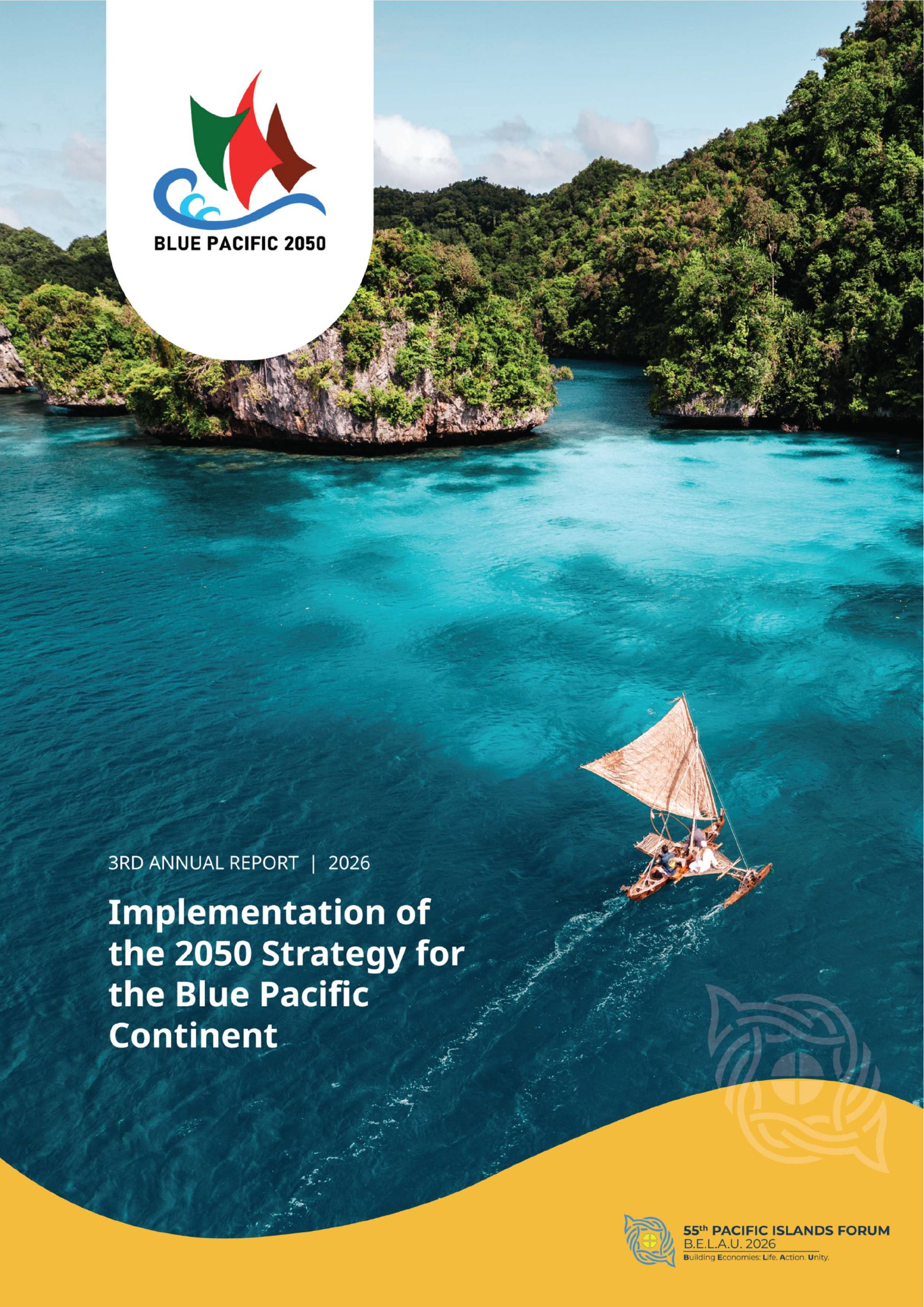
This is highlighted in the ‘Third Annual Report on the Implementation of the 2050 Strategy for the Blue Pacific Continent,’ which reviews progress, achievements and challenges in advancing the region’s shared vision for a peaceful, secure, resilient and prosperous Pacific.
The report, presented by Forum Secretary-General Baron Waqa, says regional unity and collective leadership remain central to addressing growing economic, environmental and geopolitical pressures.
It calls for a development approach that places people, culture, the ocean and the environment at the centre of regional prosperity.
Waqa said the Pacific must remember its identity and traditional knowledge while preparing for future challenges.
The report draws on the theme of the 55th Pacific Islands Forum Leaders Meeting in Palau, B.E.L.A.U – Building Economies, Life, Action and Unity – as a guide for the region’s development priorities.
It says building economies must go beyond economic growth to create resilient and inclusive opportunities that benefit communities, protect the ocean and support young people.
On climate action, the report highlights the Pacific’s growing influence in international climate diplomacy, including recognition of climate change as the region’s greatest security threat, progress in international legal processes and increased attention to climate financing.
However, access to climate finance and technical capacity remain major challenges, with funding and resources still insufficient to meet the region’s adaptation and resilience needs.
The report also identifies continuing gaps between regional commitments and national implementation, particularly for smaller island countries facing limited resources and institutional capacity.
Economic recovery following the COVID-19 pandemic has continued through tourism, fisheries and remittances, but inflation, structural economic constraints and workforce shortages remain concerns.
It also points to persistent challenges in youth unemployment, literacy, gender equality and the participation of women, young people and persons with disabilities in decision-making.
On regional security, the report highlights stronger coordination on transnational crime, disaster response and law enforcement, while calling for continued attention to climate security, digital governance and cybersecurity.
It also identifies health system pressures, particularly non-communicable diseases and gaps in mental health services, as issues requiring sustained regional action.
The report calls for stronger monitoring, better data systems and improved coordination between national governments and regional institutions to ensure commitments translate into practical outcomes for Pacific communities.
It identifies investment in renewable energy, digital infrastructure, the blue economy, labour mobility and inclusive development as important priorities for the next phase of implementation.
Waqa said the 2050 Strategy was more than a regional declaration of ambition and should serve as a shared guide for collective action.
“The 2050 Strategy is not only a statement of ambition; it is a call to collective action and a shared compass for the work ahead,” he said.
He said unity was essential as Pacific countries navigated increasing uncertainty and sought to protect their collective interests.
“Alone, we drift. Together, we navigate uncertainty, strengthen our resilience, and shape the future of our Blue Pacific Continent,” Waqa said.
The report reinforces the need for Pacific-led regionalism, stronger national implementation and sustained investment to ensure the benefits of the 2050 Strategy reach communities across the Blue Pacific Continent.