


By Pita Ligaiula
Pacific Island countries remain vulnerable to the gap between global climate commitments and action on the ground, with new United Nations reports highlighting persistent barriers to climate finance and delays in turning adaptation plans into projects.
The findings come as Pacific leaders continue to push for stronger emissions cuts, more accessible climate funding and urgent support to protect communities from rising seas, extreme weather and other climate impacts.
Three reports released by UN Climate Change ahead of the COP31 climate conference in Antalya, Türkiye, from 9 to 20 November, show governments are increasingly integrating climate action into national policies, but global progress remains insufficient.
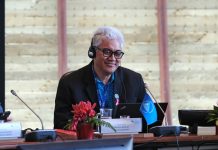
UN Climate Change Executive Secretary Simon Stiell said many developing countries continued to face substantial barriers to delivering their climate commitments.
“Collective progress remains clearly insufficient, global transitions are very uneven, and many countries face substantial barriers to delivering their targets and pledges,” Stiell said.
The findings on climate finance are particularly relevant to Pacific Island countries, many of which need significant investment to strengthen infrastructure, protect coastal communities and prepare for climate-related disasters.
The 2026 National Adaptation Plan (NAP) Progress Report found that 146 countries had initiated or launched their adaptation planning processes as of 20 October.
Of these, 81 developing countries, including 29 least developed countries and 17 small island developing states (SIDS), had submitted national adaptation plans.
However, the report found that having an adaptation plan does not guarantee implementation.
Countries face difficulties preparing project proposals, securing approval, accessing funding and receiving money in time to carry out work on the ground.
The report also identified a shortage of accredited entities and delays in processing funding proposals as obstacles to delivering adaptation projects.
For Pacific countries with limited administrative and technical capacity, these barriers can slow efforts to strengthen climate resilience even when national priorities and plans have been established.
The reports also highlight the wider challenge of mobilising enough finance to meet developing countries’ climate needs.
Global climate finance increased by 32 percent to an annual average of US$1.9 trillion in 2023 and 2024, according to the Standing Committee on Finance.
Finance provided and mobilised by developed countries for developing countries also increased between 2020 and 2024.
However, the assessment found persistent problems with access, affordability and the distribution of funding, while adaptation finance remained insufficient.
These challenges remain central to Pacific demands for climate finance that is accessible, predictable and responsive to the urgent needs of small island developing states.
The reports also warn that global emissions reductions remain far below the levels needed to meet the Paris Agreement’s climate goals.
The 2026 Nationally Determined Contributions (NDC) Synthesis Report found that 127 new climate pledges, representing 154 parties to the Paris Agreement, were recorded between January 2024 and August 2026. Together, they cover about 70 percent of global greenhouse gas emissions.
Despite broader commitments and greater involvement of businesses, communities and local authorities, current pledges are expected to reduce global emissions by only about six percent by 2035 compared with 2019 levels.
Even if all current pledges are fully implemented, emissions would fall by about nine percent, stressing the need for deeper cuts.
For Pacific Island countries, whose climate security is closely linked to the pace of global emissions reductions, the findings reinforce concerns about the gap between international commitments and the action needed to limit warming.
The 2026 Biennial Transparency Report Synthesis Report found that 137 parties had submitted reports covering about 85 percent of global emissions. It also showed that 92percent of reporting parties included adaptation measures in their reports.
UN Climate Change Executive Secretary Stiell said COP31 must help countries move from pledges to implementation through stronger outcomes on emissions reduction, adaptation, climate finance and just transitions.
The conference will also promote practical action through the Global Climate Action Agenda, including expanding electrification, cutting methane emissions, improving access to finance and reducing waste.
For the Pacific, the key challenge remains ensuring international climate commitments translate into timely funding, stronger resilience and measurable emissions cuts.
The reports will inform discussions at COP31, where countries will face pressure to demonstrate how existing commitments can be turned into faster and more effective climate action.