


Pacific countries and the United States have agreed to strengthen maritime security, intelligence sharing and law enforcement cooperation to combat drug trafficking, cyber-enabled crime and illicit financial flows across the region.
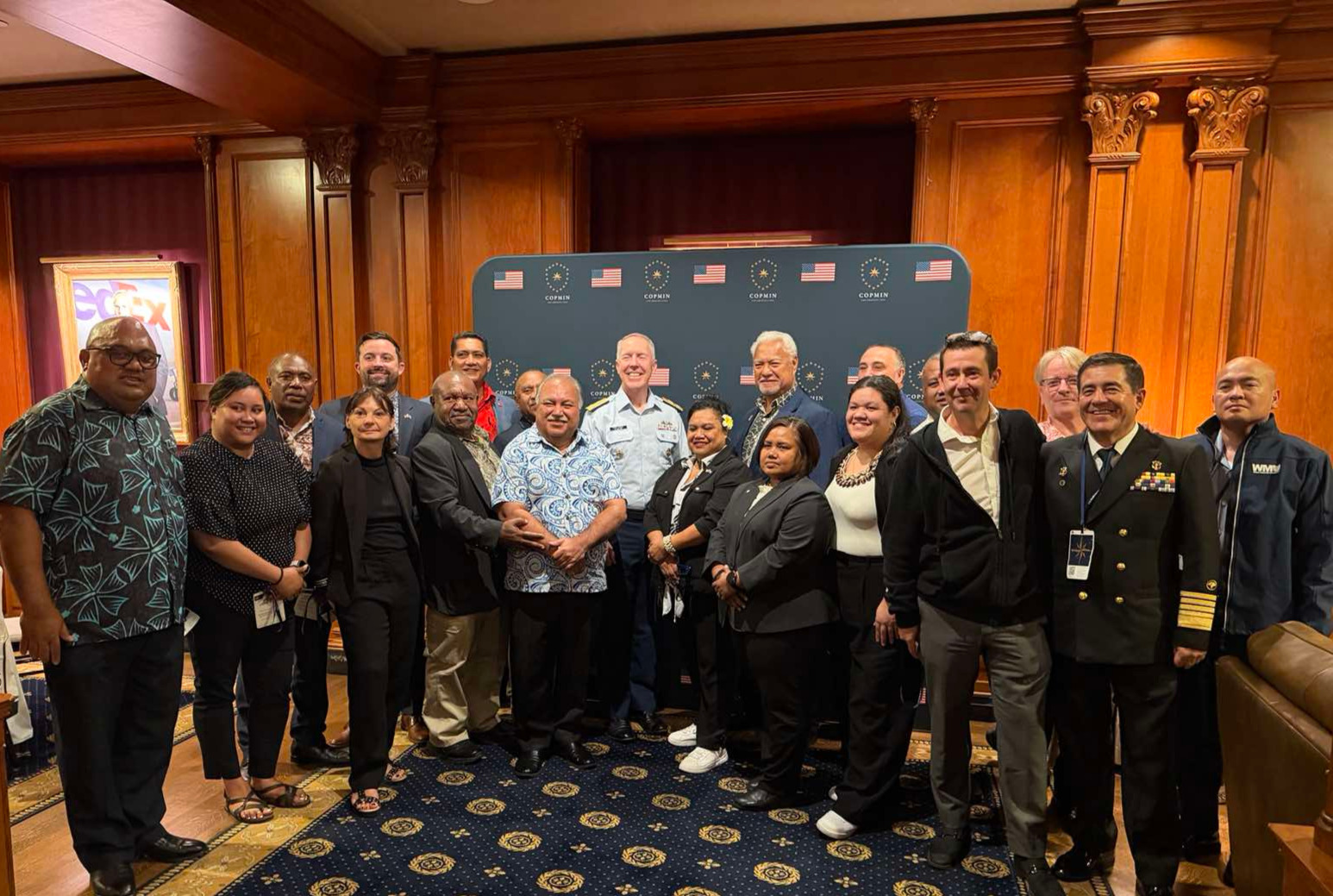
The commitment was outlined in a joint communiqué following the inaugural U.S–Pacific Islands Conference of Police Ministers, hosted by the United States and Palau in Los Angeles on 21–22 October.
The communiqué identifies transnational criminal networks, including those trafficking methamphetamine, cocaine and other synthetic drugs, as a growing threat to Pacific communities and regional security.
Participants said narcotics trafficked through the Pacific by Western Hemisphere cartels had surpassed those originating from Asia since 2024. They also noted that semi-submersible vessels used by cartels had been recovered in the waters of Fiji, the Marshall Islands and Solomon Islands.
The meeting brought together police ministers and senior law enforcement officials from Pacific countries and territories, Australia, New Zealand, the Philippines and Ecuador, as well as France and its Pacific territories. The Pacific Islands Forum Secretariat and Pacific Police Chiefs Conference (PACPOL) Secretariat also participated.
Under the communiqué, participants committed to strengthening maritime and border enforcement capabilities, improving information sharing on trafficking routes and criminal networks, and tightening port security.
Cooperation with the United States could include maritime law enforcement agreements, foreign assistance arrangements and Shiprider programmes, subject to national laws, capacities and consent.
The participants also pledged to strengthen efforts to detect and stop illegal, unreported and unregulated fishing, particularly where transnational criminal groups are involved.
The communiqué calls for a coordinated response to drug-related harm, including community-based prevention, treatment, rehabilitation and reintegration services. It highlights the need to reach people in remote and outer island communities.
Cyber-enabled crime was another priority, with participants identifying large-scale online scams, human trafficking linked to scam operations and the movement of criminal proceeds through formal and informal financial channels as major concerns.
They agreed to increase information sharing on scam operations, criminal infrastructure and cryptocurrency laundering, while building the capacity of national cyber authorities, police and financial intelligence units.
The communiqué also calls for stronger anti-money laundering and cybercrime frameworks and action against corrupt officials who enable criminal networks to operate.
Participants welcomed a United States initiative to develop a cross-regional information-sharing mechanism linking the Pacific with the Americas and maritime Southeast Asia. The mechanism will be developed in consultation with participating countries and coordinated with existing regional arrangements.
They also welcomed the U.S announcement of investments to strengthen law enforcement cooperation, counter drug trafficking and combat transnational crime, in consultation with recipient governments.
The communiqué reaffirmed the central role of the Pacific Islands Forum in setting regional peace and security priorities and said the work would align with the Forum’s Pacific Regional Peace and Security Action Plan 2026–2030.
Participants said cooperation must respect national sovereignty and comply with domestic laws and agreed regional priorities.
The communiqué is a statement of shared intent and is not legally binding. Forum members will report the outcomes of the conference through existing regional security processes.
The participants committed to identifying resources to sustain cooperation and strengthen efforts to protect Pacific communities from evolving security threats.