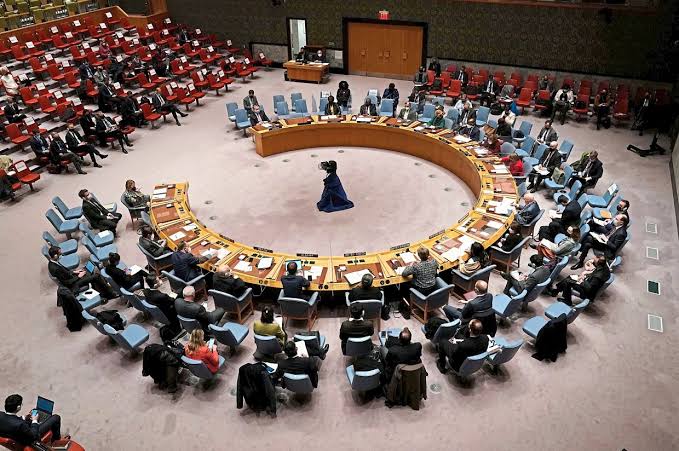
Pacific nations are building international support for a dedicated rotating seat for Small Island Developing States (SIDS) on the United Nations Security Council, alongside calls to give greater weight to climate change as a security threat.
Seventy-three UN member states — more than one-third of the General Assembly — support stronger representation for SIDS on the 15-member Security Council, which comprises five permanent members and 10 non-permanent members.
The campaign argues that small island states, despite their limited contribution to global emissions, face serious security threats from climate change, natural disasters and the potential loss of their homelands.
Fiji is the only Pacific island country recorded as having sought a non-permanent Council seat, applying in 2011 before withdrawing its bid.
Singapore remains the only small island state from the UN’s Asia-Pacific regional group to have served on the Council. Australia, which is currently seeking a seat, and New Zealand belong to the Western Europe and Others group.
There are 39 UN-defined small island developing states with a combined population of about 65 million, alongside 18 UN associate members, or territories, with 8.5 million people. Together, they represent less than one percent of the world’s population.
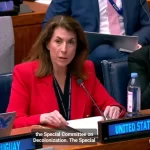
Speaking for the L69 group of 42 countries, Saint Lucia’s Permanent Representative to the UN, Menissa Rambally, said a rotating SIDS seat would improve the Council’s representativeness and accountability.
“The small island developing states ask only for a voice that comes to them in turn. These are not favours this assembly is being asked to grant,” Rambally said.
She said guaranteed representation was necessary for a Security Council that was more inclusive, transparent, effective and democratic.
Timor-Leste’s Permanent Representative, Dionisio Babo Soares, said SIDS perspectives on climate-related security, disasters and emerging challenges deserved greater attention.
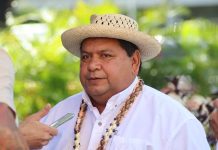
The Federated States of Micronesia’s Permanent Representative, Jeem S. Lippwe, said climate change had become a paramount security issue for countries facing the physical loss of their homelands.
“A council that lacks adequate permanent representation for these vulnerable regions cannot effectively address the defining security challenges,” Lippwe said.
Maldives Permanent Representative Ali Naseer Mohamed said SIDS also brought experience in building coalitions and bridging differences.
“Who sits at the table shapes what the table actually sees,” he said.
Australia’s Permanent Representative, Briony Daley Whitworth, said her country had listened to calls for greater representation for Africa, Latin America and the Caribbean, and the Asia-Pacific region, including options to strengthen SIDS representation.
Nigeria’s Vice President Kashim Shettima said improved representation for Africa should advance alongside greater representation for other developing regions and small island states.
Germany, speaking for the G4 group of Brazil, India, Japan and Germany, said the Council’s legitimacy depended on its representativeness and that SIDS deserved a stronger voice.
Jamaica, representing the Caribbean Community (CARICOM), said delays in Security Council reform were holding back the aspirations of SIDS for guaranteed representation.
San Marino and Spain also backed stronger representation for underrepresented regions and improved access to the Council for small and medium-sized states.
Italy, speaking for the Uniting for Consensus group, said support was growing for proposals that included a rotating SIDS seat.
Any change to the Security Council’s structure would require ratification by two-thirds of UN member states, including all five permanent members.