
Israel voted against all United Nations resolutions concerning decolonisation of six Pacific territories, yet its foreign minister says Pacific leaders have welcomed the country into the Pacific Islands Forum (PIF) family as a Dialogue Partner.
The contrast raises questions about the Pacific’s commitment to self-determination and the criteria governing admission to the regional organisation.
At the UN General Assembly’s Fourth Committee on 15 October, Israel and the United States were the only countries to oppose all resolutions considered on decolonisation, including measures covering reporting obligations for administering powers, dissemination of decolonisation information, economic activities affecting territorial peoples, education and training opportunities, and implementation of the UN Declaration on decolonisation.
The United States explicitly called for the abolition of the UN Special Committee on Decolonisation’s mandate, while Israel did not address the committee.
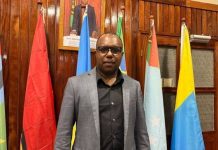
Five days later, Israeli Foreign Minister Gideon Sa’ar said on social media that PIF Secretary-General Baron Waqa had informed him that Pacific leaders accepted Israel as a Forum Partner during the 55th PIF Leaders Meeting in Palau.
The claim places Israel’s reported acceptance against the background of its voting record on an issue central to Pacific regional policy.
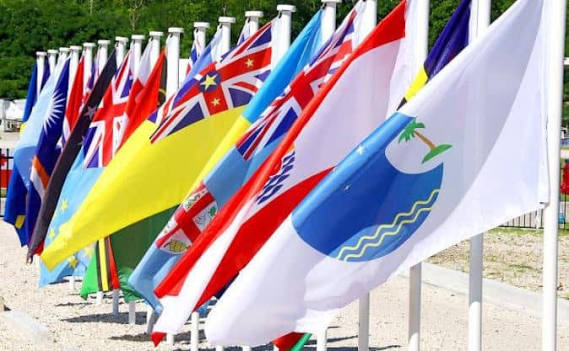
Decolonisation has been a founding principle of the PIF since its establishment in 1971, with Pacific leaders repeatedly affirming the right of peoples in non-self-governing territories to determine their political future.
However, the 55th PIF Leaders Meeting communique did not name Israel or any other country as having been admitted as a partner.
The PIF Secretariat has also made no subsequent public statement confirming Israel’s status.
The communique said leaders had agreed that the Secretary-General would communicate decisions on the review of the regional architecture and partner status to partners in line with an endorsed communication approach.
The Forum’s last public update specifically concerning Israel was a meeting with ambassadors and Israel’s international development cooperation agency, Mashav, on 18 October. It made no reference to Israel’s partner status.
Under the PIF’s published criteria, Dialogue Partners must demonstrate a commitment to advancing Pacific leaders’ vision and priorities, maintain a long-term commitment to the region, and share common interests and positions on international issues.
They are also expected to be transparent about their economic, political and strategic interests in the Pacific and use their international networks to support Forum priorities.
Six of the 17 territories on the UN list of Non-Self-Governing Territories are in the Pacific: American Samoa, French Polynesia (Mā’ohi Nui), Guam, New Caledonia (Kanaky), Pitcairn and Tokelau.
At their 1981 meeting, Forum leaders reaffirmed their support for self-determination and independence for non-self-governing Pacific territories, including the French territories.
In 1991, leaders again affirmed the importance of the universal right of peoples to self-determination in accordance with the UN Charter and the principles and practices of the United Nations.
The UN addresses the six Pacific territories under its decolonisation framework. The Occupied Palestinian Territory, comprising the West Bank, East Jerusalem and the Gaza Strip, is addressed under the framework of belligerent occupation and international humanitarian law rather than through the UN Special Committee on Decolonisation.
While Sa’ar’s statement presents Israel’s reported acceptance as a sign of closer engagement with Pacific leaders, the absence of public confirmation from the PIF Secretariat leaves the country’s formal partner status unclear.
The question remains whether Israel’s reported welcome into the Pacific family is consistent with the region’s long-standing commitment to decolonisation and self-determination.