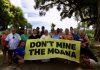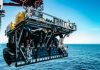
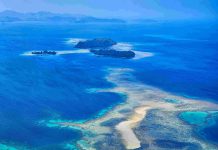

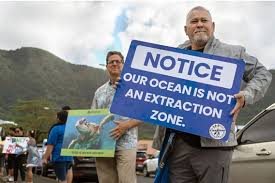
A legal environmental group has sued the U.S government in a bid to stop the Trump administration from pushing through with the 19 November auction of 31 million acres of mineral-rich seabed surrounding American Samoa.
Earthjustice petitioned the federal court in Hawaii for injunctive relief following the Marine Minerals Administration’s issuance of the final notice of lease sale for potential deep-sea mining exploration in a section of the waters off the U.S territory.
The U.S government will lease two areas, each for a 20-year term, at a minimum bonus bid of US$3 million to map American Samoa’s outer continental shelf lands.
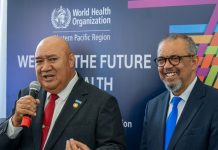
“Critical minerals are no longer just commodities; they are a vital strategic asset in global competition, essential for reaching our energy efficiency goals, strengthening our national defence and securing domestic supply chains,” said Mike Olsen, acting MMA director.
The areas targeted for exploration are rich in nickel, cobalt, and manganese, which are used to build batteries, electronics, and other products.
Earthjustice, however, challenged the MMA’s legal authority to sell mineral leases off American Samoa.
Suing on behalf of Faleula o le Manu‘atele, Fa‘asao Amerika Samoa and Conservation Council for Hawaii, Earthjustice argued that the Samoan leaders who ceded lands and waters to the United States signed two treaties that protect Samoan control over the territory’s assets.
Earthjustice cited the Instruments of Cession, which “secured the promise that the federal government would pay fair consideration for the use of ‘land, or any other thing’ in American Samoa.”
The 1929 Ratification Act “ratified that promise,” stipulating that the U.S public land laws “shall not apply to American Samoa,” the nonprofit legal group said.
“Congress has never passed a ‘special law’ authorizing mineral leasing of submerged public lands surrounding American Samoa,” the lawsuit states.
This was the second lawsuit Earthjustice filed against the proposed lease sale.
In August, the group sued the National Marine Fisheries Service for approving MMA’s “finding of no significant impact” without complying with the requirements under the Endangered Species Act and other federal laws.
The federal agency emphasised that a winning bid and a lease do not grant immediate permission to harvest deep-sea minerals; they only authorise preliminary activities such as mapping.
MMA said the lease award will be followed by a multi-stage post-auction regulatory process prior to physical exploration, testing or full-scale commercial harvesting.
“MMA recognises the ocean floor surrounding American Samoa carries cultural, economic and environmental significance, requiring that the pursuit of national security and energy readiness is balanced with rigorous environmental stewardship,” Olsen added.
Olsen assured American Samoa that as MAA evaluates potential deep-sea resources, its priority remains guided by science, environmental review and meaningful engagement with the people and leadership of the territory.
The MMA’s environmental assessment report dated 14 October said the proposed exploration “is not expected to constitute an irretrievable and irreversible commitment of resources, since the leases considered do not authorise any mining operations.”
The report said that marine cultural resources are unlikely to be found in the deepwater action area.
However, MMA said that existing federal historic preservation and environmental laws and regulations would reduce the magnitude of overall impacts on any cultural resources present in the lease areas.
In his official response to MMA’s proposed lease sale, American Samoa Governor Nikolau Pula asked the U.S government for equitable federal-territorial revenue sharing from commercial operations.
While saying it supports the governor’s recommendation, MMA said it is not currently authorized by law to offer revenue sharing.
“MMA notes the submission of H.R. 10318 by representative King-Hinds that recognises the importance of revenue sharing in Pacific territories,” the agency said.
MMA said it is working with the Department of the Interior leadership, lawmakers and relevant stakeholders to ensure American Samoa receives a fair share of revenues generated from offshore mineral leasing associated with the territory.
Chris Eaton, Earthjustice attorney, said the lawsuit seeks to “protect the Samoan lands and waters that hold histories, feed families, and shelter sacred beings before deep-sea mining causes irreversible destruction.”
“The more steps the Trump administration takes to breathe air into this speculative industry, the more that we question whether the Trump administration is making any effort to follow the laws,” he said.
Jonee Peters, executive director of the Conservation Council for Hawaii, noted that the seabed around American Samoa and the Rose Atoll Marine National Monument is home to marine biodiversity, including endemic and endangered species.
“This type of extractive industry will destroy marine habitats, disrupt carbon sinks, and displace marine life, food sources and the cultural identity of this area,” Peters said. “It will cause a chain reaction of devastating effects across the Pacific region by altering cross migrations, loss of species and underwater pollution,” said Peters.