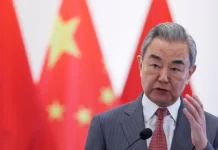

China’s cooperation with the Pacific islands is not part of a geopolitical competition, top diplomat Wang Yi told a delegation of politicians from the region last Friday.
The comments come as Beijing and Washington vie for influence in the South Pacific.
“China’s engagement with Pacific Island countries is a form of South-South cooperation based on mutual assistance and support,” Wang said, according to a statement from the Communist Party’s International Department.
“This cooperation does not interfere in the islands’ internal affairs, impose political conditions, engage in geopolitical rivalry or target third parties, nor is it subject to interference by third parties.”
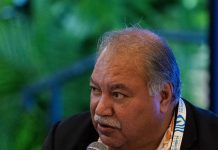
Wang made the remarks during a meeting in Beijing with a joint delegation of Pacific Island politicians led by Tonga’s Deputy Prime Minister Viliami Latu.
Wang said China’s diplomacy consistently stood with developing and smaller countries, describing Beijing as a reliable partner to Pacific Island nations.
“China supported the islands in pursuing development paths suited to their national circumstances and chosen by their own people, as well as in safeguarding their sovereignty, security and development interests,” he said.
He urged the islands to continue upholding the one-China principle, saying Taiwan’s return to China after World War II formed an important part of the post-war international order.
The delegation members described China as “a good friend and partner”, thanking Beijing for its long-standing help with their economic and social development, according to the department’s statement.
They said the Pacific islands would continue to uphold the one-China policy and deepen cooperation with Beijing in infrastructure, agriculture, healthcare, education, disaster prevention and relief, and capacity building.
Beijing sees Taiwan as part of China to be reunited by force if necessary. Most countries, including the US, do not recognise the self-ruled island as an independent state. However, Washington is opposed to any attempt to take Taiwan by force and is committed to supplying it with weapons.
Beijing has sought to persuade Taiwan’s remaining diplomatic allies in the region to switch formal recognition from Taipei to mainland China. Nauru, Kiribati and the Solomon Islands have all severed formal ties with Taipei and established diplomatic relations with Beijing.
However, the Solomon Islands has since sought to rebuild ties with Washington, signing an agreement allowing U.S Coast Guard vessels to patrol its waters alongside local police officers.
The diplomatic contest is unfolding alongside growing competition in the South Pacific, with Beijing seeking to deepen its diplomatic and economic ties while Washington and its allies offer new funding.
At this year’s Pacific Islands Forum leaders’ meeting in Palau, Washington and Canberra unveiled a joint US$580 million aid package for the region.
In a parallel move, the U.S and New Zealand also pledged US$50 million and NZ$17.5 million (US$9.8 million), respectively, to upgrade a former World War II port in the Cook Islands.
China’s expanding role has also drawn scrutiny from Australia and New Zealand. In July, the two countries criticised Beijing after it launched a ballistic missile from a nuclear-powered submarine into international waters in the South Pacific, citing short notice and a lack of transparency.
Despite the intensifying competition among outside powers, Pacific Island leaders have stressed that regional security and development priorities should be determined by the island nations themselves.