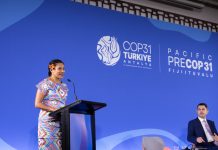

Green Climate Fund Executive Director Mafalda Duarte has warned that climate finance must be delivered faster and at greater scale, saying Pacific communities cannot afford to wait years for resilience projects while facing existential climate threats.
Duarte told Pacific leaders at the Pacific Pre-COP31 plenary in Denarau that her visit to Tuvalu had demonstrated the reality of climate vulnerability in a way scientific reports could not.
“There is a very big difference between reading scientific reports, hearing stakeholders talk about climate change and actually experiencing firsthand being in the islands.
“I have been in many countries and places around the world that have been impacted by climate change, but I have never been in one where the existential risk was so alive,” she said.
Duarte said Tuvaluans and people in other vulnerable countries were living with the prospect of losing their homes and country within their lifetime.
“This prospect should not be considered acceptable anywhere for anyone,” she said.
She highlighted the Tuvalu Coastal Adaptation Project (TCAP), financed by the Green Climate Fund in 2016 and completed in 2024, which she said had provided a safe area during recent high tides.
Duarte said the project was now being replicated through two additional phases that would reclaim about 20 hectares of land, equivalent to about 20 percent of the island’s total area.
She said the project demonstrated that climate finance could protect communities before climate shocks became disasters.
“Climate finance works.
“It reaches people before a shock becomes a catastrophe. It protects the foundations of economies, food, water, health, education, energy and can unleash significant economic opportunities,” Duarte said.
Duarte said climate finance should not be viewed as aid or charity but as an investment in global security.
“Climate finance is not charity. It is an investment in shared human and economic security,” she said.
She said the scale of global spending showed that resources could be mobilised for climate resilience if countries made it a priority.
“If we can invest almost three trillion dollars globally in just one year in military spending and even more so in fossil fuel subsidies, we can certainly scale investments that are the only guarantee of energy, food and water security,” she said.
Duarte said climate finance institutions also needed to be capable of delivering funding at the scale and speed required.
“We need ambition, we need scale of investments and we also need institutions that can deliver at that scale in a timely manner,” she said.
She said the GCF was reforming its operations to improve delivery and highlighted increased investment in the Pacific.
“Just here in the Pacific, we doubled our investments in three years from US$500 million to US$1 billion, unlocking US$2.4 billion,” Duarte said.
She added that another US$300 million in Pacific financing was due to go before the GCF board later this month.
Duarte said the experience in Tuvalu should strengthen the case for greater climate investment and urged leaders not to ignore calls from Pacific communities for action.
“Let us allow ourselves to be inspired by what we saw in Tuvalu and not allow the call from the elder lady and the girl or even the students here today go unheard and unanswered,” she said.
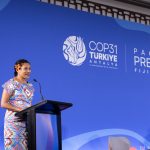
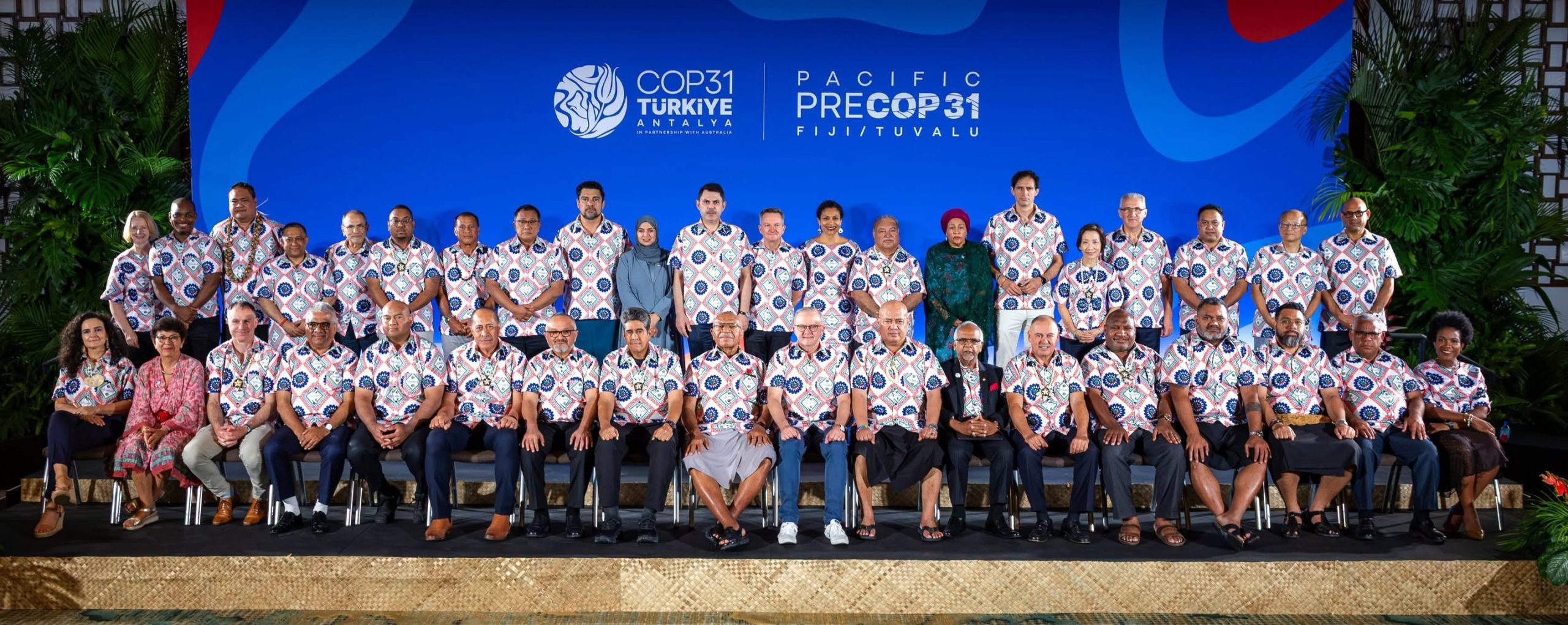
The Pacific Pre-COP31 meeting concludes in Denarau today with leaders expected to sign the Taku Pakasoa Declaration, setting out regional priorities ahead of COP31 in Türkiye.