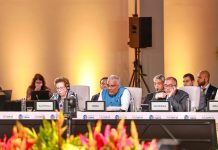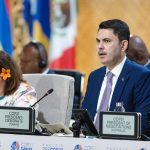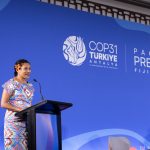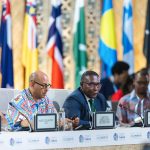
Antigua and Barbuda has backed the Pacific’s call to keep the 1.5C target within reach, protect the sovereignty of climate-vulnerable states and deliver climate finance at the scale needed to prevent communities from being forced from their homes.
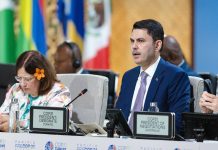
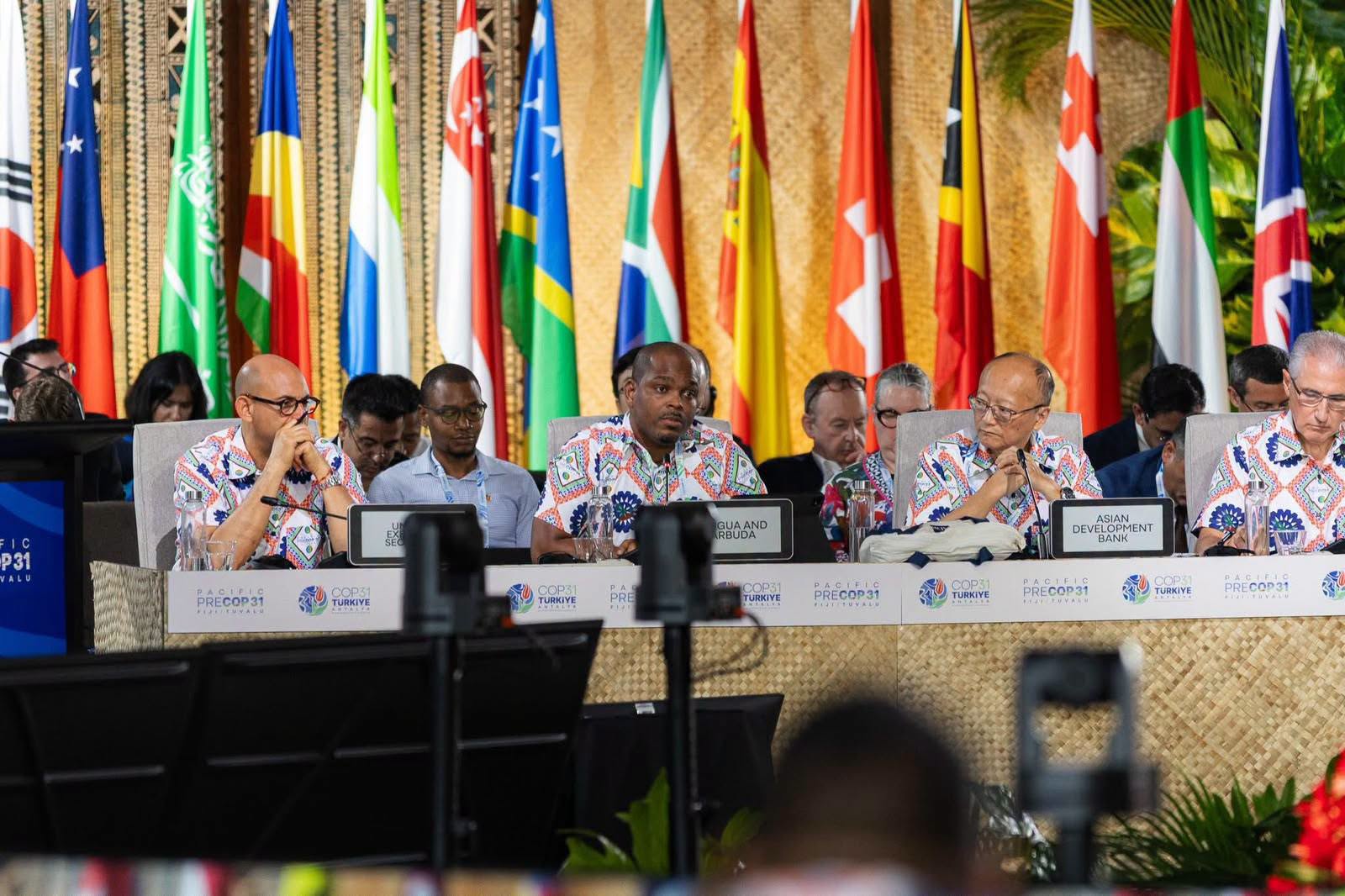
Antigua and Barbuda Minister for Environment Michael Joseph told Pacific leaders at the Pre-COP31 plenary in Denarau that his visit to Tuvalu showed the close similarities between the climate threats facing Pacific and Caribbean island states.
“I saw vulnerable coastlines, homes and communities just metres from the sea and people determined to remain on their land, preserve their culture and a way of life, defend their right to economic development and shape the future they choose for themselves,” Joseph said.
Joseph said Antigua and Barbuda understood Tuvalu’s position that relocation was not the answer.
In 2017, Hurricane Irma devastated Barbuda, making the island uninhabitable and displacing its population.
“One climatic event, a few hours, the entire island community became uninhabitable and its people displaced.
“So when the people of Tuvalu say relocation is not the answer, that they will remain, reclaim their land and defend their sovereignty, Antigua and Barbuda understands,” Joseph said.
Joseph said the issue went beyond physical infrastructure.
“This is about more than infrastructure. It’s about home, culture, ancestry, tradition, memory, identity and most important, a way of life,” he said.
He said young people were now demanding action from the leaders responsible for shaping climate policy.
“Even up to today, young people like 13-year-old Melelusi Sokotia, who gave a youthful and emotional plea in Tuvalu, is urging us, the global leaders, for protection.
“That future is now. We must listen and we must act,” Joseph said.
Joseph said his generation was no longer outside international climate negotiations demanding action.
“My generation is no longer standing outside these rooms asking for action. We are now sitting in them, carrying a responsibility for what happens next,” he said.
He identified three priorities from the Pre-COP31 discussions in Tuvalu.
First, he said the 1.5C target must remain within reach because it directly affects the ability of island communities to remain on their land.
“1.5 degrees is not just a number.
“For our islands, it means where the coastlines remain habitable, where the fresh water remains available, where the reefs and fisheries survive, and where the families can remain in communities they call home,” Joseph said.
He said climate action must also protect people, cultures, livelihoods, dignity and sovereignty.
Joseph said the third priority was finance, arguing that the era of small-scale adaptation projects was no longer sufficient.
“The time for piecemeal adaptation has passed.
“We need transformational investment in coastal protection, resilient infrastructure, water security, ecosystems, and national scale adaptation,” Joseph said.
He said Small Island Developing States (SIDS) and Least Developed Countries (LDC) must be prioritised, with finance that is accessible, concessional and predictable.
“Finance must be accessible, concessional, predictable, and delivered at the speed and scale required,” Joseph said.
Joseph said the test of the Pacific Pre-COP31 meeting would be whether the concerns heard in Tuvalu translated into decisions at COP31 in Türkiye.
“The test of this pre-COP is whether the message we heard in Tuvalu travels with us to COP31 and changes what we do when we get there,” he said.
Antigua and Barbuda strongly endorsed the Taku Pakasoa Declaration, including its calls to keep 1.5C within reach, defend continuing statehood and sovereignty, and improve access to climate finance for SIDS and LDCs.
“As a Caribbean nation, we stand in solidarity with Tuvalu and with the wider Pacific.
“Different oceans, but the same determination. That our people will remain, our cultures will endure, and our islands will have a future,” Joseph said.