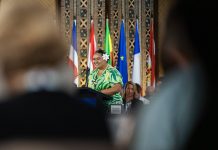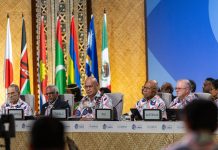


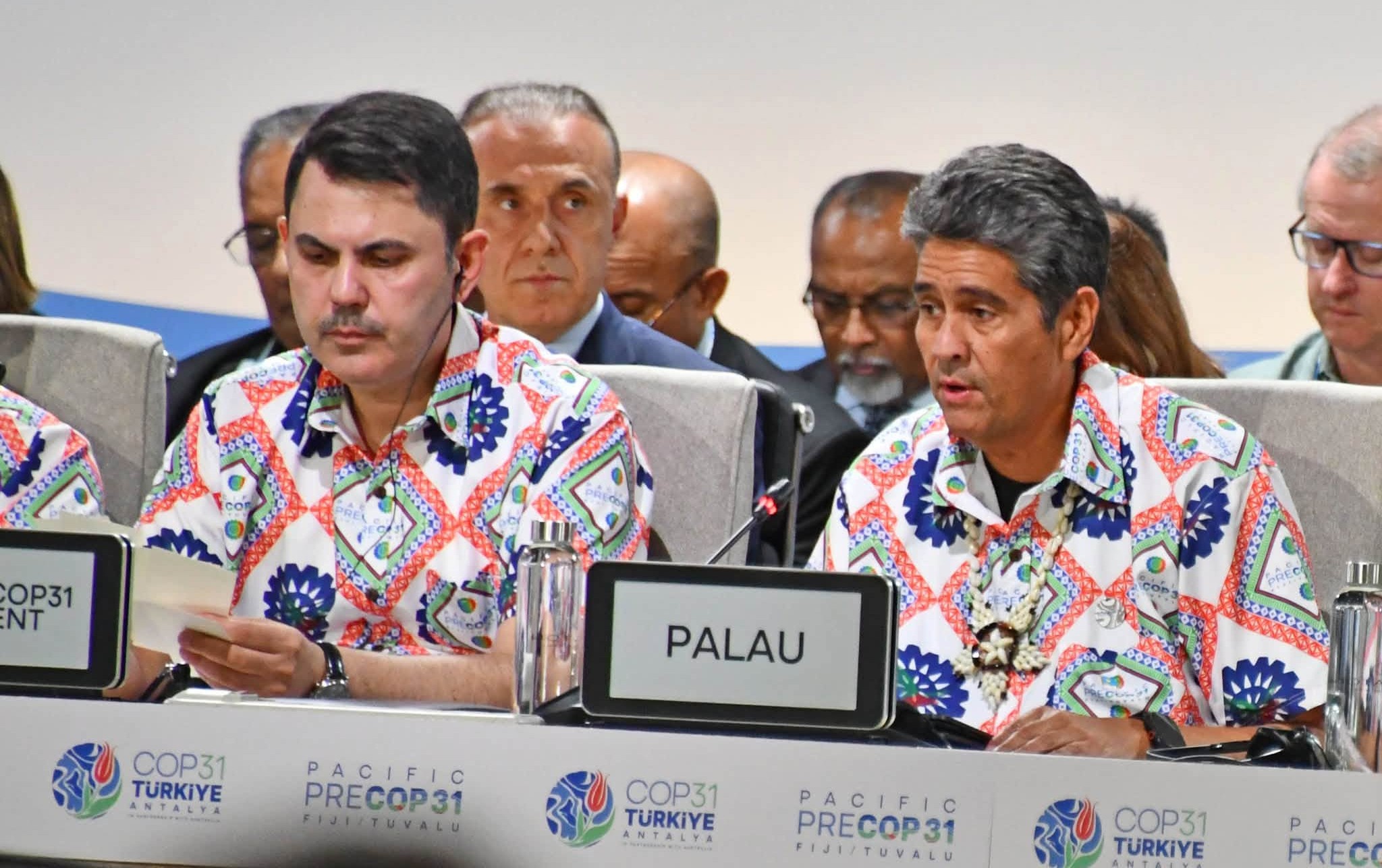
Forum Chair and Palau President Surangel Whipps Jr has called on international leaders to replace slow climate finance and debt with direct, grant-based investment, warning that Pacific nations are running out of time as the impacts of climate change intensify.
Addressing Leaders Plenary at the Pacific Pre-COP31 in Fiji, Whipps said the region was not seeking charity but finance delivered at the speed required to protect communities, economies and oceans.
“We are not asking for charity; we are demanding justice to act at the speed required to keep our heads above water,” Whipps said.
He urged COP31 to deliver practical action on renewable energy, climate resilience and ocean health, arguing that continued reliance on fossil fuels was increasing the Pacific’s vulnerabilities.
Whipps, who chairs the Pacific Islands Forum and the Alliance of Small Island States (AOSIS), said the recent visit to Tuvalu had provided a stark reminder of what was at stake.
“What we have seen over the last two days in Tuvalu should remind us all of the real reason we are gathered in the Pacific region this week,” he said.
He said the latest UN Environment Programme assessment on limiting global warming underscored the threat to the 1.5°C target under the Paris Agreement.
“The 1.5 is about our security, our prosperity, and the future of our generations,” Whipps said.
He outlined three Pacific priorities for COP31.
The first is stronger use of climate science, including ensuring the Seventh Assessment Report is delivered in time to inform the second Global Stocktake and the setting of 2040 climate targets.
The second is a new Pacific Renewable Energy Drive aimed at accelerating the region’s transition away from fossil fuels.
Whipps said the Pacific should pursue a 100 percent renewable energy future and pointed to the regional 100% Renewable Energy Investment Prospectus, which aims to mobilise an estimated US$2 billion for priority renewable energy projects.
“We must translate this ambition into tangible outcomes,” he said.
Whipps also backed Brazil’s efforts to develop a roadmap for the transition away from fossil fuels, calling for clear targets, timelines and trajectories, supported by milestones and transparent reporting.
His third proposal is for COP31 to become the first “Blue COP”, recognising the Pacific’s dependence on the ocean and the link between ocean health and climate security.
Using a canoe analogy, Whipps described Pacific islands as a vessel damaged by a much larger ship, with climate finance arriving too slowly to prevent it from sinking.
“Our canoe is taking on water. We are sinking,” he said.
He criticised climate finance systems that provide small amounts of assistance through lengthy bureaucratic processes, followed by loans that increase the debt burden of vulnerable island states.
“They hand us a tiny patch to cover a gaping hole. And the bureaucratic process just to receive that patch is so slow that the water fills the hull while we wait,” he said.
“To rebuild our vessel so it can survive the next storm, we are offered loans — debt that adds weight to a sinking boat.”
Whipps called for greater investment in the Unlocking Blue Pacific Prosperity initiative and urged partners to help capitalise the Pacific Resilience Facility (PRF), which is seeking US$500 million to strengthen climate resilience at community level.
He said the special PSIDS climate finance event during the COP31 Leaders Segment on 12 November should be used to secure direct, grant-based investment.
“Not debt, not slow promises — into our energy transition, resilience, and ocean health,” he said.
Whipps said Pacific leaders would continue pressing for action while bringing regional solutions to the global climate negotiations.
“Let us unlock the finance, cut the red tape, and rebuild this canoe together so our children inherit a future of hope, not a memory of dry land,” he said.