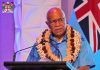
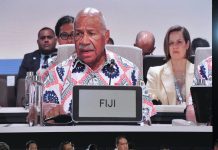
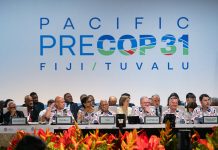
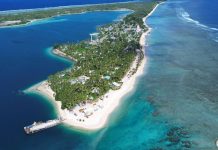
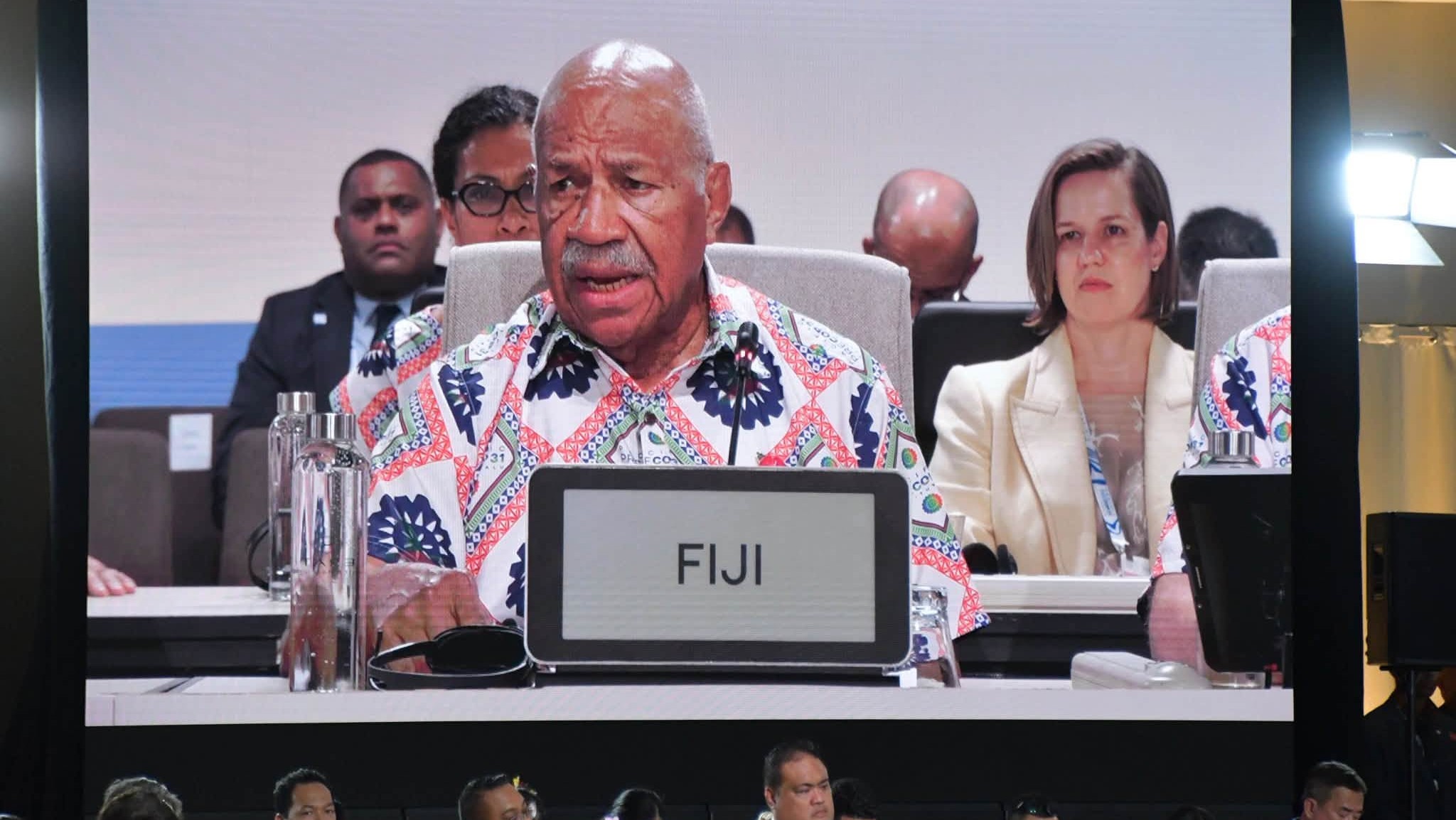
Fiji Prime Minister Sitiveni Rabuka has challenged Pacific leaders to turn their climate commitments into action, saying the Pacific must use Tuvalu as a measure of whether the world is delivering the support vulnerable island countries need.
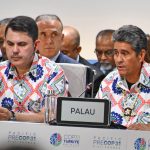
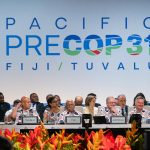
Opening the Pacific Pre-COP31 Leaders’ Plenary in Denarau, Rabuka said leaders had a responsibility to ensure their decisions ahead of COP31 translate into tangible results for communities facing climate change.
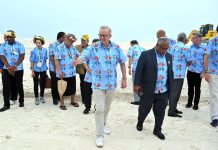
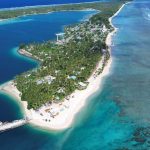
“Many of us have come directly from Tuvalu.
“I want to thank the Prime Minister and the people of Tuvalu for opening their home to the world and providing the leaders the space on the shores of Funafuti to find common ground,” Rabuka said.
The leaders had spent a day and a half in Tuvalu before returning to Fiji for the plenary, where they are expected to endorse and sign the Taku Pakasoa Declaration ahead of COP31 in Antalya, Türkiye.
Rabuka said the leaders’ discussions in Tuvalu had demonstrated broad agreement on the challenges facing the region and the need for collective action.
“Our deliberations have shown that we do not lack knowledge or understanding of risks.
“The science is understood,” he said.
He said the Taku Pakasoa Declaration must make clear the commitment to act on that knowledge.
“Our declaration must make our commitment to close the gap between what we know and what we do crystal clear.
“Closing that gap is what leaders are for. It is what we are here for. And it is what the world expects,” Rabuka said.
Rabuka said the commitments made in Fiji would guide ministers and negotiators as they prepare for COP31.
“This leaders’ plenary is here to set the direction for the week.
“Ministers begin their work tomorrow. And what leaders say in this room tonight will inform their engagement and inform directives given to the COP31 negotiators,” he said.
He urged leaders to assess the success of climate action by looking at what happens in Tuvalu over the coming decades.
“Please see Tuvalu as the proxy for evaluating our efforts.
“We must ask, in five years’ time, has Tuvalu received the support needed to expand the coastal protection efforts that they have begun?,” Rabuka said.
He said the test must continue over 10 and 20 years.
“In 10 years to 20 years’ time, have the roads been worked on and the land on which we spoke still dry?” he asked.
Rabuka called on leaders to commit to protecting Pacific communities while addressing the causes of climate change.
“I ask that we make the commitment needed to protect both the smallest and the largest of us,” he said.
“That we signal unequivocally that we are committed to curtailing the overshoot that contravenes our legal obligations.”
He said the Pacific had the scientific and technological capacity to act.
“We can be bold, because science is on our side. Technology is ready, and our people’s future relies on us,” Rabuka said.
“That means we must all be part of the solution. We must come together, united.”
Rabuka said the Taku Pakasoa Declaration was intended to strengthen Pacific unity and establish common ground ahead of COP31.
“This is what the Taku Pakasoa seeks to do: unite our regions, unite our efforts, and find common ground,” he said.
He said the Pacific also wanted to shift the way the region was viewed internationally — from being defined by climate vulnerability to demonstrating solutions.
“Here in the Pacific, as a region, and as a voice of the world’s largest ocean, we aim to create islands of innovation, to demonstrate and scale up solutions, and to move beyond being seen as a region where only the problem is measured.
“To the place where solutions are shared,” Rabuka said.
He linked this approach to the Pacific’s push for an Ocean of Peace, saying regional cooperation must extend to protecting communities and future generations.
“Tonight I would add that the same duty binds us all.
“People who are not in this room, the communities on the most exposed shores, the generations who will inherit what we decide at COP31,” Rabuka said.
Rabuka called on leaders to use the Pre-COP31 meeting to demonstrate that international cooperation can deliver results.
“Let us show the world that multilateralism can rise to the challenge.
“That climate harm will not continue unaddressed. That when we come together, listen, and engage, action will follow,” said Rabuka.