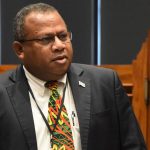
Fiji’s Prime Minister Sitiveni Rabuka has called on world leaders to heed the Pacific’s warning on climate change, saying the impacts being experienced by island communities are risks that will eventually affect the wider world.
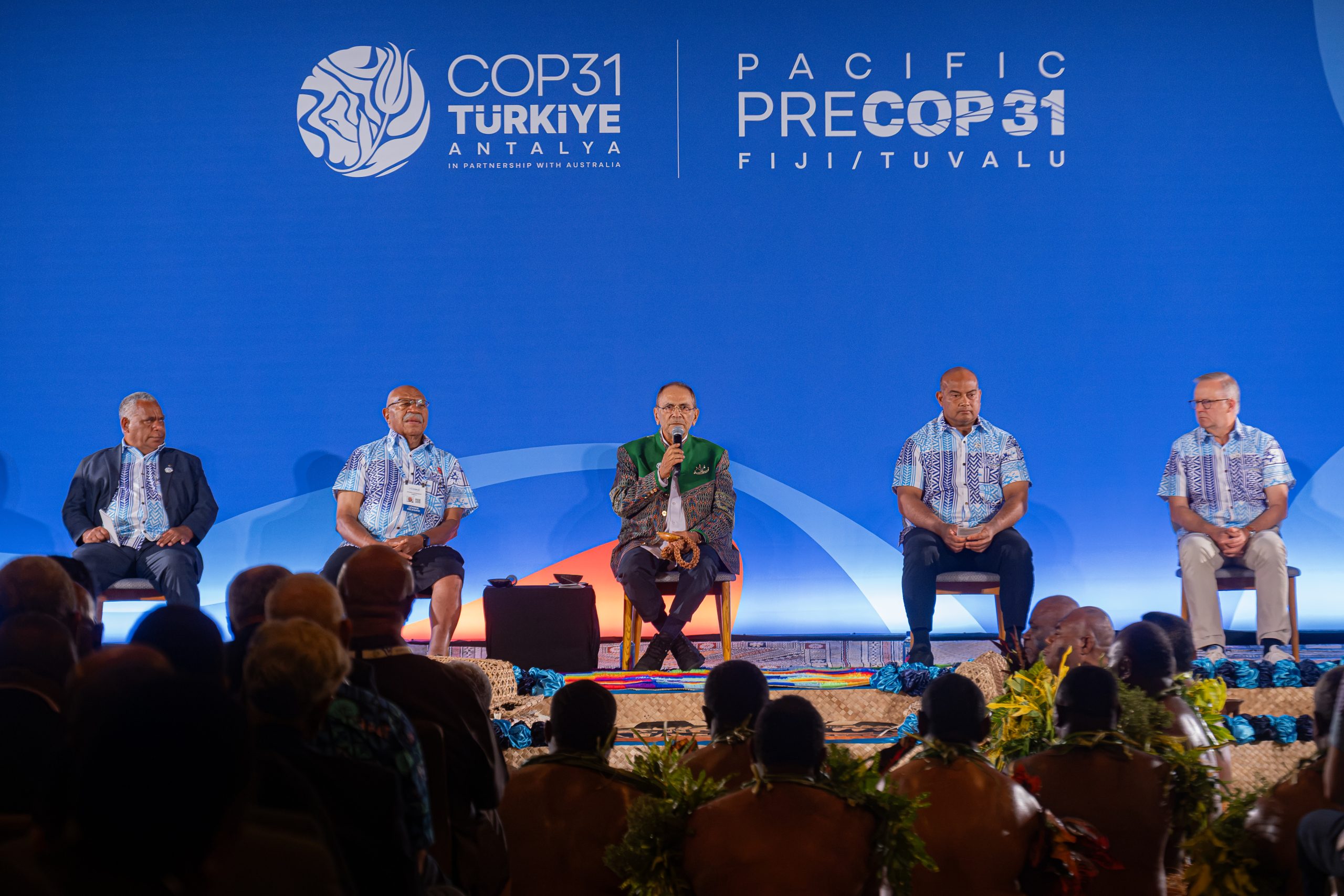
Rabuka made the comments at a traditional welcome ceremony for leaders, ministers, ambassadors, delegates and other guests attending this week’s climate discussions in Fiji.
He said the Pacific should not be viewed simply as a region needing sympathy, but as a frontline indicator of what other parts of the world could face.
“I am asking you to look at us as a bellwether – indicating the scale of the challenges to come,” Rabuka said.
“Frontline communities are where risk becomes visible first.”
He said rising seas, warming oceans, water shortages and food insecurity were already tangible realities for Pacific communities.
“These are not Pacific risks. They are human risks. They are shared risks,” he said.
Rabuka said the impacts of climate change in the Pacific were connected to what happens elsewhere in the world.
The Pacific Ocean covers roughly a third of the planet and is “the engine room of the world’s weather”, he said.
Warming ocean temperatures and El Niño can affect rainfall and harvests, as well as contribute to floods, droughts and fires in different parts of the world.
“What begins in our waters arrives in yours,” Rabuka said.
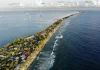
He said visiting leaders would have the opportunity to see some of those impacts for themselves during the week, including in Tuvalu.
“There, the climate crisis is not a forecast. It is the king tide at the door, the salt in the garden, and the hardest of questions: how long can a community stay?” he said.
Rabuka also used the traditional sevusevu ceremony to draw attention to the relationship between Pacific communities and their environment.
He explained that the presentation of kava represents a request to be received and establishes a relationship between host and guest.
Rabuka said that relationship also reflected the kind of cooperation needed internationally to address climate change.
He also spoke about the Fijian greeting bula, which means life.
Rabuka said the word reflected what was ultimately at stake in the climate discussions.
“Not abstractions, not clauses and brackets, but life. The life of a village. The life of a reef. The life of a nation whose highest ground is only a few metres above the sea,” Rabuka said.
For Pacific people, he said, land, sea and people are interconnected and are understood as the Vanua.
“What harms one part harms all,” he said.
“Island or continent, small or large, we share one ocean, one sky, and one set of consequences.”
Rabuka said traditional Pacific knowledge had long relied on careful observation of the environment, with elders reading changes in the sky, tides, trees and birds to determine when to plant, fish or move to safer ground.
“It was not superstition. It was attention, and attention kept people alive,” he said.
He compared the traditional sounding of the davui, or conch shell, to the warning now coming from the Pacific.
“And when danger came, the davui was sounded. Its call carried two meanings: come together and take heed,” Rabuka said.
“The Pacific Ocean is sounding the davui now. And it is not sounding it for us alone.”
He said the interconnectedness of the world’s countries meant no nation could consider itself isolated from the consequences of climate change.
“It is a strange thing for a nation of islands to say that no one is an island. But it is true.”
Rabuka urged countries to keep the 1.5-degree Celsius temperature goal within reach, improve access to climate finance and give the ocean a greater role in international climate negotiations.
“Keep 1.5 within reach. Make finance reach the communities that need it. And give the ocean the seat at the negotiating table that its role in our climate demands,” he said.
He also called for discussions during the week to follow the spirit of talanoa – open, inclusive and honest dialogue.
“Let us be generous in listening, slow to blame, and focused on finding solutions that serve the common good,” Rabuka said.
The Prime Minister ended the traditional welcome by telling the visiting leaders they were now guests of Fiji.
“You are under the protection of the Vanua, and you are family,” he said.