

As negotiators from Pacific Small Island Developing States (PSIDS) strategise and finalise their plans in the lead up to COP31 in Türkiye, there is renewed purpose and a sense of urgency to their work.
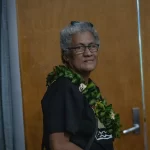
“The Pacific must keep pushing to hold the line on 1.5. We must continue to push and hold high emitting countries, this is not over yet,” said Kathy Jetnil-Kijiner, the Climate Envoy for the Republic of the Marshall Islands (RMI).
Florence Iautu, of Vanuatu, concurs. “This is our lifeline, it’s about our survival. There is no time to waste,” she said.
Takena Redfern, from Kiribati, adds: “Kiribati’s message here in Fiji and going forward to COP31 is that we need urgent actions to avert and move away from the pathway of overshoot. The time for meaningless talk is over.”
The renewed push from Pacific negotiators is spurred by the Limiting Overshoot Report, by the UN Environment Programme (UNEP), warning that global temperature rise is set to cross 1.5°C, likely within the next few years, pushing climate risks and impacts to increasingly dangerous heights.
According to the report, above 1.5°C, risks and impacts will intensify with every extra fraction of a degree and every year.
Anticipated impacts include intensified extreme weather, ecosystem loss, and submersion of Small Island Developing States and low-lying coastal cities. Severe damage to human health, food security, water supplies, nature, cities, infrastructure, and economies is expected.
The report also warns that the likelihood of crossing irreversible tipping points increases with the magnitude and duration of higher temperatures. These include the destabilisation of major ice sheets, degradation of the Amazon rainforest and disruption of the Atlantic Meridional Overturning Circulation (the system of currents that moves warm surface water north and cold deep water south, playing a key role in regulating the climate). Some impacts may emerge abruptly, while others will accumulate over time, the report notes.
It is sobering reading but the report, released at the beginning of the month, comes at a time when all eyes are on Fiji as Leaders, Government officials, negotiators and delegates descend upon Nadi for a series of meetings to ensure the survival of Pacific communities against the harmful impacts of climate change.
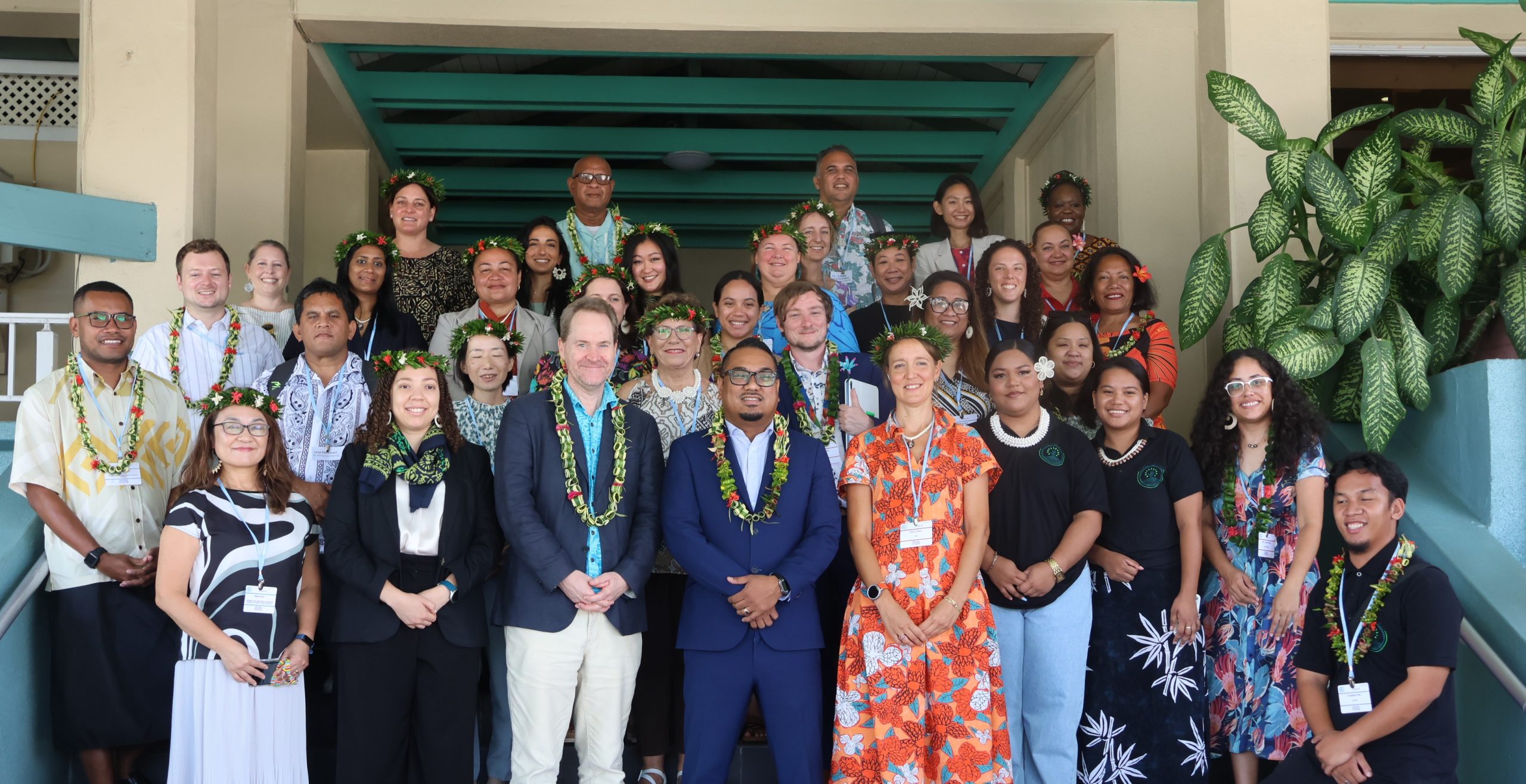
The first of the meetings is the Pacific Small Island Developing States (PSIDS) pre-COP31 meeting from 30 September – 02 October at the Tanoa International Hotel in Nadi.
Facilitated by the Secretariat of the Pacific Regional Environment Programme (SPREP) with support from Climate Analytics and OneCROP, the meeting is an opportunity to reflect on the Pacific’s thematic priorities, share knowledge, lessons and track how issues have advanced since COP30 in Belem, Brazil, last year.
“For RMI, 1.5 has a really special place in our hearts, our former Minister Tony De Brum helped usher in 1.5 into the Paris Agreement, he was also known as the father of the Paris Agreement. A lot of the work and campaigns we do on climate change is about this number. So seeing the overshoot report was devastating and what has been lost.”
But there is optimism, Jetnil-Kijiner pointed out, referring to the report noting that it is still possible to bring temperatures down and achieve global goals in the Paris Agreement.
“The report also clearly states that there is still time to turn things around, make the changes and course correct,” she said.
“But we do have to hold the line, we do have to keep pushing and that’s what the Pacific needs to do. We must continue to push and hold high emitting countries; this is not over yet and this is not an excuse to contribute more emissions. This is why the transitioning from fossil fuels is so important.”
Jetnil-Kijiner is amongst Pacific negotiators pushing for more urgent ambitious actions to turn things around.
“I’d love to see roadmaps to transition away from fossil fuels, I want to see more concrete positions on that as well as ensuring there is finance provided that’s accessible to allow our region to contribute to renewable energy. And updating and submitting NDCs that are 1.5 aligned.”
RMI has just hosted a global gathering on Loss and Damage.
“For many international participants, they said it was really life changing for them to see and atoll nation for the first time, and how incredibly vulnerable we are to sea level rise,” said Jetnil-Kijiner.
“We are doing comprehensive work to collect data on the kinds of loss and damage impacts we are witnessing across the different islands and some of the really clear indicators so far are islets that are disappearing, football fields now underwater, graveyards now underwater, airports that are constantly getting flooded and schools that are having to be moved further inland because of the changing coastline.
“The reality is that this is going to get worse if we don’t lower our emissions, and if we don’t close that gap on 1.5. This is we must hold the line.”
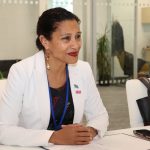
Florence Iautu, of Vanuatu, is another Pacific negotiator. But more importantly, she said, is her role as a mother.
“I’ve read the Overshoot Report, as a mother, it is extremely worrying for my children and our future generations,” she said. “I feel sad thinking about the environment they’re going to inherit, it’s scary.”
But she is not giving up, and the work in the lead up to COP31 in Türkiye, she said, is a key part of the response.
“For us, keeping the momentum on 1.5 is non-negotiable, we have to hold the line, even if it appears very difficult right now.,” she said. “We have to remain hopeful. We have to keep working and do the best we can, and as far as I can see, that is holding the line and making sure we do not give up.”
Takena Redfern, a negotiator from Kiribati, said the time of meaningless talk is over.
“It’s interesting and sad to see the Overshoot Report but it’s not surprising for me,” she said. “Back home in Kiribati, our lived reality is sea level rise, more extreme weather patterns and everything that this report talks about.”
Redfern is determined to change the trajectory and give her children a better environment to inherit.
“I’m hear to ensure the voice of our communities, our people is heard. Climate change is not about figures and numbers, this impacts people in a very real way. This drives the work that I do and as long as I am able to contribute, I will continue to advocate for the survival of our communities.
“Kiribati’s message here in Fiji and going forward to COP31 is that we need urgent actions to avert and move away from the pathway of overshoot. The time for meaningless talk is over, our people need action, tangible outcomes. Now.”
The 31st Conference of the Parties to the UN Framework Convention on Climate Change (UNFCCC) will take place in Antalya, Türkiye, from 09-20 November 2026.
The Pacific Small Islands Developing States (PSIDS) COP31 Preparatory Meeting from 30 September -0 2 October at the Tanoa International Hotel in Nadi is facilitated by the Secretariat of the Pacific Regional Environment Programme (SPREP) and funded by the Government of Australia.