
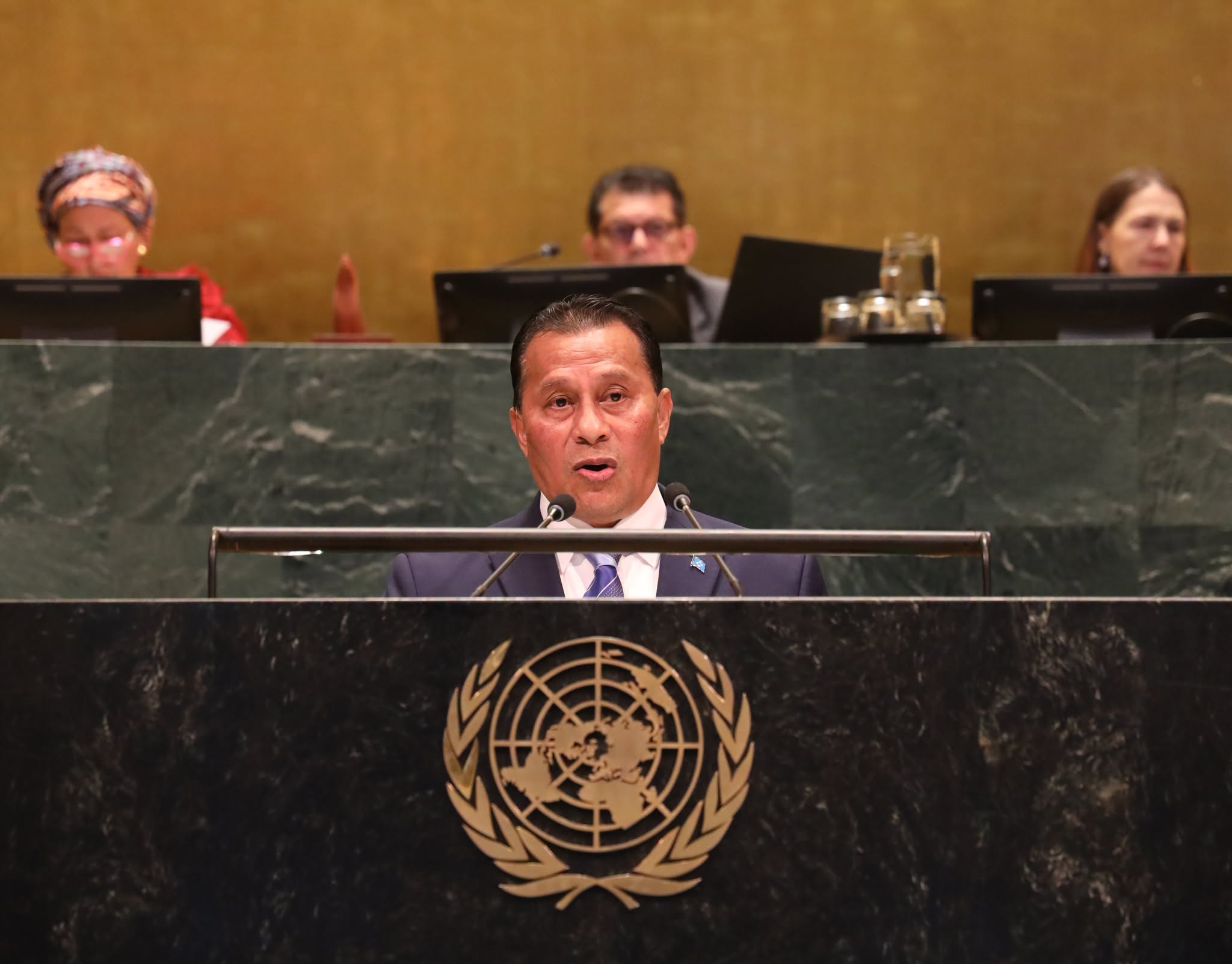
The Federated States of Micronesia (FSM) has called for stronger climate action, predictable adaptation finance and a faster transition to renewable energy, warning that climate change, ocean degradation and resource insecurity are increasingly threatening Pacific stability.
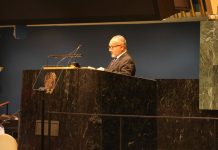
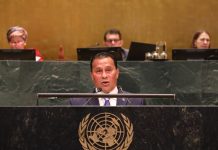
Addressing the 81st United Nations General Assembly, Vice President Aaron Palik said climate-driven pressures were now affecting security, food and water systems, governance and livelihoods across vulnerable Pacific states.
“Today’s security landscape is not only by conflict, but by climate-driven fragility.
“Extreme weather events, sea level rise and resource degradation are eroding stability across vulnerable regions, especially the Pacific,” Palik said.
Palik called for science-based emissions reductions, stronger national climate commitments and accelerated investment in renewable energy.
He also called for accessible and predictable grant financing for climate adaptation and urged countries to operationalise the Loss and Damage Fund.
“We demand accessible and predictable adaptation grant financing to support investments in resilient infrastructure.
“We must operationalise the loss and damage fund,” Palik said.
Palik said the transition away from fossil fuels was also an economic and security issue for small island developing states exposed to volatile fuel prices and external energy markets.
“Instability in the Middle East and volatile fuel prices are the vulnerability of small island developing states to expensive fuel.
“Shift to renewable energy is an economic necessity,” he said.
Micronesia endorsed the proposed ‘Fossil Fuel Non-Proliferation Treaty’, while calling for a “just and orderly transition” away from fossil fuels.
“Solar, wind and ocean-based technologies can reduce dependence on external fuel markets, strengthen energy security, and lower emissions in line with science,” Palik said.
“The world must accelerate the transition to resilient, affordable and community-centred renewable energy systems.”
Palik said protecting the ocean was central to Micronesia’s identity, economy and future, and called for stronger ocean governance, sustainable fisheries management and conservation of marine biodiversity.
He said Micronesia was among the first countries to sign the BBNJ Agreement and was working with partner states on marine management tools and marine protected area proposals.
The work aims to translate the commitment to conserve 30 percent of the ocean into protection for areas beyond national jurisdiction.
On deep-sea mining, Palik said Micronesia was taking a precautionary approach.
“We stress the need to consolidate comprehensive knowledge, data and science about the marine environment before any decision is taken on proceeding with exploitation,” he said.
He also called for meaningful consultation with stakeholders, including coastal states, Indigenous peoples and Pacific communities, before decisions are made.
Palik also raised concerns about plastic pollution and marine debris, including microplastics and associated toxic substances accumulating across Pacific islands.
He highlighted the situation in Chuuk, where oil leaking from Second World War-era wrecks led to an emergency declaration last year.
“These impacts impose disproportionate cleanup and economic burdens on small island governments, whose waste management infrastructure is inadequate,” he said.
Micronesia called for greater technical assistance, predictable financing, technology transfer and stronger controls across the plastic life cycle.
Palik also urged countries to complete negotiations on a global treaty to end plastic pollution, including pollution of the marine environment.
With less than five years remaining to achieve the Sustainable Development Goals, Palik said climate impacts were already eroding development gains in the Pacific.
“Climate impacts are steadily eroding development gains and placing progress across the goals further at risk,” he said.
He highlighted recent typhoons, severe flooding and increasingly frequent king tides affecting Micronesia’s low-lying islands.
“These are no longer isolated events, but recurring pressures that test the resilience of our communities on the frontline of climate crisis,” Palik said.
He also highlighted Micronesia’s efforts on health, gender equality, youth participation and migration, including the adoption of its National Migration Policy with technical support from the International Organisation for Migration.
Palik called for reforms to ensure the United Nations better reflects the needs of small island developing states.
He supported an expanded Security Council that would include Brazil, Germany, India and Japan as permanent members, alongside permanent representation for Africa and a dedicated permanent seat for small island developing states.
“For countries defined by distance, dispersion and vulnerability, reform cannot be an abstract exercise.
“It must strengthen the UN’s ability to deliver where the needs are greatest,” Palik said.
He also called for the continued presence of the UN Multi-Country Office and Resident Coordinator system in the Pacific.
Palik said digital transformation and artificial intelligence could improve public services, diversify economies, expand market access and support climate-resilient development.
But he warned that inadequate investment, capacity and governance could deepen inequality and increase cybersecurity, misinformation and data privacy risks.
“We therefore call upon the international community to strengthen resilient technical and digital infrastructure with ethical and effective guardrails and governance frameworks,” he said.
Palik said the success of the United Nations should ultimately be measured by practical improvements in people’s lives rather than declarations.
“Success must be measured not by declarations, but by tangible improvements in our people’s lives, security and dignity.
“We call for equitable partnership with small island developing states through accessible finance, technology transfer, strong capacity and a meaningful voice in global decisions,” he said.