

By Pita Ligaiula in Savusavu
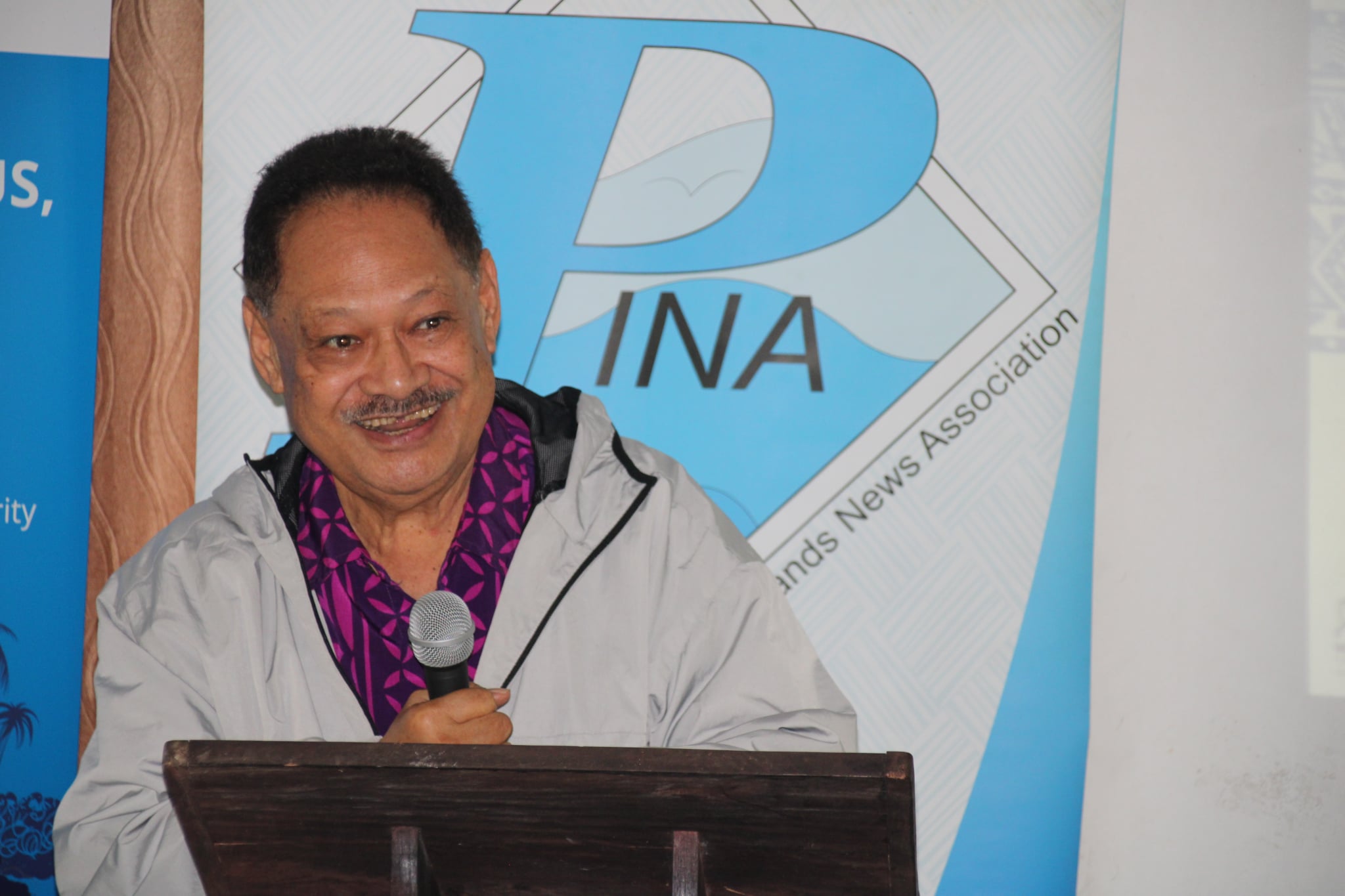
Veteran Tongan journalist and Pacific Islands News Association (PINA) President Kalafi Moala says corruption in the Pacific is no longer confined to political leadership, with abuse of administrative systems increasingly occurring within the civil service.
Speaking at a pre-summit workshop on climate change and corruption for Pacific journalists in Savusavu, Kalafi said journalists needed to look beyond governments and political leaders to identify where corruption was occurring at the operational level.
“For years, we’ve been fighting corruption in government, and we’ve become critical of leadership at that level. And it’s still important for us to do that.
“But one of the changes that I have noticed is that that corruption basically has moved down so strongly,” he said.
Kalafi said reports and complaints emerging in Tonga highlighted corruption involving civil servants dealing with land administration.
He said the problem had become particularly concerning as climate change displaced people living on land to which they did not have formal ownership, while climate finance intended to assist affected communities could also be vulnerable to misuse.
“One of the key things…is that we’re finding out that corruption is not something that is just at the very top level,” Kalafi said.
Kalafi described an alleged practice in which land records involving deceased or overseas owners were identified and then manipulated to transfer ownership to others.
He also recounted his own experience after discovering that a piece of land he owned had been registered in the name of a relative.
Kalafi said he confronted officials and demanded that the land be returned to his name.
“The next day…my friend who did the evaluation said, hey, the land is back in your name,” he said.
Kalafi said he had since heard complaints from others about similar experiences.
“That’s an area of huge corruption in my country.
“It’s not happening necessarily at the top level. The minister or the government, they don’t know about it. But the workers at this level, they’re very involved,” he said.
Kalafi said the persistence of civil servants across successive governments could allow corrupt practices to become embedded within administrative systems.
“You see how government changes every four years. But these guys, they don’t change.
“The CEOs, the secretary, the surveyors, they’re there from year to year to year. And so they have worked out a system of corruption,” he said.
He said regional journalism networks such as the Pacific Anti-Corruption Journalist Network (PACJN) were important because journalists could share information and expose corruption occurring at different levels.
“The stories from our diverse and different areas have been a tremendous help in allowing us, while standing in a way fighting against corruption, to go into areas where the real corruption is happening,” Kalafi said.
Kalafi also linked the fight against corruption to the changing media environment, warning journalists that technology, including artificial intelligence, could not replace journalism fundamentals.
“Technology is changing all of that. But it failed not to replace the importance of thinking, the importance of doing journalism, integrity, the importance of asking the right questions, pursuing the right answers,” he said.
He said Pacific journalists also needed to work together as the region faced increasing geopolitical pressure.
In the Pacific, it has become an open ground for geopolitical forces. We need more to stand together.
“Togetherness is not an option. It’s something we must,” Kalafi said.
Kalafi said regional cooperation was essential to prevent external forces from exploiting divisions within Pacific societies.
“And so that we end up being fighting each other rather than fighting the forces of darkness or the forces of corruption that we need to be fighting in our society,” he said.
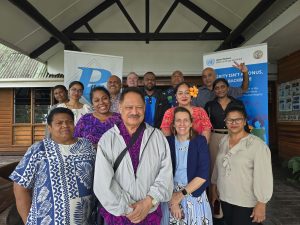
The workshop brought together Pacific journalists to examine the links between climate change, corruption, accountability and investigative journalism.