

By Pita Ligaiula in Koror, Palau
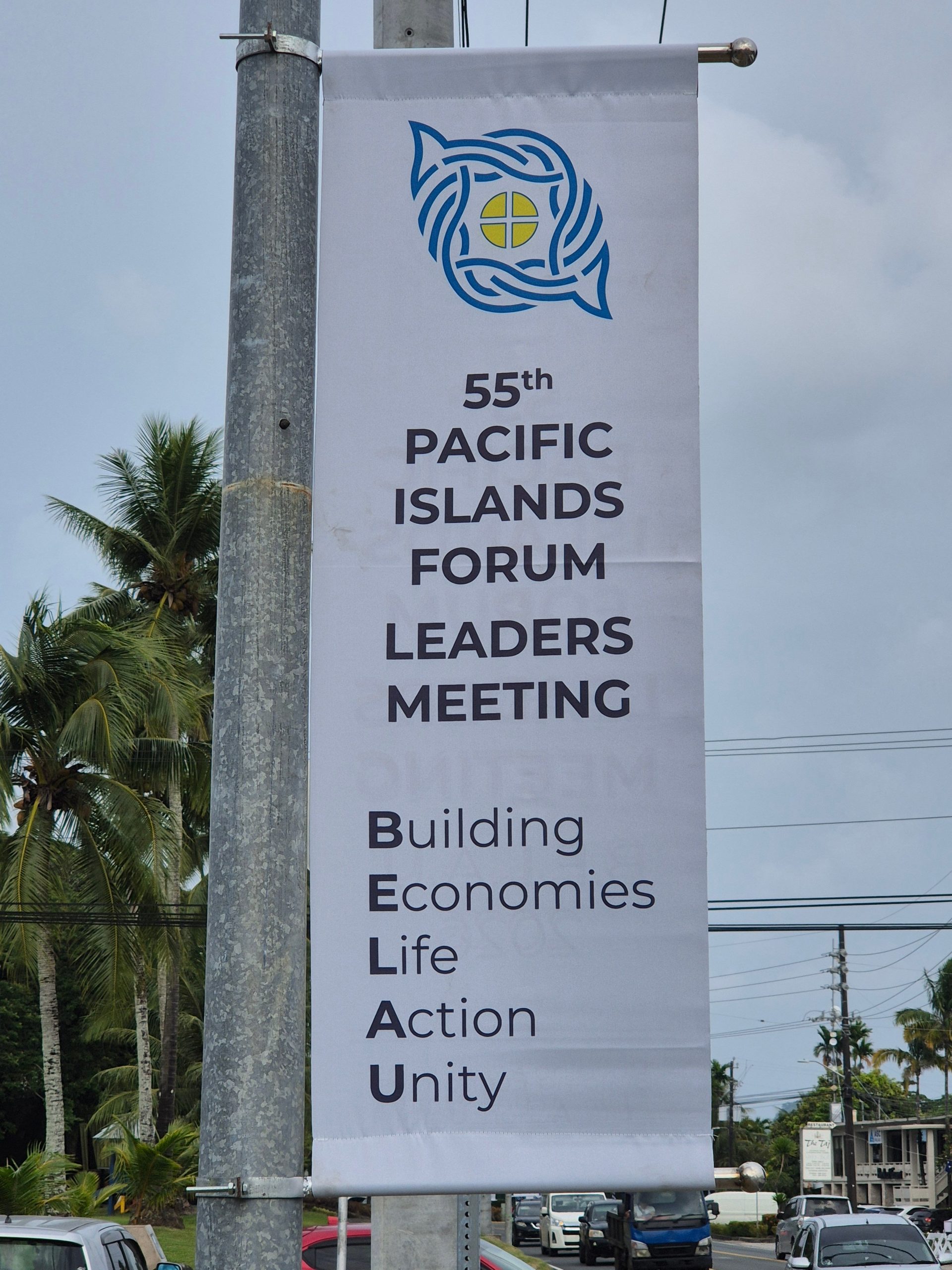
Food security, climate action and finance, and transnational crime are expected to be among the key issues Pacific Islands Forum leaders will seek progress on when they meet in Palau next week.
Forum Deputy Secretary General Esala Nayasi said the region was facing emerging challenges that could not always be predicted, making collective regional action increasingly important.
“The food crisis is one of such issues,” Nayasi told Pacific journalists in Palau.
He said food security had become an emerging regional concern alongside the continuing challenges posed by geopolitics.
“We always recognise that geopolitics is an issue that we need to manage as a region, and we’ve seen that at different levels, including at the national level.
“But it is one that we really see the value of regionalism to be able to manage more effectively,” he said.
Nayasi said the Forum was also advancing work on a regional response mechanism following the COVID-19 pandemic, with a report expected to be presented to leaders.
“We’ve had the Pacific-based vaccines establish a regional response mechanism.
That report we are now taking through to leaders,” he said.
Climate change and advocacy will also be a major focus, particularly as Pacific countries prepare for key international climate negotiations.
Nayasi said Pacific countries needed to be clear about their priorities and what they wanted to achieve through the climate process this year.
“The importance of us being able to be clear in terms of our priorities and what we want out of this process this year to ensure that we will be able to deliver,” he said.
He said the Pacific Resilience Facility (PRF) would also be part of the climate finance discussions, with the Forum hoping leaders would provide clear commitments.
“Attached to that is a Pacific Resilience Facility, which is an initiative that we hope will get some clear commitments from our leaders this year as well,” Nayasi said.
The third major issue he identified was transnational crime, which he said required a collective regional response rather than individual national approaches.
“Last year, when they had discussions on it, there was one national approach rather than individual countries having to address the issues individually for an issue that is beyond what one can address.
“It needs a collective solution, and that is what we are also taking to leaders this year in terms of a regional approach,” he said.
Nayasi said the issues reflected the growing need for Pacific countries to use regionalism to address challenges that were beyond the capacity of individual states.
He said while there were many items on the leaders’ agenda, the three areas would require particular attention as Forum leaders meet next week.