

Pacific communities face a growing threat from climate change, biodiversity loss and pollution despite contributing only 0.01 percent of global greenhouse gas emissions, SPREP Director General Sefanaia Nawadra says.
Nawadra made the remarks as the Secretariat of the Pacific Regional Environment Programme (SPREP) holds its fifth Executive Board Meeting in Samoa, where members are reviewing progress and setting priorities for the year ahead.
“We live in such volatile times. The impacts of economic, political and social challenges right across the world, as well as the toll of war, is a reality we cannot escape.
“Our Pacific people and communities are not immune. But we are up against a much greater threat, forcing us into the fight for our lives.” Nawadra said.
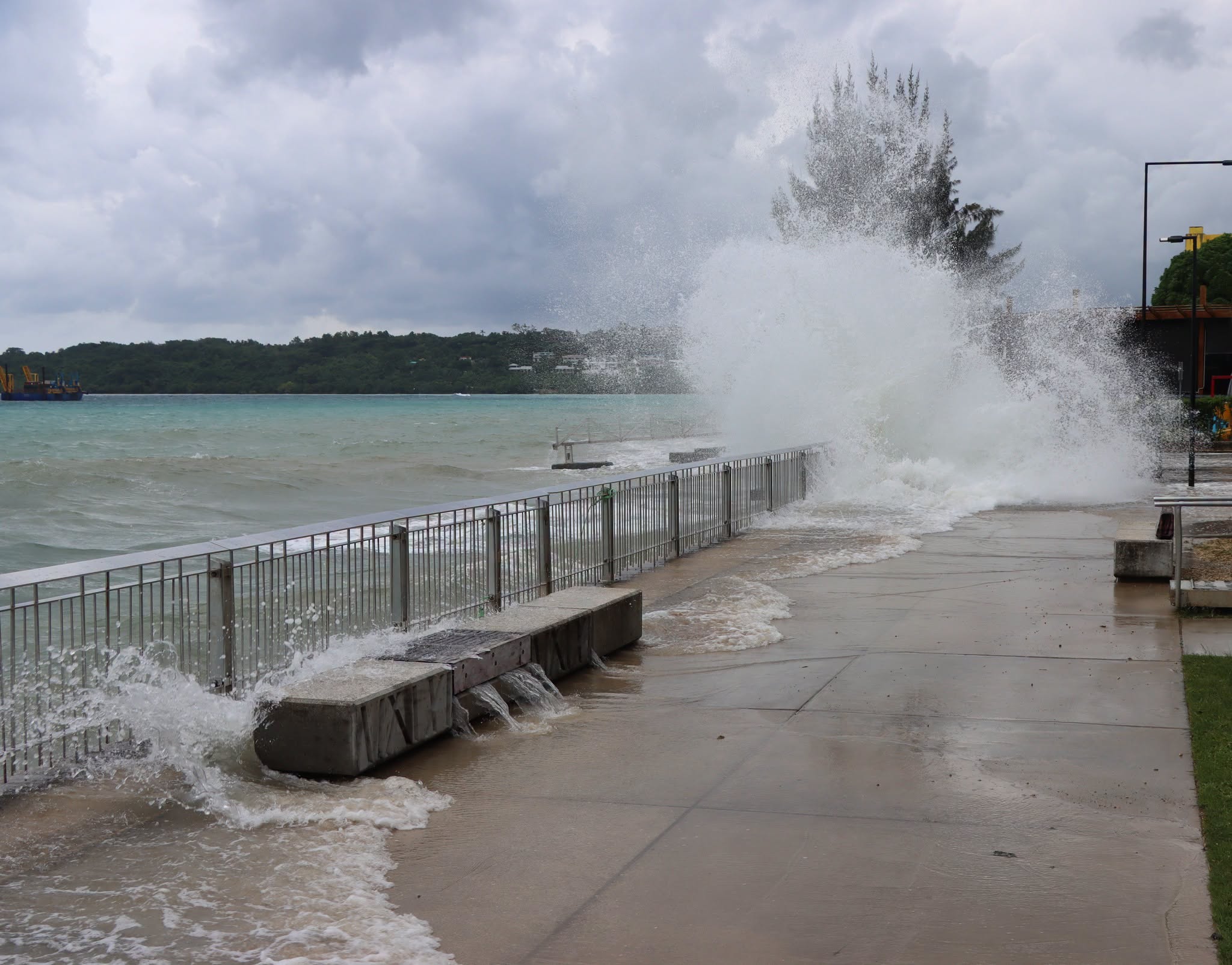
He said Pacific communities continue to bear the brunt of the triple planetary crises despite their minimal contribution to global emissions.
“Despite contributing 0.01 percent of global emissions to the greenhouse gases that have warmed our planet, Pacific communities bear the brunt of the impacts of the triple planetary crises of climate change, biodiversity loss and pollution.”
Nawadra said SPREP’s role in helping Pacific countries adapt and protect their environments had become more important against this backdrop.
“Against this backdrop, SPREP’s role in supporting all our Pacific countries to adapt and survive has never been more important, to ensure a resilient Pacific environment, sustaining livelihoods and natural heritage in harmony with cultures.”
The Executive Board meeting brings together the Troika – United Kingdom as past Chair, Vanuatu as current Chair and Wallis and Futuna as incoming Chair along with Fiji representing Melanesia, Cook Islands, French Polynesia, Federated States of Micronesia for Micronesia, Australia for Metropolitan Members and France for French-speaking members.
Nawadra said the meeting provides an opportunity to assess SPREP’s work over the past year, share experiences, refine priorities and agree on the organisation’s work programme and budget.
“Most importantly, it allows us to ensure that our collective efforts are delivering meaningful and lasting outcomes for our countries and communities.”
He said 2025 was a productive year for SPREP, with several major projects completed.
These included the seven-year PacWastePlus programme funded by the European Union, the Vanuatu Klaemet Infomesen blong Redy, Adapt mo Protekt (VanKIRAP) project funded by the Green Climate Fund, the GEF 6 Regional Invasives Project and the ACP Multilateral Environmental Agreements Phase 3 Project.
Nawadra said the projects met or exceeded their key objectives and deliverables.
The VanKIRAP project also delivered a weather radar system in Port Vila.
SPREP also launched the Emma Luke Regional Earth Observation Centre, named after the late Emma Luke, who advocated for Pacific leadership in earth observation.
Nawadra said the centre would serve as a regional hub for geospatial collaboration and learning.

He said SPREP also continued to support Pacific participation in major international environmental negotiations, including UNFCCC COP30 in Belem, CITES COP20 in Uzbekistan and INC-5.2 in Geneva.
With Türkiye hosting COP31 and Australia serving as President of Negotiations, Nawadra said the pre-COP would be hosted in the Pacific.
SPREP will support the Pacific Islands Forum process and work with the Forum Secretariat and Australian Government as part of the joint Pacific COP31 Secretariat.
Nawadra also highlighted new multi-year partnerships with Australia and New Zealand, including AUD24.75 million (US$17.47 million) from Australia for 2025–2031 and NZD10.5 million (US$6.17 million) from New Zealand for 2025–2029.
He acknowledged additional support from the United Kingdom, European Union, Japan, China and other development partners.
Nawadra said SPREP’s work depended on collective efforts by its members, staff, partners and communities.
“Our success is about our collective effort as SPREP Members, SPREP Staff, SPREP Community and the SPREP Family.”
He said the organisation would face a heavier workload as Pacific countries continued to deal with the impacts of the triple planetary crisis.
“Our workload will continue to get busier and heavier, as the world, continues to increasingly experience the impacts of the triple planetary crises.” he said.
But Nawadra said SPREP remained committed to supporting Pacific countries.