
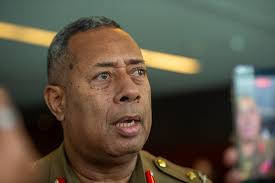
The Republic of Fiji Military Forces (RFMF) has assured the public it will not interfere in Fiji’s next General Election.
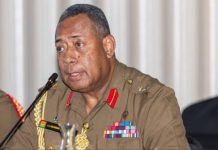
Commander Major-General Ro Jone Kalouniwai reaffirmed the RFMF’s commitment to remaining neutral throughout the electoral process.
Dismissing speculation about his own political ambitions, Major-General Kalouniwai said he had no intention of contesting the election.
“I’m not standing in for election, so I have nothing to say about the election,” he said.
He reassured the public there would be no military involvement despite the possibility of heightened political rhetoric and instability during the campaign period.
Major-General Kalouniwai said the RFMF would remain focused on its constitutional role.
“We will stay where we are at the moment. There’s nothing for us to do,” he said.
He added that matters relating to the conduct and management of the electoral process rested with the relevant authorities and the Government of the day.
Major-General Kalouniwai said the military would continue to keep its distance from political affairs.
He stressed that the RFMF would remain “far away from all that”, reinforcing its position of non-involvement in Fiji’s democratic process.
The assurance comes as Fiji prepares for its next General Election, with political parties expected to intensify campaigning in the lead-up to polling.
Meanwhile, uncertainty over when the next general election will be held is creating difficulties for political parties planning their campaign strategies, the Electoral Commission says.
The issue was highlighted in the Commission’s submission to the Constitutional Review Commission (CRC).
Electoral Commission chairperson Justice Usaia Ratuvili said stakeholders had consistently raised concerns about the broad discretion available in determining election dates.
Under the current constitutional arrangements, Parliament can sit for between three-and-a-half and four years before a general election is called.
Justice Ratuvili said the lack of certainty affected campaign planning and resource allocation because political parties did not know when they would go to the polls.
He said international best practice also discouraged major changes to electoral laws during an election year.
The Commission recommended that significant electoral reforms should only take effect after an election, allowing election officials to focus on preparations rather than implementing new legislation during the campaign period.
The proposal was among several governance reforms presented to the CRC as it continues nationwide consultations on constitutional changes.
Justice Ratuvili said a more predictable election timetable would strengthen public confidence in Fiji’s electoral process and provide greater certainty for voters, candidates and political parties alike.