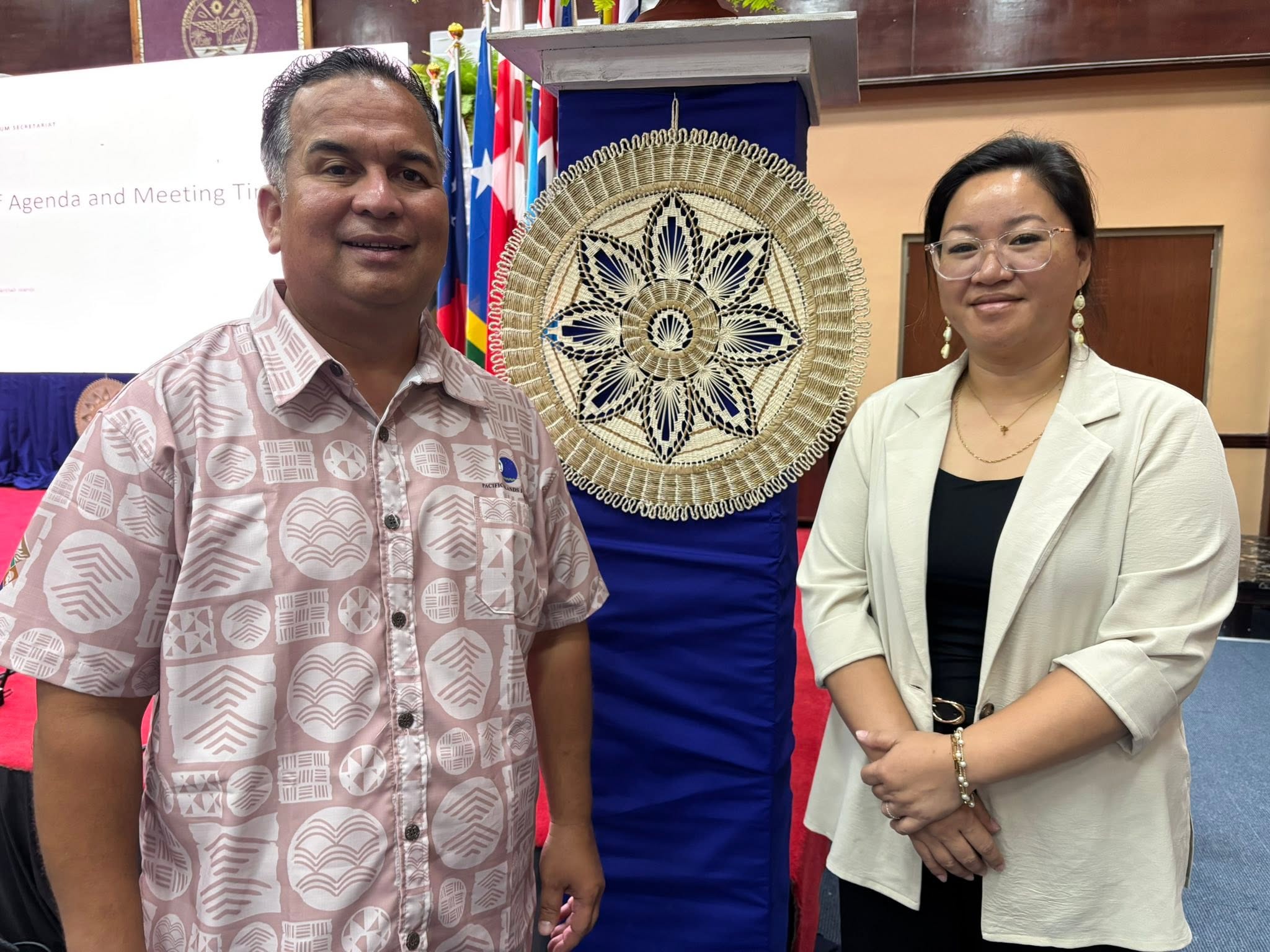
The Republic of the Marshall Islands (RMI) declared a State of Emergency following sharp increases in global fuel and commodity prices linked to the Iran conflict, Finance Minister David Paul told Pacific finance ministers as he opened the 2026 Forum Economic Ministers Meeting.
Addressing ministers and officials in Majuro Tuesday, Paul said the challenges leading up to the meeting, including disruptions caused by the conflict in the Middle East, underscored the need for regional economic resilience.
“Your attendance today is a demonstration of your commitment to ensuring our region remains economically and financially resilient despite the challenges we face,” he said.
He also commended the Pacific Islands Forum Secretariat and his ministry team for organising the meeting.
Paul said this year’s Forum Economic Ministers Meeting theme, “Economic and Financial Inclusion in the Pacific,” builds on last year’s focus on resilience and sustainability.
“The theme this year underscores not only the need to stand unified but being inclusive given the challenges we currently face are felt across all levels of society and undermining our economic development efforts,” he told Forum Economic Ministers.
Paul said rising costs of energy, transport, food and fuel had once again exposed the Pacific’s vulnerability to external shocks because of its heavy dependence on global markets.
“The current challenges of escalated costs of energy, transport, food, and fuel have once again demonstrated how vulnerable we are to external shocks which are being felt through our heavy dependence on global markets on some of our very basic household needs as well as what sustains our private sector and economic growth,” he said.
Paul said the rising cost of living was placing pressure on communities, particularly low-income households, people living with disabilities and those dependent on limited social protection systems.
He said the Marshall Islands faced many of the same constraints as other Pacific economies.
“My country is not immune to these shocks as we share some of the common challenges that classify us as small economies, isolated from major markets with a narrow resource base and high dependency on imports and external financial support.”
Paul said these vulnerabilities prompted the government to declare a State of Emergency after fuel and commodity prices surged.
“It is these vulnerabilities amid the Iran conflict that prompted our government to declare a State of Emergency following the sharp spikes in global fuel and commodity prices.”
He noted that ministers were meeting toward the end of the 90-day State of Emergency declared in March 2026.
“As part of the SOE, our government has implemented measures to cushion households, stabilise essential services, and contain fiscal pressures,” the FEMM chair said.
Paul acknowledged support from development partners, including the World Bank and the Asian Development Bank.
He also highlighted the Marshall Islands’ efforts to improve financial inclusion through digital technology.
“In line with this year’s FEMM theme of inclusion and acknowledging the widely dispersed nature of our country creating structural barriers to financial access as well limiting access to traditional banking services, my government has introduced the Lomalo app.”
Paul said ministers would be shown the Republic of the Marshall Islands Digital Payment and Wallet System during the Ministerial Talanoa as an example of efforts to strengthen financial inclusion.
He said the meeting agenda had been structured around the Pacific Roadmap for Economic Development (PRED) and its strategic focus areas, with discussions aimed at advancing regional cooperation and integration.
“It acknowledges the significant potential for greater economic cooperation and integration across many sectors with our discussions over the next two days reflecting on the initiatives that are being progressed through strengthening existing regional institutions and arrangements, and through coordinated regional policies and approaches,” he explained.
Paul said a dedicated session with private sector and civil society representatives would examine ways to strengthen economic and financial inclusion across the region.
“We also have a dedicated session for dialogue with our private sector and civil society colleagues to explore how we can collaborate to navigate the risks our communities and people are facing and, in the process, really strengthen economic and financial inclusion in our region.”
He said the Pacific already has a framework to guide regional action and that the meeting provides an opportunity to improve coordination and integration.
“We already have the blueprint for our collective actions that enhance our national efforts towards greater economic and financial resilience and inclusion. The next two days provide us with the opportunity to share, discuss and explore added options that will help strengthen coherence and coordination towards strengthened regional economic integration,” he stressed.
Paul also urged ministers to work together to address the region’s economic challenges.
“These are trying times for all of us. As stewards of our economies, we have a responsibility to guide and direct our countries to navigate and mitigate the challenges we face. I am confident that with our collective wisdom, expertise, experience, and God’s blessing, we can weather the storm together and continue to enhance our economic cooperation and integration,” he said.