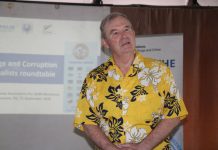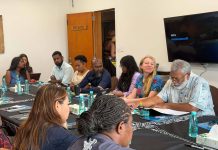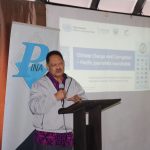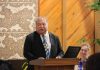
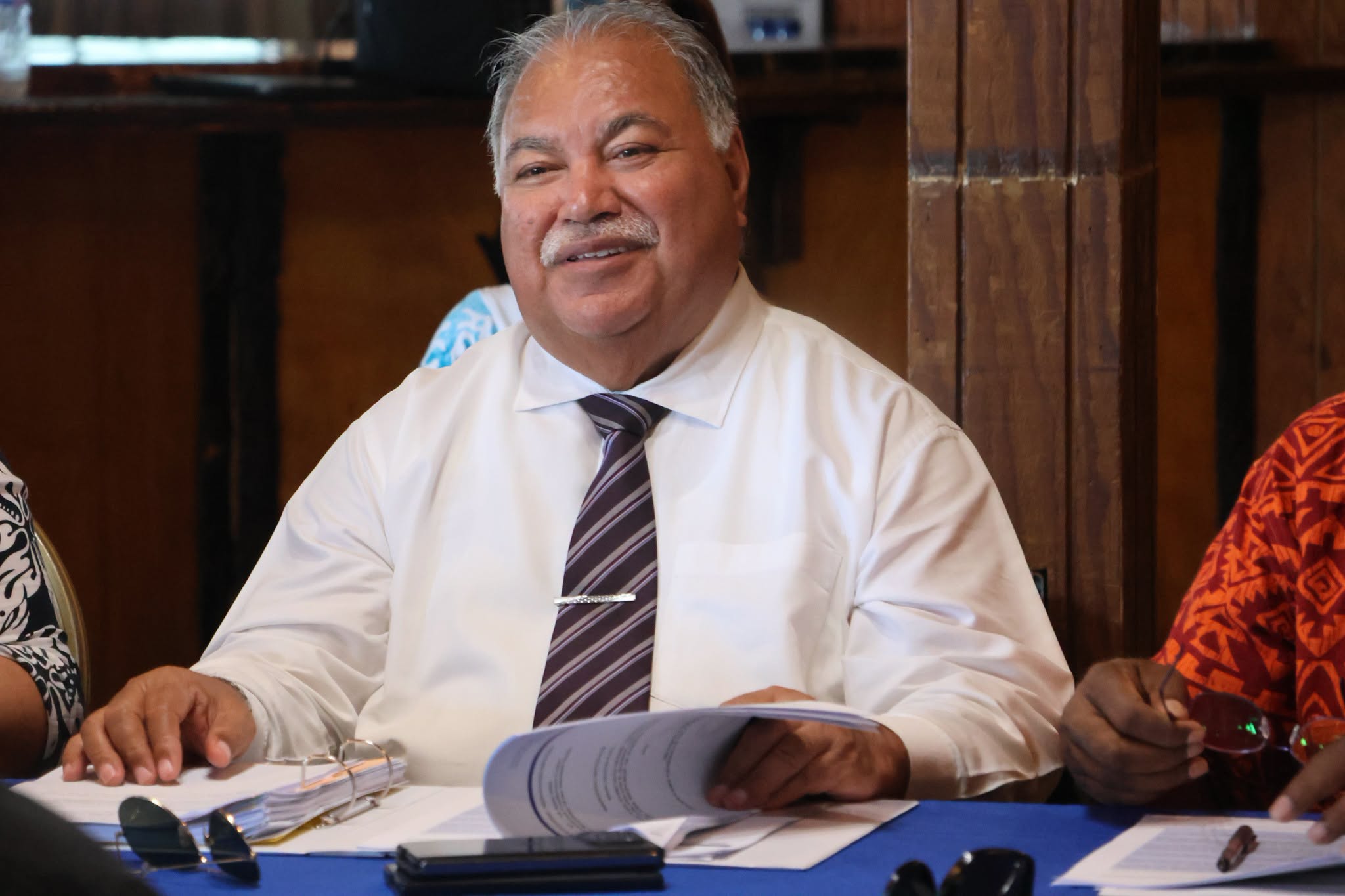
Pacific Islands Forum Secretary General Baron Waqa has urged Pacific finance ministers to use worsening global conditions as an opportunity to strengthen regional resilience, saying the Middle East conflict and other international crises have intensified economic pressures across the region.
Addressing the 2026 Forum Economic Ministers Meeting (FEMM) in Majuro on Tuesday, Waqa said the Pacific faces a significantly more difficult regional and global environment as conflicts continue to disrupt economic stability.
“We meet at a time when the challenges facing our region have worsened with the regional and global environment and outlook substantially deteriorating.
The expansion of the Middle East conflict into Iran and other ongoing conflicts have compounded the challenges facing our economies, bringing the world into greater political, economic and social turmoil,” he said.
Waqa said finance ministers were already addressing these challenges at the national level, while the regional discussions at this year’s meeting would focus on strengthening financial and economic resilience.
“As Finance Ministers, you are already addressing these challenges as part of your regular national efforts.
At the regional level and FEMM this year while using the impact of the Middle East crisis as the basis of our discussions, it is also about acknowledging the many initiatives and pathways you have put in place to strengthen our resilience, financially and economically, to be able to rise above these shocks,” Waqa told Ministers.
Before addressing the economic agenda, Waqa extended the Forum’s sympathies following the recent fire in Ebeye.
“On behalf of the Pacific Islands Forum family, I convey our heartfelt sympathies to all those affected, particularly the families, businesses, and communities who have suffered loss and disruption,” he said.
He commended the Marshall Islands Government, emergency responders and communities for their response to the disaster.
Waqa said the incident highlighted the importance of resilience and preparedness in responding to unexpected shocks with economic and social consequences.
“This incident serves as a timely reminder of the importance of resilience, preparedness, and collective support in the face of unexpected shocks that can have significant social and economic consequences for our communities,” he said.
Waqa said the current global environment also presented an opportunity for Pacific countries to better prepare for future shocks.
“The current global environment presents a unique opportunity to focus on preparing ourselves to be resilient in readiness for the next shock building on our strength as individual nations and as a collective,” he emphasised.
Referring to outcomes from the recent Energy and Transportation Ministers Meeting in Papua New Guinea, Waqa highlighted the potential role of Papua New Guinea in regional fuel supply.
“The Manubada declaration from the recent Energy and Transportation ministers meeting in Papua New Guinea included exploring PNG’s potential to play an increasing role in supplying oil and refined products to the region. How can we translate this into a practical reality?” he asked.
Waqa also highlighted opportunities linked to the transition to cleaner energy.
“The Iran conflict is also increasing the spotlight on transitioning away from fossil fuel to cleaner energy.”
He referred to the Palau Leaders Ascent Dialogue and preparations linked to COP31 as opportunities to advance renewable energy and climate action.
“Some opportunities that we need to bear in mind include the Palau Leaders Ascent Dialogue which has a strong focus on moving towards 100% renewable energy.
The COP31 Australia-Türkiye partnership with the Pacific playing a key role including hosting the UNFCCC Pre COP here in Fiji with a Leaders segment in Tuvalu is a platform to elevate practical ways of keeping the 1.5 degrees global temperature goal within reach including through expediting the clean energy transition,” he stressed.
Waqa said Pacific leaders had invoked the Biketawa Declaration as part of the regional response to current challenges.
“Our Leaders have also invoked the Biketewa Declaration to underpin our regional response.”
He said the mechanism had strengthened cooperation among regional organisations, development partners, the private sector and civil society groups.
“Through this regional mechanism, we have seen increased cooperation between CROP agencies, with our development partners, with the private sector and civil society organisations. It is very encouraging and further emphasises the strength of our regional and inclusive approaches,” he said.
Waqa said regional economic cooperation and integration were already producing results through initiatives endorsed by ministers.
“Regional economic cooperation and integration is not a new issue. We are seeing positive manifestations from the collective decisions you have made including the PRF, the CBR project, the CFAMS, the PFM regional coordination mechanism, the private sector strategy, just to name a few, with the PRED the over-arching framework that guides our approach,” he said.
He also acknowledged the support of bilateral and multilateral partners to Forum members.
“I take this opportunity to acknowledge and recognise the important contribution from our bilateral and multilateral partners.”
Waqa specifically thanked Australia, New Zealand, Japan, China, the European Union, the Asian Development Bank, the World Bank, the International Monetary Fund and United Nations agencies for their support.
“Together we are stronger, said PIF Secretary General, Baron Waqa.