
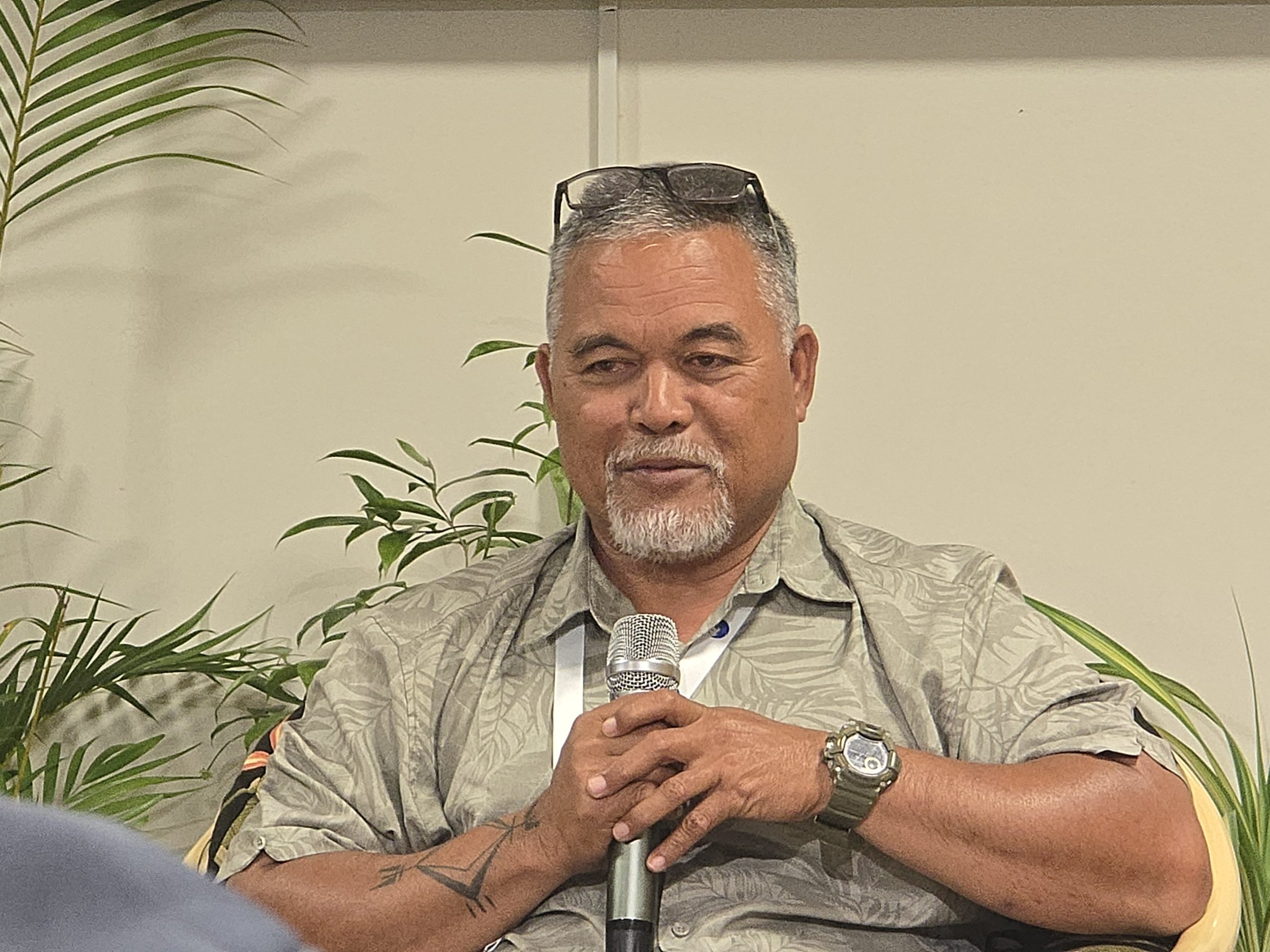
“Ocean is our grandmother, and it is reminding us where true power lies” – Pacific Navigator Larry Raigetal.
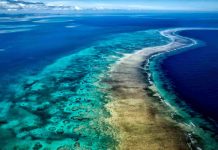
For Master Navigator Larry Raigetal, the Pacific Ocean is more than a resource to be managed or a territory to be governed; it is a grandmother.
Speaking at the State of the Pacific Ocean Convening, the Assistant Professor at the University of Guam reflected on a lifelong relationship with the sea, describing it as a nurturing yet powerful force that cares for Pacific people but is increasingly reminding humanity of its authority through environmental change and the growing challenges facing the region.
“I do not remember whether I swam before I walked, but I was always taught to hold a healthy respect, almost a fear of the ocean, to regard it as one would a grandmother,” Raigetal told participants.
“The ocean, like a grandmother to us all, provides, cares for us, and loves us. Yet it also demands that we behave and disciplines us when we do not.”
Growing up in Micronesia, Raigetal said respect for the ocean was instilled from an early age. While many Pacific Islanders today often repeat the phrase “we are the ocean,” he challenged people to move beyond words and reconnect with the deeper meaning behind that relationship.
“We are the ocean. The ocean is in us. These things we need to really feel,” he said.
That relationship, he explained, was never one of domination. Instead, it was built on reciprocity, humility, and an understanding that the ocean ultimately holds power over humanity.
“I cannot help but think that we have been misbehaving, and that the ocean is once again reminding us where true power lies,” he said.
His comments come as Pacific Island nations continue to confront escalating climate impacts, including stronger tropical cyclones, sea-level rise, and ocean warming.
For Raigetal, these changes are not only environmental challenges but also reminders that people have drifted away from traditional understandings of their relationship with the ocean.
“As salty-feet people, we must always have that closer relationship with this ocean than the superficial one that we’ve adapted from our colonisers and Western ideologies and philosophies, in which our understanding of the ocean is different from what it has always been since time immemorial,” he said.
He argued that Pacific ancestors viewed the ocean not as a space divided by political boundaries but as a living network connecting families, communities, and generations.
“In the ocean I was brought up with and learned, we only have sea lanes,” he said.
“There was no 200-mile border. We identified these sea lanes as our highways, places where we need to go and visit relatives, places where we need to go and get resources and always return.”
Drawing on his experience as a traditional navigator, Raigetal said voyaging canoes offer an important lesson for today’s leaders.
“When we are on that canoe, we see that canoe as our land, and we see everyone on that canoe as one canoe,” he said.
“Our survival depends on us working together on that sea.”
He also urged Pacific leaders to draw on indigenous values and ancestral knowledge when making decisions about the region’s future.
“Let’s not play into the hands of our colonisers or those who dictate how we need to work together, how we need to look at the resources of our ocean, but that we must do it our Pacific way as brothers and sisters,” he said.
Despite growing conversations around ocean governance and management, Raigetal urged Pacific people to remember their place within the ocean’s story rather than above it.
“It’s hard for me, even when I start to think of this conversation of ocean governance.
“I place myself in that grandchild-to-grandmother relation. And now I’m going to be careful about regulating or governing my own grandmother,” he said.