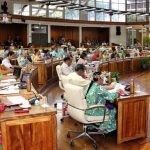

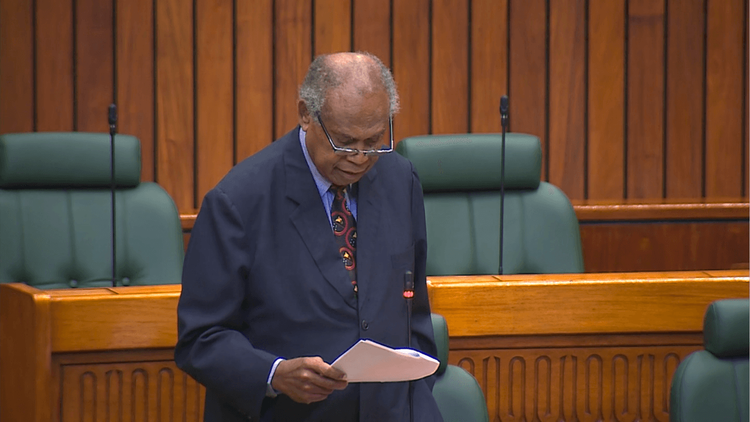
Chairman of the Bipartisan Parliamentary Committee on Bougainville Affairs, Dr Allan Marat, presented the Report on the nationwide public consultation regarding the Bougainville Referendum in Papua New Guinea Parliament Tuesday.
This report is a significant step in fulfilling Parliament’s ongoing responsibilities under the Bougainville Peace Agreement and the Constitution of Papua New Guinea.
The nationwide consultations were designed to gather a comprehensive understanding of the perspectives and sentiments of the Bougainvillean people concerning their future governance and potential independence.
Dr Marat highlighted the importance of involving the public in this critical decision-making process, as it aligns with the principles of peace, democracy, and self-determination outlined in the peace agreement.
He detailed the key findings of the consultations, emphasising the diverse opinions expressed by different groups across the country.
Dr Marat noted the need for transparency and thorough consideration of these views as the government moves forward with discussions about Bougainville’s political status and its relationship with the national government.
“First, there was strong recognition across all consultations of the importance of maintaining peace and stability.
“Participants frequently referred to the legacy of the Bougainville conflict and emphasised the need for Parliament to approach its consideration with care, responsibility, and a clear commitment to preserving the peace achieved through years of dialogue and reconciliation.
“Second, many participants highlighted the importance of constitutional process.
“There was a strong emphasis on the expectation that Parliament’s consideration of the referendum outcome will proceed transparently and in accordance with the Constitution and the Bougainville Peace Agreement, recognising that clarity and openness in the process can help foster public understanding and confidence.
“Third, consultations highlighted the need for careful planning in considering future arrangements. Participants raised issues related to governance capacity, economic sustainability, and institutional development, emphasising the importance of managing any transition in an orderly and responsible manner.”
The report not only serves as a reflection of the people’s voices but also as a guide for policymakers as they navigate the complexities of Bougainville’s future.
Dr Marat called for ongoing dialogue and collaboration between the national government and Bougainville’s leadership to ensure a peaceful and inclusive process moving forward.
In conclusion, he reaffirmed the commitment of the Parliamentary Committee to uphold the rights of the Bougainvillean people and to support their aspirations in line with the frameworks set forth in the Bougainville Peace Agreement.
He urged all stakeholders to engage constructively in this pivotal phase of Bougainville’s journey.
Many Members of Parliament during the debate called for deferral of the debate to another session of Parliament as leaders want to have a clear understanding on the report presented.
Consultations were held in five locations representing all major regions of the country: Goroka (Highlands), Lae (Momase), Kokopo (New Guinea Islands), Port Moresby (Southern), and Buka and Arawa (Autonomous Region of Bougainville).
Participants included a broad cross-section of society, such as community leaders, church representatives, women and youth groups, civil society organisations, academics, legal practitioners, former and current public officials, and members of the general public.
The diversity of participants ensured that the consultations captured a wide range of perspectives, experiences, and concerns.