When Stella Sahara Tuuau was growing up in Salesatele village far from Samoa’s capital Apia, the ocean was never far from daily life.
Fish on the family table, income for households, and the rhythm of village life all depended on the sea. Long before she understood terms like fisheries management or illegal fishing, Stella understood one simple truth: the ocean sustained her community.
Today, she is helping protect that same resource as a Senior Fisheries Officer with Samoa’s Fisheries Division, representing her country in Operation Tui Moana 2026 (OPTM26) – one of the Pacific’s largest coordinated fisheries surveillance operations.
“I always dreamed of wanting to work for Fisheries,” Stella says.
The opportunity came unexpectedly while she was still studying at the National University of Samoa. Looking for employment, she applied through a government recruitment circular and was called for an interview with the Fisheries Division.
“Fisheries was the first to give me a call. Luckily, I got the job,” she recalls with a smile. “At first, I was observing and learning. Then after a few months, I became more interested and wanted to do the best that I could.”
That interest eventually grew into a career dedicated to protecting one of the Pacific’s most valuable resources.
For Stella, fisheries is not simply a government department or an industry. It is deeply personal.
“Fisheries in Samoa is like the lifeblood of many villages,” she explains. “Many of our families rely on fish resources not only to earn money but also for food security and their livelihoods. Our people depend on the resources in our ocean.”
That connection made representing Samoa during Operation Tui Moana 2026 (OPTM26) especially meaningful.
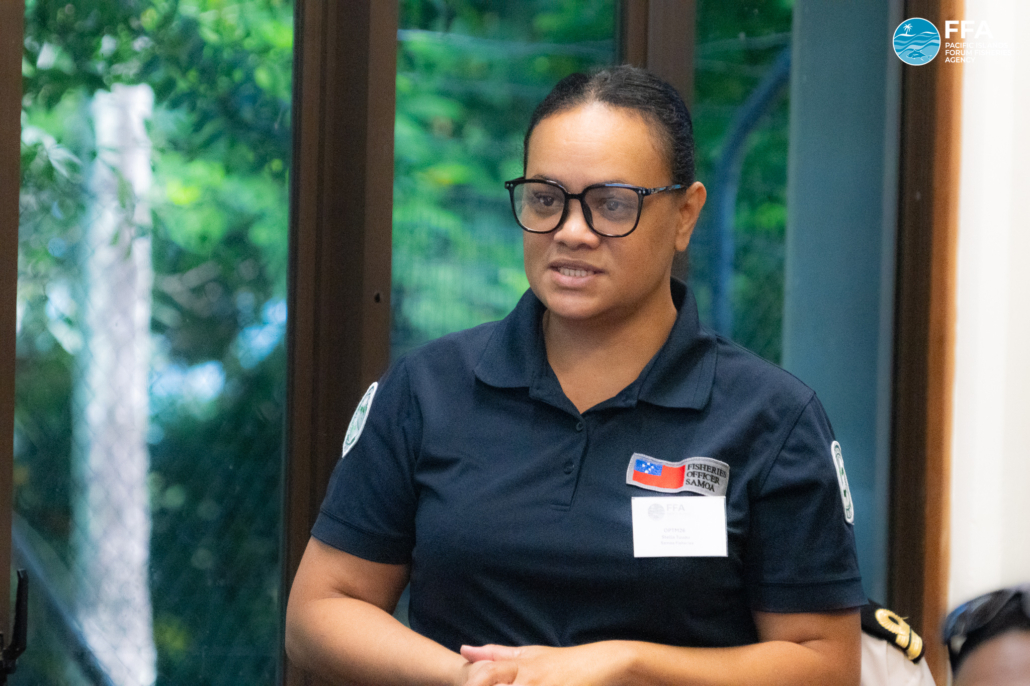
“I felt so thrilled to be part of the operation and represent the Samoa flag through Fisheries,” she says. “It was an amazing opportunity to observe, learn and see for myself how these regional operations work.”
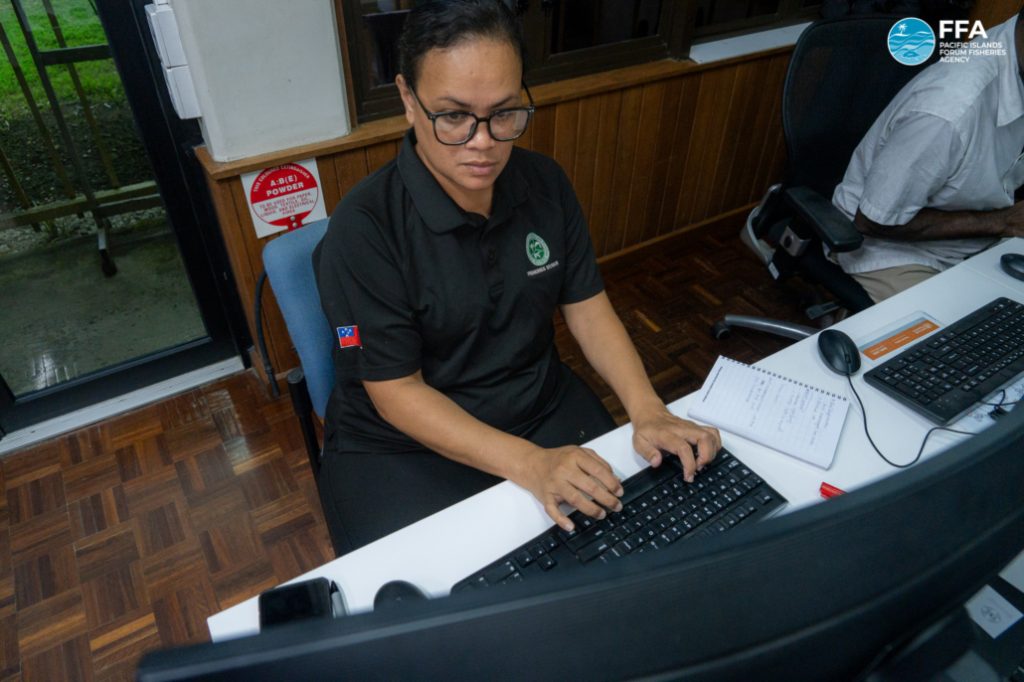
Assigned to the intelligence team, Stella spent long days analysing vessel activity and examining data from vast stretches of ocean. The work was challenging, particularly when monitoring large exclusive economic zones and areas where hundreds of fishing vessels operate.
Yet it was also one of the highlights of the operation.
“The most memorable part for me was conducting analysis and using the different systems introduced during the training,” she says. “Looking at the information, identifying patterns and understanding what was happening in the area of operation was something I really enjoyed.”
One moment stands out above all others.
Every morning, participants gathered to brief colleagues on their findings and report any suspicious activity they had identified.
“When it was our turn to present, it felt like we were experts,” Stella says, smiling. “Everyone had a role to play and contributed to the operation.”
But beyond the technical skills, what left the greatest impression was the spirit of regional cooperation.
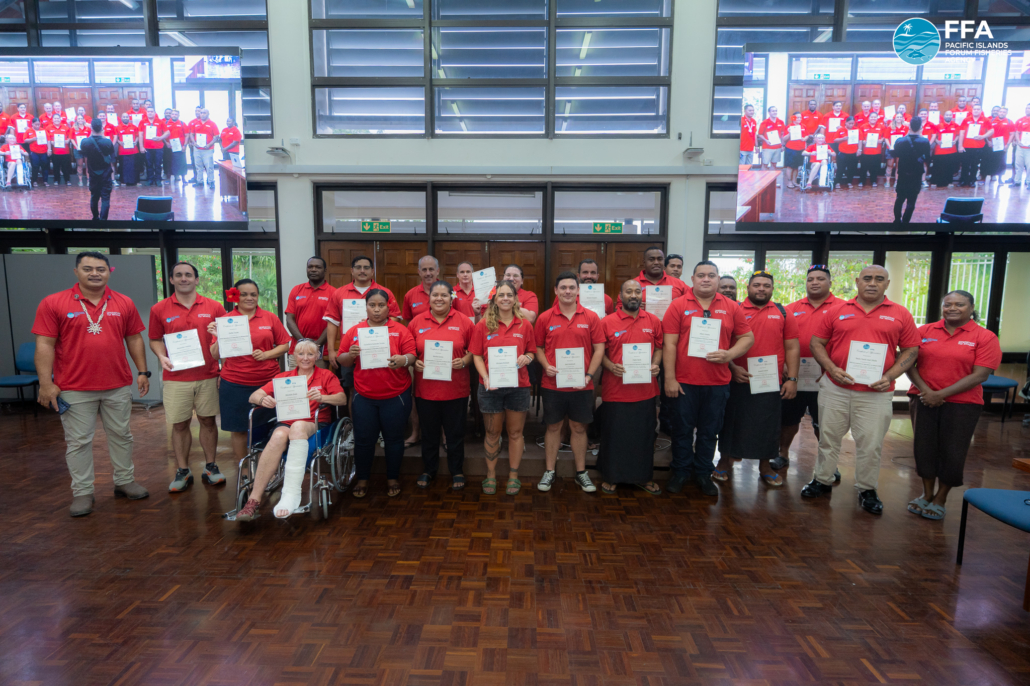
Participants from across the Pacific worked side by side, sharing knowledge, supporting one another and building friendships.
For Stella, those relationships reinforced an important message: Pacific countries are stronger when they work together.
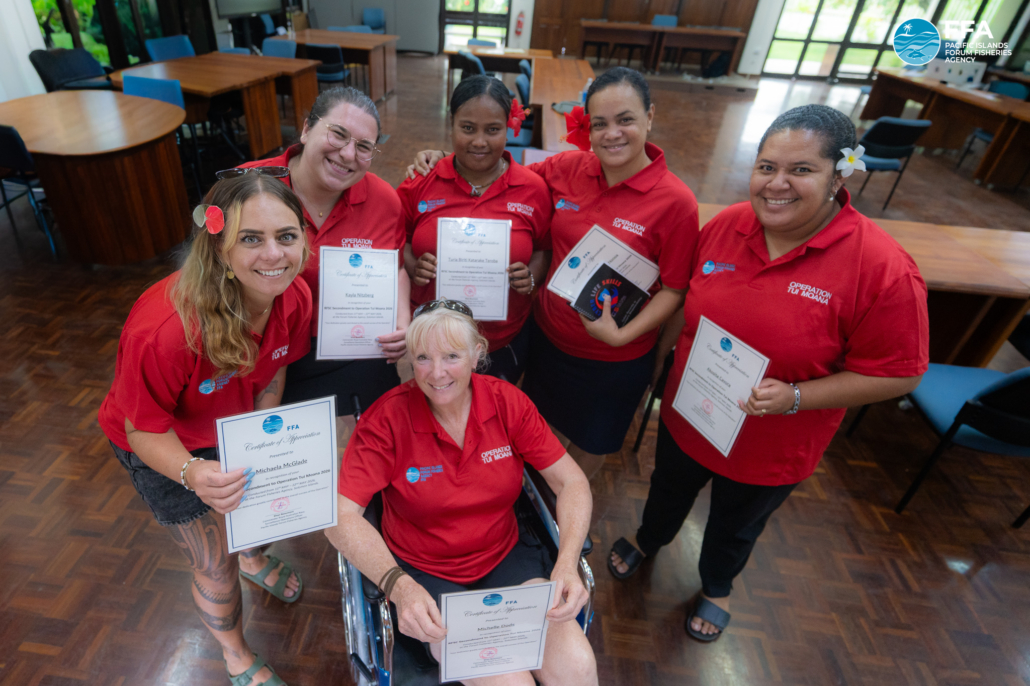
“It gives me hope to see countries cooperating like this,” she says. “By working together, we can solve some of the problems facing our ocean and combat illegal fishing in our waters.”
That hope is driven by a larger purpose.
Protecting tuna and other fisheries resources, she says, is about much more than fish. It is about safeguarding food security, supporting jobs, preserving cultural identity and ensuring future generations can continue to benefit from the ocean just as previous generations have.
“There are still more tuna and more resources for our communities and for the future of our children,” Stella says. “That is why this work is important.”
As Operation Tui Moana came to a close last weekend, 22 May 2026, Stella is eager to take her new knowledge and experience back to Samoa, where she hopes it will strengthen the work of her surveillance and compliance team.
She believes that the lessons learned will help improve how her team analyses fishing activity and monitors vessels entering Samoan ports.
Yet, despite the sophisticated technology, surveillance tools and complex analyses involved, Stella’s motivation remains remarkably simple.
She has never forgotten where she came from.
The same ocean that fed her village and supported her community is the ocean she now helps protect.
“We are the caretakers of our ocean and our fish,” she says. “There are no more suitable people on earth to be the custodians of the ocean than those for whom the sea is home.”
Led by the Pacific Islands Forum Fisheries Agency (FFA), Operation Tui Moana 2026 brought together fisheries, maritime and law enforcement personnel from across the region to strengthen efforts against Illegal, Unreported and Unregulated (IUU) fishing and other transnational maritime crimes.
The operation covered the Exclusive Economic Zones (EEZs) of 10 Pacific Island countries and adjacent high seas areas within the Western and Central Pacific Ocean, combining maritime patrols, aerial surveillance, intelligence analysis and compliance monitoring to identify and deter potential fisheries violations.
At the heart of OPTM26 was the FFA Regional Fisheries Surveillance Centre (RFSC) in Honiara, where 21 secondees from Member countries, partner agencies and MCS organisations worked side by side to coordinate intelligence gathering, operational planning and surveillance activities throughout the three-week deployment.
During OPTM26, authorities conducted 61 vessel inspections at sea and in port and verified more than 200 vessel detections across the area of operation. Intelligence and surveillance activities also identified four vessels of interest and led to two apprehensions linked to suspected fisheries-related offences, including concerns involving vessel monitoring system (VMS) non-reporting, unauthorised bunkering and transhipment activities, and logsheet reporting compliance.
Operation Tui Moana is a core component of FFA’s Regional Monitoring, Control and Surveillance (MCS) programme and is implemented under the Regional Monitoring, Control and Surveillance Strategy. The operation also strengthened cooperation under the Niue Treaty Subsidiary Agreement (NTSA) through coordinated surveillance activities, joint boarding exercises and enhanced intelligence sharing among participating countries.
As Pacific fisheries face increasingly sophisticated compliance challenges, regional operations such as Tui Moana continue to play a critical role in ensuring that fisheries are managed sustainably and that the economic benefits derived from the region’s tuna resources remain with Pacific people.
The operation supports the vision of the 2050 Strategy for the Blue Pacific Continent, reaffirming the region’s commitment to collective action, regional security and the sustainable management of one of the world’s most valuable tuna fisheries.