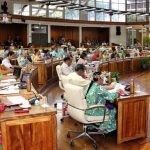

Pacific nations have renewed calls for nuclear justice at the United Nations, with Kiribati and the Marshall Islands detailing the human cost of nuclear testing in the Pacific and urging the international community to address historic wrongs.
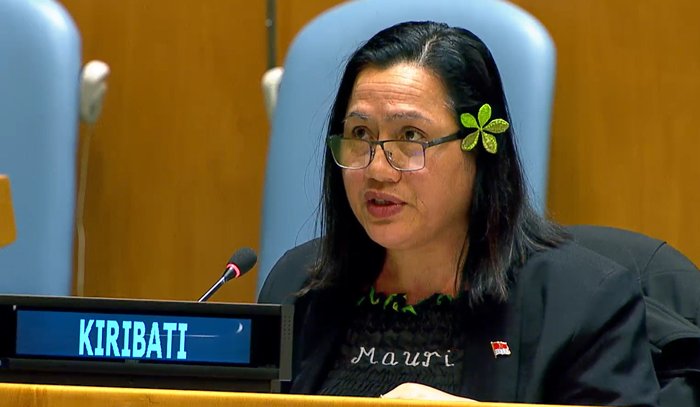
Speaking during discussions on nuclear issues, the representative of Kiribati said the country continues to live with the consequences of nuclear testing carried out decades ago.
“Between 1957 and 1962, 33 nuclear tests were conducted in the South Pacific nation, yet the 500 citizens living on Kiritimati Island received ‘little protection and inadequate warning’.”
The representative said the impact of the tests continues to affect communities today.
“The legacy of these tests has been devastating.”
“Many of these people suffered untreatable illnesses and health complications, most of which resulted in death,” including “cases of cancer and severe abnormalities among newborn babies”.
Kiribati said the suffering experienced by affected communities highlights the need for justice and accountability.
“This profound human suffering underscores why her country calls on all States parties to address the importance of nuclear justice and recognise the role of affected communities.”
The representative said Kiribati has continued to promote awareness through remembrance initiatives and youth engagement.
“Kiribati’s commitment to nuclear justice is also expressed through remembrance and youth engagement, reflected in its support for artworks by young people from Kiritimati envisioning a world free from nuclear weapons.”
Kiribati said it has been working closely with Kazakhstan to advance the issue internationally.
“Together with Kazakhstan, ‘we have been spearheading efforts on nuclear justice’ within this review cycle, the General Assembly and the Treaty on the Prohibition of nuclear weapons, including organising ‘the first-ever international meeting on victim assistance and environmental remediation’.”
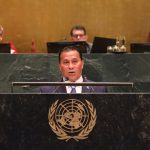
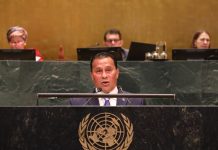
Meanwhile, the representative of the Marshall Islands warned that global nuclear risks are increasing.
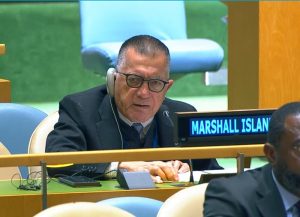
“The world is slipping into a dangerous and growing level of nuclear risk.”
He called for “building better bridges” and said Pacific countries remain committed to regional nuclear-free efforts under the Rarotonga Treaty.
The Marshall Islands endured 67 nuclear tests conducted by the United States between 1946 and 1958.
“The Marshall Islands experienced 67 large-scale nuclear tests by the United States between 1946 and 1958, many of which were conducted after his country had petitioned the UN to halt them.”
“Despite assurances of our well-being, the tests continued under the auspices of Trusteeship resolutions 1082 and 1493,” he recalled.
The representative, speaking emotionally during the session, backed Kiribati’s proposal on addressing the impacts of nuclear testing.
“Holding back tears and to a burst of applause, he supported the joint submission led by Kiribati to working group III – on the impacts of nuclear testing – and underscored the importance of progress on an outcome that recognises the responsibility and obligation to address the historic wrongs and contemporary impacts of testing.”
He also described the suffering experienced by Marshallese families following the nuclear tests.
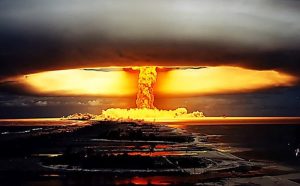
“Describing the experiences of Marshallese mothers who gave birth to stillborn babies who ‘looked like jellyfish’, and recalling the voices of Marshallese leaders who came to the UN in 1954 and 1956, he implored:”
“‘As you walk these halls, if you take a few moments, you might hear their call to bring an end to nuclear weapons,’” the Marshall Islands representative said.