
has issued a blunt warning on rising HIV cases, drug abuse and youth migration, calling on leaders to treat young people as partners, not afterthoughts, in shaping the region’s future.
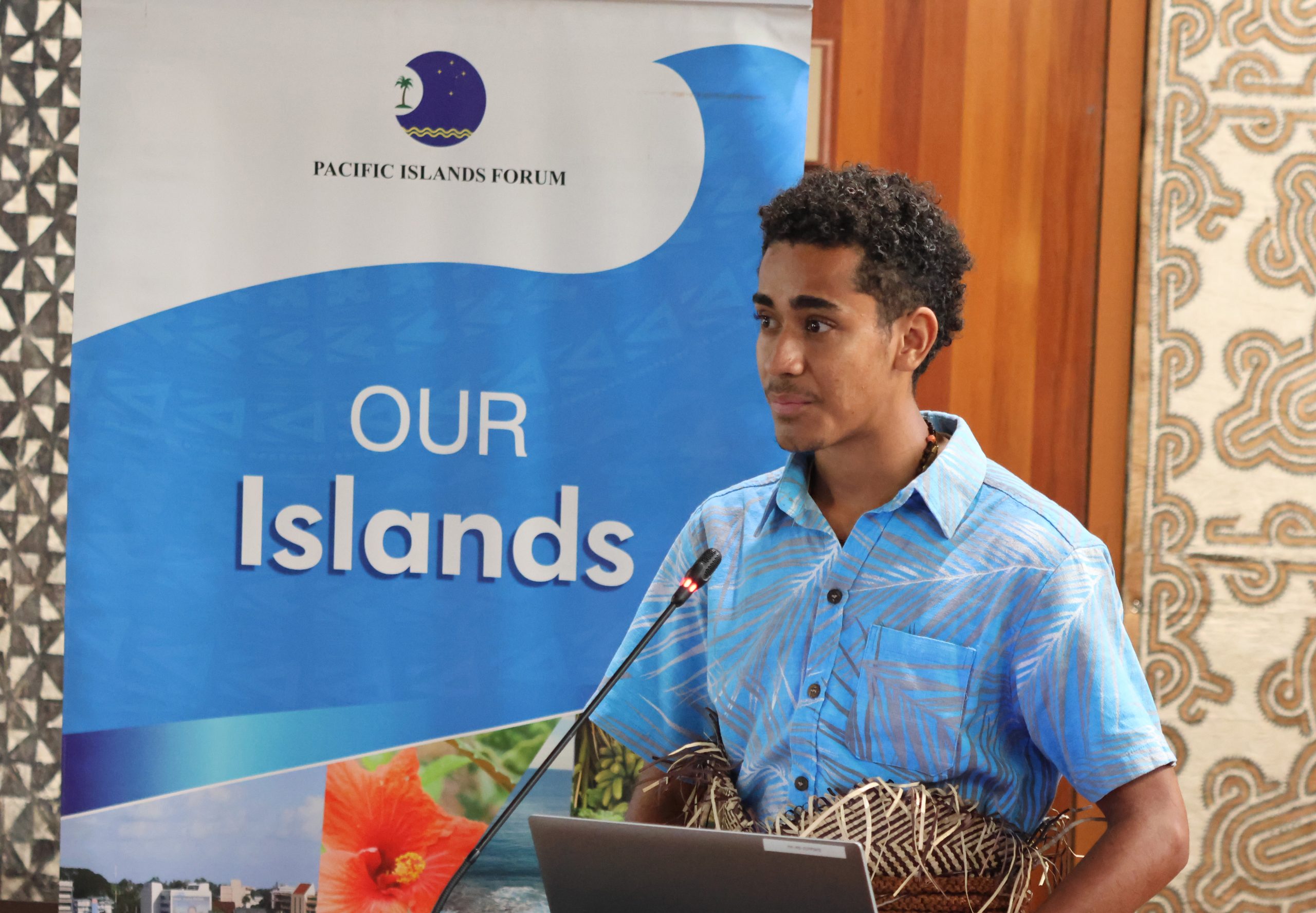
Speaking at the 2050 Regional Convening at the Pacific Islands Forum Secretariat, the 19-year-old said Pacific youth are carrying the weight of growing social and economic pressures.
“I stand before you today not just as a member of the Pacific Youth Council, but as a 19-year-old son of Fiji and a child of the Blue Pacific.”
“I am here to speak for the millions of young souls across our vast ocean…the dreamers, the innovators, and the inheritors of the future we are collectively shaping.”
Williams rejected the label often used to describe young populations.
“We often hear discussions about the ‘youth bulge.’ Let us reframe this: we are the heartbeat of the Pacific. But today, that heartbeat is under strain.”
He highlighted the escalating health and social crises affecting young people.
“We are facing a terrifying rise in HIV cases and a drug crisis that is stealing our peers before they can even begin to lead.”
He said non-communicable diseases are also taking a growing toll.
“Across the region, our hospitals are filled with the casualties of NCDs – preventable diseases that are cutting short the lives of our elders and now, increasingly, our youth.”
Williams also highlighted the impact of migration.
“Our best and brightest are migrating in record numbers, seeking opportunities abroad. We are leaving behind aging populations in our villages and a void in our workforce.”
Despite the challenges, he said Pacific youth have already delivered results on the global stage.
“We didn’t just wait for change; we led it. We took our climate change fight from the shores of our islands to the world’s highest court, the International Court of Justice.”
He said young people continue to fight for the region despite limited support.
“We continue to fight for our region even when we are the least invested in.”
Williams challenged leaders to go further.
“Imagine what we could achieve if we weren’t just ‘fighting for a seat,’ but were properly resourced and empowered as partners from the very beginning.”
On inclusion, he warned it must go beyond rhetoric.
“As we ‘Align, Commit, and Track,’ we must ensure that inclusion is not just a buzzword.”
He called for greater recognition of marginalised groups.
“This vision must be accessible to our brothers and sisters in the disability community, ensuring that our infrastructure, our data, and our digital futures leave no one behind.”
He also pointed to regional identity struggles.
“It must also include those still seeking their place at the table….our friends in Kanaky, West Papua, and Tahiti who are reclaiming their identities. A truly united Pacific must be a free and inclusive Pacific.”
Williams urged leaders to integrate youth frameworks into national planning.
“The Pacific Youth Development Framework (PYDF) 2026-2035 is our roadmap for this journey. We urge you to integrate the PYDF into your planning.”
He said youth must be embedded across all sectors.
“Youth must be a cross-cutting priority in every national budget and development plan.”
He called for a shift in how governments engage young people.
“We call for a commitment where countries diligently and intentionally include young people……..not just as observers of decisions, but as partners in implementation.”
Williams used a traditional metaphor to drive his message.
“The 2050 Strategy is our Drua.”
“Without the elders’ wisdom, the canoe would have no direction. But without the youth’s strength to weave the hull together, the canoe would simply fall apart in the first storm.”
He said the region’s future depends on shared responsibility.
“Let us not just ‘convene.’ Let us weave this Drua so tightly that no storm can break us. Let us sail this canoe together as one Pacific family,” said Williams.