

By Makereta Komai, PACNEWS Editor in Samarkand, Uzbekistan
The vulnerability of Pacific countries to external shocks has come to the fore with the impact of the prolonged crisis in the Middle East on the region’s energy sector.
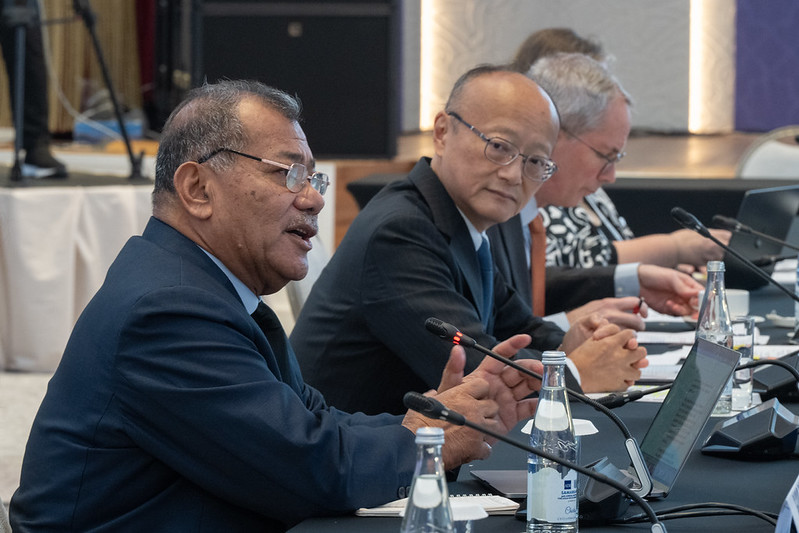
This was clearly articulated by most of the 14 Pacific Developing Member Countries (PMDCs) of the Asian Development Bank, meeting in Samarkand, Uzbekistan this week.
In April, the small island nation of Tuvalu declared a state of emergency for two weeks because it was not sure whether fuel will be consistently supplied beyond June.
Other Pacific countries have put in place contingency plans to address fuel shortages if the crisis continues.
“I am very concerned about the real pressures your economies are navigating right now, especially the spillovers from the Middle East conflict to Pacific islands, assured ADB President, Masato Kanda.
“I urge you to share how these pressures are being felt, and where ADB can be most useful—through financial support, policy advice, or working alongside other development partners.
Kanda told PMDC leaders – which include finance ministers and Governors of Reserve Banks – that a stronger private sector is one of the most effective buffers against external shocks.
“It creates jobs, diversifies revenue, and reduces dependence on aid and remittances. A reliance on fuel imports, tourism, and remittances can intensify risks.
The ADB President who has made the Pacific his personal priority – has started consultations with member countries, development partners and other stakeholders to explore how to address the exposure of Pacific countries to external shocks.
ADB’s analysis identified four core impediments to inclusive, resilient, and sustainable growth – vulnerability to external shocks currently experience, gaps in public service delivery, infrastructure deficits, and a narrow private sector.
“These are not vulnerabilities unique to the Pacific. But in small island economies, they concentrate risk in ways that few other regions face.
While the Pacific’s portfolio with the bank has grown from US$845 million in 2010 to US$3.9 billion across 95 active projects at the end of 2025, the bank has also increased its presence in the region.
“Our field presence has increased significantly over the past five years. In February, I formally opened a resident mission in Solomon Islands.
“Later this year, we plan to open a subregional office for the North Pacific. We are moving closer to you—because that is where the work gets done, President Kanda remarked at a meeting with Pacific DMC leaders on the sidelines of the bank’s 59th Annual Meeting underway in Samarkand, Uzbekistan.
Kanda reiterated that a stronger private sector is one of the most effective buffers against external shocks. It creates jobs, diversifies revenue, and reduces dependence on aid and remittances.
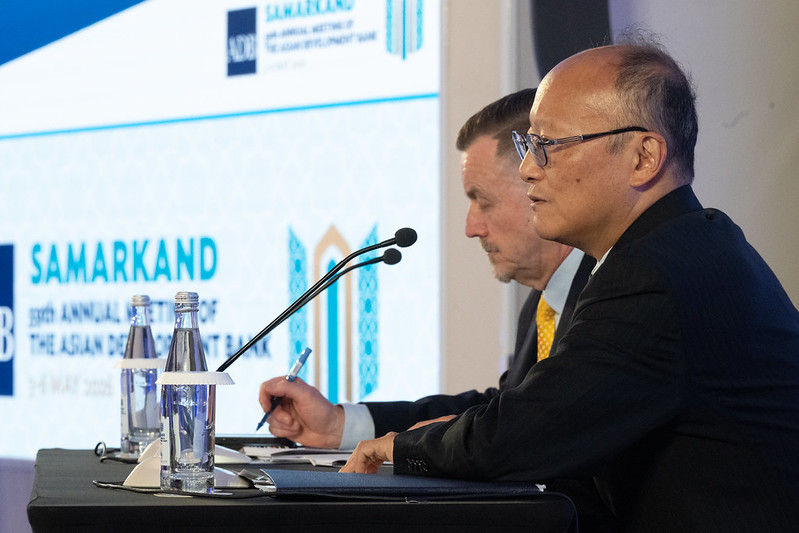
ADB is focusing its support to the private sector as a core pillar of its engagement with the Pacific.
“The newly launched Wayfinder and ADB Frontier Seed programmes are supporting tailored private investments through streamlined processes and blended finance. In its first year, Frontier has supported four high-growth small enterprises.
And Wayfinder made its first investment in the TamTam Submarine Cable project in Vanuatu in February.
But there is more to do, according to the ADB President.
“The high cost of doing business remains a significant constraint. We are working to boost small and medium-sized enterprise (SME) investment, advance state-owned enterprise reforms in energy and water, and improve business environments through tax, customs, and financial sector reform.
“The new Pacific Approach must reflect your realities—not just our analysis of them. My team is here to listen, and your insights will directly shape what we plan to bring to the Board of Directors in the third quarter of 2026.
More than 4,000 delegates representing governments, businesses, the private sector and the media are in Samarkand for the bank’s annual meeting.