

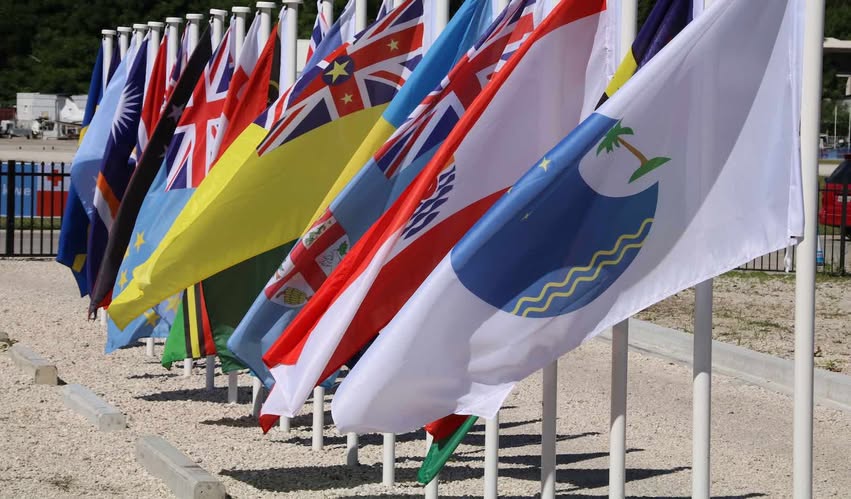
Pacific Islands a ‘triple junction’ of climate risk, ocean governance, and geopolitical competition
By Jack Huang
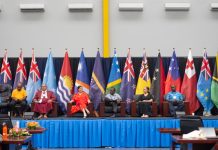
Taiwan’s return to the Pacific Islands Forum (PIF) in 2026 should not be read as a simple diplomatic comeback.
It is better understood as a rare inflection point in Pacific regionalism — one that gives Taipei a chance to reposition itself from a politically contentious presence to a consistently useful partner in the Blue Pacific’s long-term development agenda.
The facts are now clear. Palau will host the 55th PIF Leaders Meeting from 30 August to 04 September, under the theme “B.E.L.A.U. or Building Economies: Life. Action. Unity.”
Palau’s president has publicly signalled that all dialogue partners will be welcomed back. This is an unmistakable response to the precedent set last year when external partners were shut out in an effort to preserve internal unity amid intensifying great-power competition. Taiwan’s officials have separately indicated that Taipei will again participate as a development partner this year.
Why does this matter beyond Taiwan’s own diplomatic storyline? Because the Pacific Islands have become a strategic “triple junction”: climate risk, ocean governance, and geopolitical competition now intersect in ways that reshape regional institutions and external partnership rules.
Ocean governance
Start with geography and sovereignty. Pacific island states may be small in land area and population, but they sit atop vast maritime domains.
Their exclusive economic zones, fisheries, seabed resources, and the sea lanes and undersea cables that connect Asia and the Americas make ocean governance central to their statecraft. Add climate vulnerability — low elevation, extreme weather, and the fiscal devastation that follows disasters—and you have a region where development, security, and survival are no longer separable categories.
In this context, aid and investment are not side issues, rather, they are structural forces. Australia and New Zealand have long been dominant donors and institutional partners. Japan sustains deep engagement through a mix of development assistance, infrastructure, and multilateral diplomacy, including the longstanding PALM summit process.
China’s development footprint has recalibrated but remains politically salient, especially where financing and infrastructure intersect with domestic politics and elite competition. A major Australian think tank’s Pacific Aid Map series has documented the evolving patterns of development finance and the way China’s engagement has stabilised and adapted after earlier surges, illustrating how aid flows can reshape political and economic incentives.
Strategic bargain
The U.S, meanwhile, is not simply “back.” It is embedding its Pacific posture into institutional and legal architecture.
Washington has emphasised partnership with the PIF as part of a broader Indo-Pacific approach, seeking to work through regional mechanisms rather than purely bilateral channels. As such, the renewed Compacts of Free Association (COFA) with Palau, the Federated States of Micronesia, and the Marshall Islands have locked in a strategic bargain, security access and strategic alignment in exchange for long-term economic assistance, reinforcing the US role as a foundational power in Micronesia.
U.S congressional and legal analyses put the scale of renewed COFA assistance at roughly NT$225 billion (US$7.1 billion) over 20 years, underscoring how the Pacific is now treated as a core national interest rather than an episodic concern.
These overlapping external strategies are precisely why the PIF’s internal cohesion and its rules for engaging external partners have become more important, not less.
The PIF is no longer just a summit, it is the region’s primary mechanism for collective bargaining: on climate finance, on fisheries and ocean governance, on infrastructure standards, and on how outside powers are allowed into Pacific decision-making. The PIF’s “2050 Strategy for the Blue Pacific Continent” is explicit about long-term, Pacific-owned priorities and accountability.
Partnership value
That institutional lens also clarifies Taiwan’s dilemma — and its opportunity.
Taiwan’s diplomatic presence in the Pacific has narrowed in recent years as several countries switched recognition, illustrating how Pacific politics can become a theatre for cross-strait competition. Yet Taiwan still maintains formal ties with Palau, the Marshall Islands, and Tuvalu, and retains deep people-to-people and development relationships across the region.
The more urgent question is not how to win recognition battles, but how to create partnership value that Pacific governments and communities will defend because it serves their priorities. This is where Taiwan’s strategic value to the Pacific — and to external partners — becomes clearer than the traditional diplomatic allies framing suggests.
Taiwan is not a military power in the Pacific. Its leverage is functional: it is a high-capacity democracy with a world-class technology base, a proven ability to deliver complex systems under constraints, and a dense private-sector ecosystem that can move faster than many state-driven aid programmes.
If Taiwan can translate these strengths into lower transaction costs and higher delivery reliability for Pacific partners, it can build a form of influence that is resilient precisely because it is not dependent on headline politics. For foreign audiences, this matters for three reasons.
Regional resilience
First, Taiwan is a practical contributor to regional resilience. In a region where capacity constraints are a binding limitation, projects fail not mainly due to a lack of ambition, but because maintenance, training, data governance, and institutional handoffs are underfunded or overlooked.
Taiwan’s comparative advantage lies in implementation intelligence: designing systems that can be operated by small administrations, training local teams, and building feedback loops and transparent data practices. That is a strategic asset in the Blue Pacific context.
Second, Taiwan can serve as a standards-reinforcing partner. Pacific governments are increasingly wary of opaque financing and short-term projects that create long-term liabilities.
A partner that emphasises transparency, accountability, and locally owned governance can strengthen, not weaken, Pacific regionalism. That helps the PIF maintain unity as it navigates external competition, a concern repeatedly highlighted by Australian strategic commentary on regional cohesion.
Third, Taiwan is increasingly relevant to the U.S and allied Pacific approach — even without being framed as such. Washington’s Pacific strategy is not designed to “carry” Taiwan into regional institutions. It is designed to sustain a workable regional order, reduce the costs of strategic competition, and demonstrate visible development outcomes that Pacific publics can trust.
Taiwan can complement that agenda by supplying what large donors often struggle to provide: execution capacity, trusted technical cooperation, and durable partnerships that survive electoral cycles. In other words, Taiwan’s value is not that it makes the Pacific more anti-China, but that it can make Pacific development partnerships more credible and effective, thereby strengthening the region’s agency.
Two problems
But this functional strategy only works if Taiwan avoids two predictable pitfalls.
The first is over-politicisation. If Taiwan’s PIF engagement is narrated primarily as a symbolic contest with Beijing, Pacific leaders will have less room to work with Taipei without raising domestic and regional costs.
In the wake of the 2025 decision to exclude external partners, Pacific governments are signalling that they want to manage external competition, not be consumed by it. Taiwan’s posture should reflect that preference.
The second is “project theatre.” Pacific communities have seen too many announcements that do not translate into sustained delivery. Any Taiwanese initiative pitched at PIF 2026 must demonstrate credible pathways for maintenance, local ownership, and long-term financing. Otherwise, it will be perceived as a one-off public relations exercise.
Which brings us to a substantive theme that can tie Taiwan’s technical strengths to Pacific priorities while also aligning with emerging global climate governance: ocean-based “blue carbon.”
Blue carbon refers to carbon captured and stored by coastal and marine ecosystems, most commonly mangroves, seagrass meadows, and tidal wetlands. For the Blue Pacific, this is not a niche environmental topic.
Blue carbon
It sits at the intersection of climate mitigation, coastal protection, fisheries health, tourism value, and community livelihoods. It is also an area where global climate and carbon-market governance is still evolving, and where credible models are urgently needed.
That urgency comes with a warning. Blue carbon has become attractive precisely as voluntary carbon markets face a crisis of confidence.
Without rigorous measurement, reporting, and verification (MRV), and without governance safeguards against double-counting, weak additionality claims, or inequitable benefit sharing, blue-carbon initiatives can trigger reputational and political backlash. In small island states, where land and marine tenure can be complex, the legitimacy of any blue-carbon project hinges on social consent and tangible co-benefits — not just carbon accounting.
This is where Taiwan could offer a compelling, credible proposition: not selling carbon credits, but helping build the institutional and technical infrastructure that makes high-integrity blue carbon possible.
A Palau-anchored approach, aligned with the host’s agenda and timed before PIF 2026, could focus on three practical pillars.
Soft power wins
First, governance and legitimacy. Work with Palauan counterparts to map the minimum viable governance conditions for blue-carbon projects: who holds authority, how community consent is obtained, how benefits are shared, how data sovereignty is protected, and how disputes are handled. This turns blue carbon from a speculative promise into a structured policy option.
Second, digital MRV and capacity. Combine satellite observation, field sampling, and community-based monitoring into a transparent MRV framework that is affordable for small administrations.
Taiwan’s strengths in digital systems and data governance could be used to develop reusable tools such as templates, training modules, and dashboards that help local teams operate MRV systems without perpetual external dependence.
PIF’s own 2050 Strategy emphasises ownership and accountability across society. MRV capacity is one way to operationalise that principle.
Third, finance and durability. Instead of treating carbon revenues as the sole business case, design blended pathways that connect blue carbon to resilience investment: coastal protection benefits, fisheries recovery, ecotourism value, and results-based finance. This reduces the risk that projects collapse when carbon prices fluctuate or verification costs rise.
Importantly, blue carbon also offers a platform for constructive US–Taiwan complementarity in the Pacific without forcing Pacific partners into overt geopolitical alignment. US policy increasingly links strategic competition with tangible delivery such as energy, infrastructure, resilience, and governance.
Pacific agency
Taiwan can add implementation depth to those aims, turning broad resilience commitments into field-level programs that can be audited, scaled, and trusted.
This is the kind of division of labour that strengthens Pacific agency. It expands the menu of credible options available to Pacific governments, rather than narrowing it to a binary choice.
For a foreign audience, the takeaway is straightforward. Taiwan’s strategic importance in the Pacific is not only about diplomacy or symbolism. It lies in the practical capability to help make Pacific regional priorities deliverable — especially in emerging domains where global governance is still being written.
PIF in Palau, after the turbulence of 2025, offers a stage where effectiveness will matter more than rhetoric. If Taiwan uses its return to anchor partnerships in high-integrity, capacity-building, and locally owned initiatives, it can build influence the way the Pacific itself increasingly demands through results that strengthen sovereignty, resilience, and regional unity.
And that, ultimately, is the kind of soft power that endures.