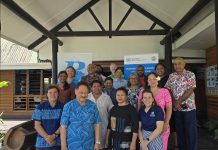

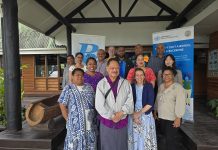

Pacific Islands Forum members have called for stronger action to advance gender equality and protect women and girls during the Commission on the Status of Women (CSW) in New York.
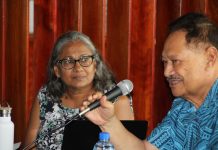
Delivering a statement on behalf of Pacific members at the 70th session of the global meeting, Cathy Nori Minister for Women, Youth, Children and Family Affairs from Solomon Island said the region remains committed to advancing gender equality and social inclusion.
Nori said the theme of CSW70 is central to the Pacific’s development priorities.
“The CSW70 theme is integral to realizing gender equality and social inclusion, a commitment our Forum Leaders continue to reaffirm as central to the region’s collective progress in pursuing a resilient, inclusive and peaceful Pacific.”
She said Pacific leaders endorsed the mainstreaming of gender equality across regional priorities at their 2025 meeting.
“At their 54th Meeting in 2025, Forum Leaders endorsed the mainstreaming of gender equality and social inclusion in all key regional policy priorities across all areas.”
Nori said the region’s work is guided by key regional frameworks including the 2050 Strategy for the Blue Pacific Continent.
“This is underpinned by the 2050 Strategy for the Blue Pacific Continent, the Revitalised Pacific Leaders Gender Equality Declaration and the Pacific Platform for Action on Gender Equality and Women’s Human Rights.”
Nori said ensuring justice for women and girls remains fundamental.
“Access to justice for women and girls is fundamental to gender equality and empowerment.”
She said Pacific governments have strengthened legal protections and improved access to justice.
“Across the Pacific Islands region, governments have taken important steps to strengthen legal protections for women and girls and improve access to justice, through participatory legislative, policy and practice reforms.”
However, she noted that unique regional challenges require tailored approaches.
“For us, access to justice is determined by unique structural realities, including geographic isolation, dispersed populations, limited legal services, linguistic and cultural diversity, and the interaction between formal and customary justice systems further necessitate approaches that are context specific, culturally grounded and respectful of customs.”
She said gender-responsive policies are especially important for women and girls in remote communities.
“This is why gender transformative and socially inclusive approaches are essential especially for women and girls in rural, remote and maritime areas.”
Nori also highlighted a new initiative in Solomon Islands.
“It is within this context that my country Solomon Islands is embarking on piloting Gender Responsive Budgeting as a transformative approach and strategy to analysing and reorienting budgetary allocations and policies that is responsive to the needs of our people particularly of those most vulnerable.”
Nori said gender-based violence remains a major challenge across the region.
“Gender Based Violence prevalence rate remains high in our region. We are determined to change this status quo.”
She said Pacific governments are strengthening survivor support services and justice systems.
“We recognise the rights-based response, includes support to victims. As a region we continue to strengthen survivor-centred services, drawing on lessons learned from experiences of response and referral systems such as in the Solomon Islands and Kiribati.”
She said governments are also expanding specialised police and judicial units.
“As well as establishing specialized police and judicial units to address gender-based violence and expanded legal aid and community-based paralegal initiatives.”
Nori said the region is taking a long-term approach to prevention.
“As a region, we are committed to taking a whole-of-life approach to preventing gender-based violence including investment in early childhood development, actively engaging men and boys as partners and agents of meaningful change and recognizing the vital role of families and communities.”
Nori said climate change continues to threaten Pacific communities.
“Pacific Islands Forum Members recognise the threats of adverse impacts of Climate change as the defining issue that imperils the lives, livelihoods and wellbeing of our people and communities.”
She said the impacts are compounded by other social and health challenges.
“This reality is further compounded by multiple and intersecting social and health issues including gender-based violence, and social impacts of the illicit drug trade.”
Nori said women play a vital role in peacebuilding and resilience across the Pacific.
“The Pacific also places importance on the critical role of women and girls in all their diversity in peacebuilding, resilience, and creating safe communities.”
She added that women’s leadership is increasingly recognised in regional peace and security efforts.
“Because of this, women’s leadership in peacebuilding, mediation, and conflict prevention is increasingly embedded in Pacific peace and security processes.”
Nori stressed the need for more funding to address the region’s challenges.
“We underscore the need for adequate financing to address these multifaceted issues.”
She highlighted the Pacific Resilience Facility (PRF) as a key regional effort.
“The Pacific Resilience Facility is our home-grown initiative, to ensure equitable access to climate finance for Pacific people, including women, children, persons with disabilities and youth.”
Nori also noted progress in Pacific engagement with international human rights bodies.
“In 2025, the Pacific convened the first ever Pacific Technical Cooperation Session of the CEDAW Committee.”
However, she said Pacific representation in UN treaty bodies remains limited.
“Currently, amongst the 172 treaty body experts, there are no Pacific Islanders.”
Despite the challenges, Nori said the Pacific remains united.
“Despite the complex and multidimensional challenges, we are confronted with, the Pacific continues to draw on our collective strength, solidarity, and shared values.”
She urged stronger action through the UN platform.
“For 70 years this platform has fostered dialogue, partnership and advanced commitments, however, more remains to be done. We must shift from dialogue to action – action that is inclusive and responsive to the needs of women and girls in all their diversity,” said Nori.