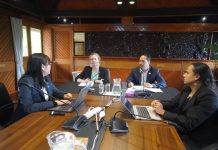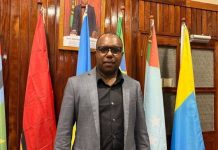
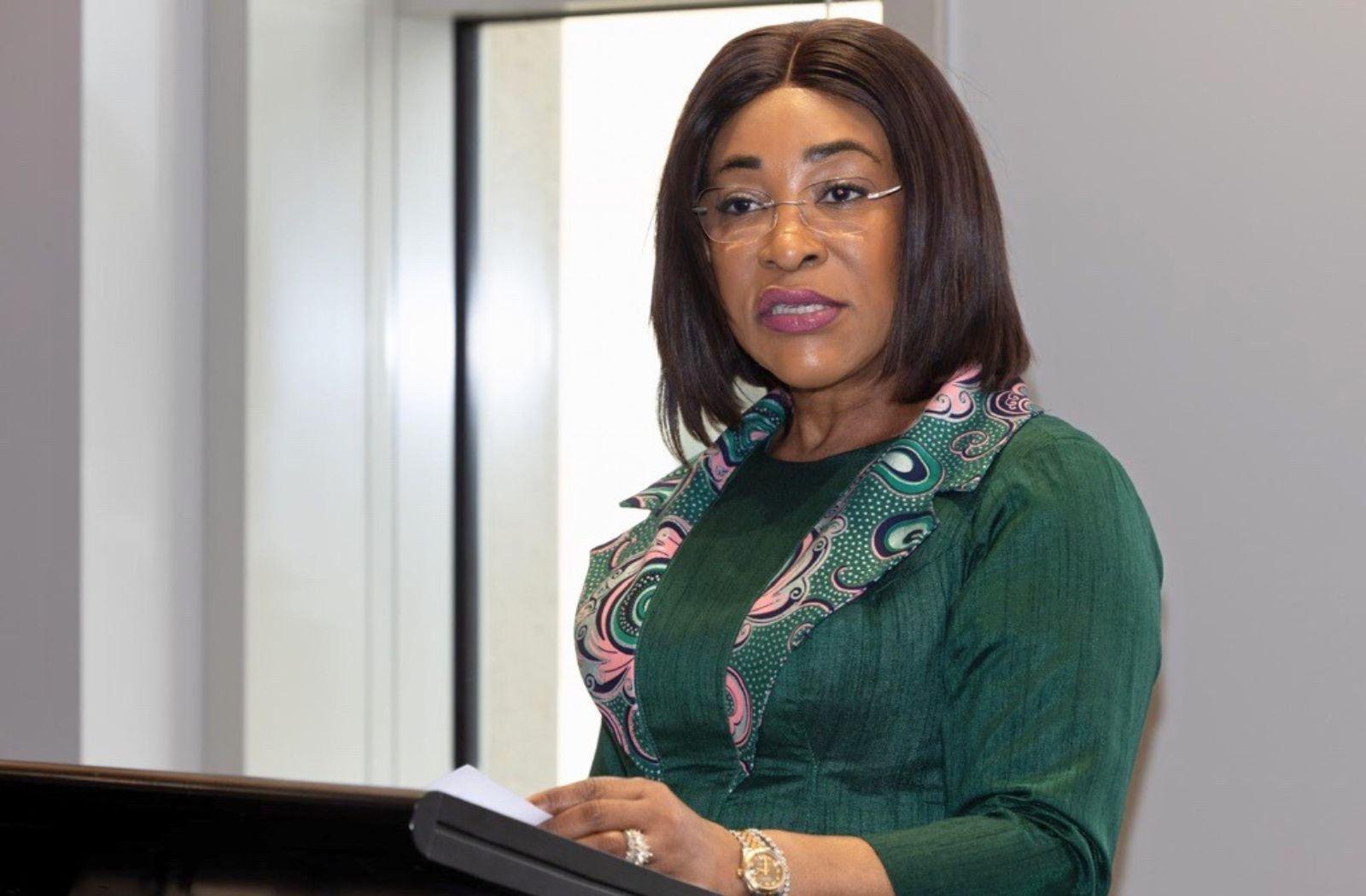
Commonwealth Secretary General Shirley Botchwey used her remarks at the 26th Commonwealth Foreign Affairs Ministers Meeting (CFAMM) in London to highlight global challenges and call for stronger cooperation across the Commonwealth of nations.
Marking International Women’s Day, Botchwey told ministers gender equality remained a global challenge.
“I wish to begin by recognising the significance of International Women’s Day. It is a moment to reflect on progress made and distance still to travel.
Even in 2026, gender equality remains far from achieved, and in every society, women and girls continue to face barriers that limit opportunity, participation and security.”
She said progress remained uneven around the world.
“No indicator under Sustainable Development Goal Five has yet been fully achieved, and projections suggest that closing gender gaps in economic participation, political leadership, health and education could take generations.”
Botchwey said women’s leadership across the Commonwealth continued to be visible.
“And yet, across the Commonwealth, we see every day the extraordinary leadership, innovation and resilience of women and girls. Indeed, I see that quality of leadership reflected around this table and I pay tribute to our women leaders here.”
She said the voices and ideas of women and girls were essential to the future of the Commonwealth.
“The voices, ideas and example of women and girls are indispensable to the future we seek to build – and it remains our duty to dismantle the legal, institutional and social barriers that continue to constrain them.”
Botchwey said the Commonwealth must ensure women and girls can fully participate in society.
“Only when every woman and girl can participate fully and fairly, will we be able to say that true equality sits at the heart of our shared Commonwealth endeavour.”
She also reflected on the role of the Commonwealth in global cooperation.
“It will be a powerful reminder that even in unsettled times, there remains a deep reservoir of belief in the idea that a group of countries bound by a painful history can leverage the lessons of history and shared values to reinvent cooperation and end exploitative relationships to ensure resilience and shared prosperity.”
Botchwey said current global systems were failing people.
“They are right because the trajectory we are on, with the post- Second World War arrangements and its traditional development cooperation, is failing our people, whether in industrialised countries or developing countries.”
She said the Commonwealth remained an important platform for cooperation among its members.
“An association that embodies all the possibilities for re-imagining multilateral cooperation, bringing together democracies, in all regions, with a market of over 2.7 billion people, a third of humanity and its youngest population.”
Botchwey said the Commonwealth could help drive economic opportunity.
“I see this as an important opportunity for our Ministers, our leaders, to lead a mindset change that affirms that, through the Commonwealth, we can make create a common market that enhances the potential of Commonwealth businesses and investors to create shared prosperity.”
She also stressed the need for stronger cooperation among member states.
“The Commonwealth works not as a bloc but as a bridge.
“A bridge between regions. A bridge between large states and small.
“A bridge between advanced and developing economies. A bridge between principles and practical cooperation,” she said.
Botchwey said the Commonwealth must act with ambition.
“For us, we must believe that the time for modest ambition is over.”
She said cooperation among Commonwealth nations could help address global instability.
“And we must prove – through action, through partnership, through vision – that when we stand together, and work together, we can defend our values, advance our interests, and change the world,” said Botchwey.