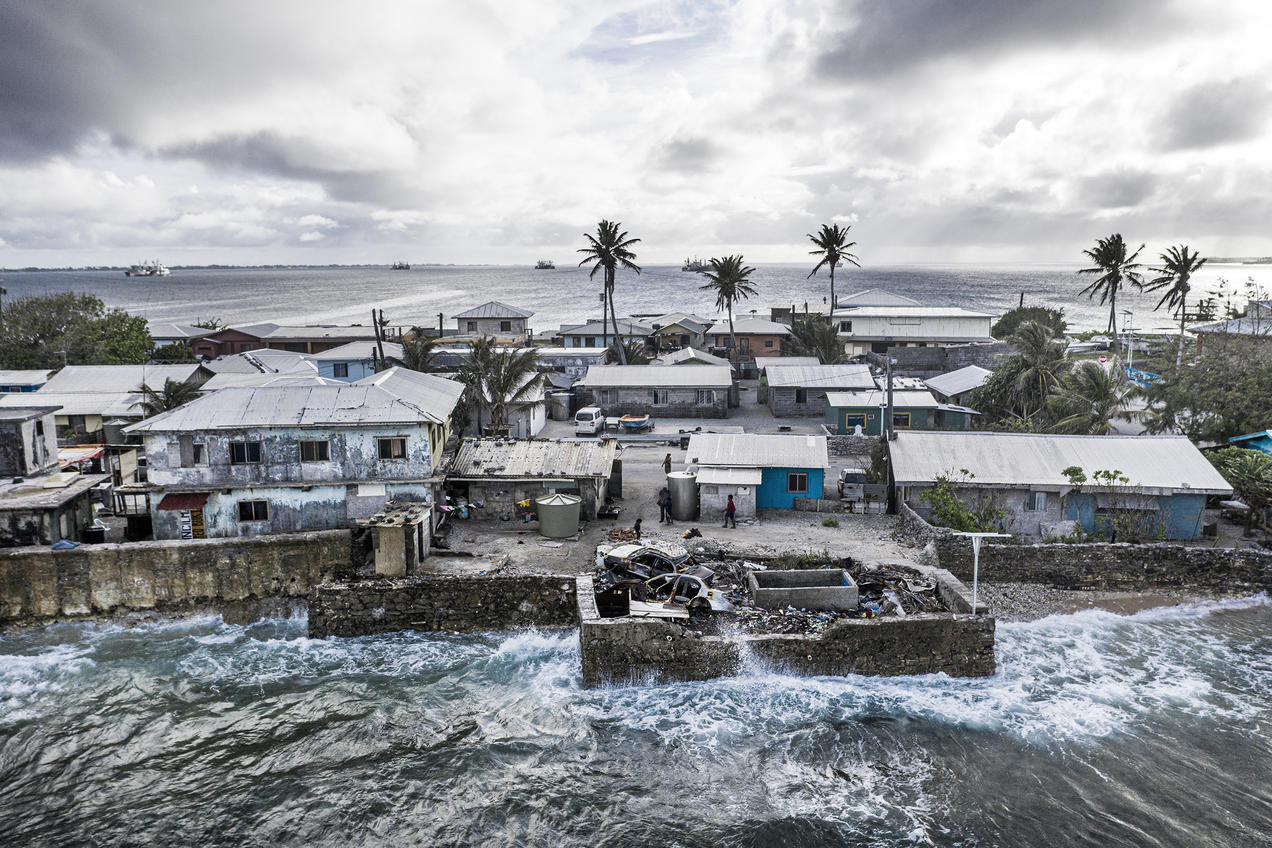
Sea level rise is no longer just an environmental crisis for the Pacific; it is a legal challenge striking at the heart of sovereignty, maritime boundaries and even the continuity of statehood.
Pacific leaders, backed by evolving international legal opinions, are drawing a firm line that rising seas should not redraw national borders.
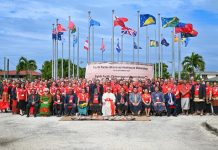
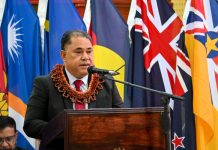
Speaking at a seminar hosted at the University of the South Pacific (USP), Dr Bimal N Patel, Vice Chancellor and Professor of Public International Law at Rashtriya Raksha University, described climate change as an “urgent and existential threat to the international community as a whole,” underscoring that its consequences now extend deep into international law.
“For Pacific Island countries in particular, rising sea levels pose existential threats affecting maritime zones, territorial integrity, economic rights, and even statehood,” Dr Patel said.
He noted that the legal conversation in the Pacific has evolved from broad principles to coordinated regional positions and structured implementation under the Pacific Islands Forum’s 2050 Strategy for the Blue Pacific Continent.
“At the centre of the Pacific’s legal consolidation stands the 2021 Pacific Islands Forum declaration on preserving maritime zones,” Dr Patel said.
The declaration expresses “a clear regional intention to maintain maritime zones established and notified in accordance with UNCLOS, with stability and predictability as the guiding outcomes.”
He highlighted that nothing in the United Nations Convention on the Law of the Sea (UNCLOS) obliges states to continually adjust their baselines or maritime boundaries as sea levels rise.
“The commission found that nothing in UNCLOS or general international law obligates states to move or continually update baselines, coordinates or outer limits of maritime zones once lawfully established and deposited,” he said.
Beyond maritime zones, Pacific leaders have also taken a firm stance on statehood. Dr Patel referenced the 2023 Pacific Islands Forum declaration on the continuity of statehood, which reinforces that sovereignty and international legal personality should endure even where territory becomes increasingly uninhabitable or partially submerged.
“The report recorded strong support in state practice and regional declarations for the continuity of statehood, sovereignty and international legal personality, even where territory becomes increasingly uninhabitable or partially submerged,” he said.
Dr Patel also emphasised the growing role of international courts and tribunals in clarifying state obligations on climate change. Referring to advisory opinions delivered by global judicial bodies, he said legal clarity has strengthened around duties to prevent harm and regulate emissions.
“In short, climate inaction that harms the ocean is not merely regrettable; it may possibly be inconsistent with binding UNCLOS obligations,” he said.

He added that the International Court of Justice had affirmed that states have obligations rooted in the UN Charter, human rights treaties and environmental agreements to mitigate climate change, adapt to its impacts and cooperate internationally.
“Political declarations, in other words, have been translated into a legal vocabulary,” Dr Patel said.
The advisory opinions, he explained, consolidate core principles such as due diligence, prevention of harm and cooperation while extending the classic “no-harm rule” to climate-related damage.
“States can no longer treat emissions as purely domestic matters when their effects destabilise climate and oceans globally and devastate communities thousands of kilometres away,” he said.
Importantly for vulnerable regions like the Pacific, Dr Patel noted that the courts have underscored differentiated responsibilities, stressing that developed states with greater historical emissions and financial capacity are expected to lead in mitigation efforts and provide finance, technology and capacity building.
“Climate finance has now become a real obligation,” he said. “These are no longer merely political principles; they are enshrined in legal documents.”
Dr Patel repeatedly acknowledged Pacific leadership in shaping the global legal response to sea level rise, describing the region as moving toward implementation-focused cooperation backed by institutional mechanisms.
“The Blue Pacific and AOSIS have demonstrated that international law can be advanced through clarity, regional unity and implementation-focused cooperation,” he said.
As sea levels continue to rise, the seminar underscored that the Pacific is not passively awaiting its fate. Instead, it is asserting a collective legal position that insists sovereignty, maritime rights and statehood cannot simply be washed away.
Dr Patel said the issue is no longer just environmental or political; it is legal. He stressed that the Pacific is determined that its sovereignty will not disappear beneath rising seas.