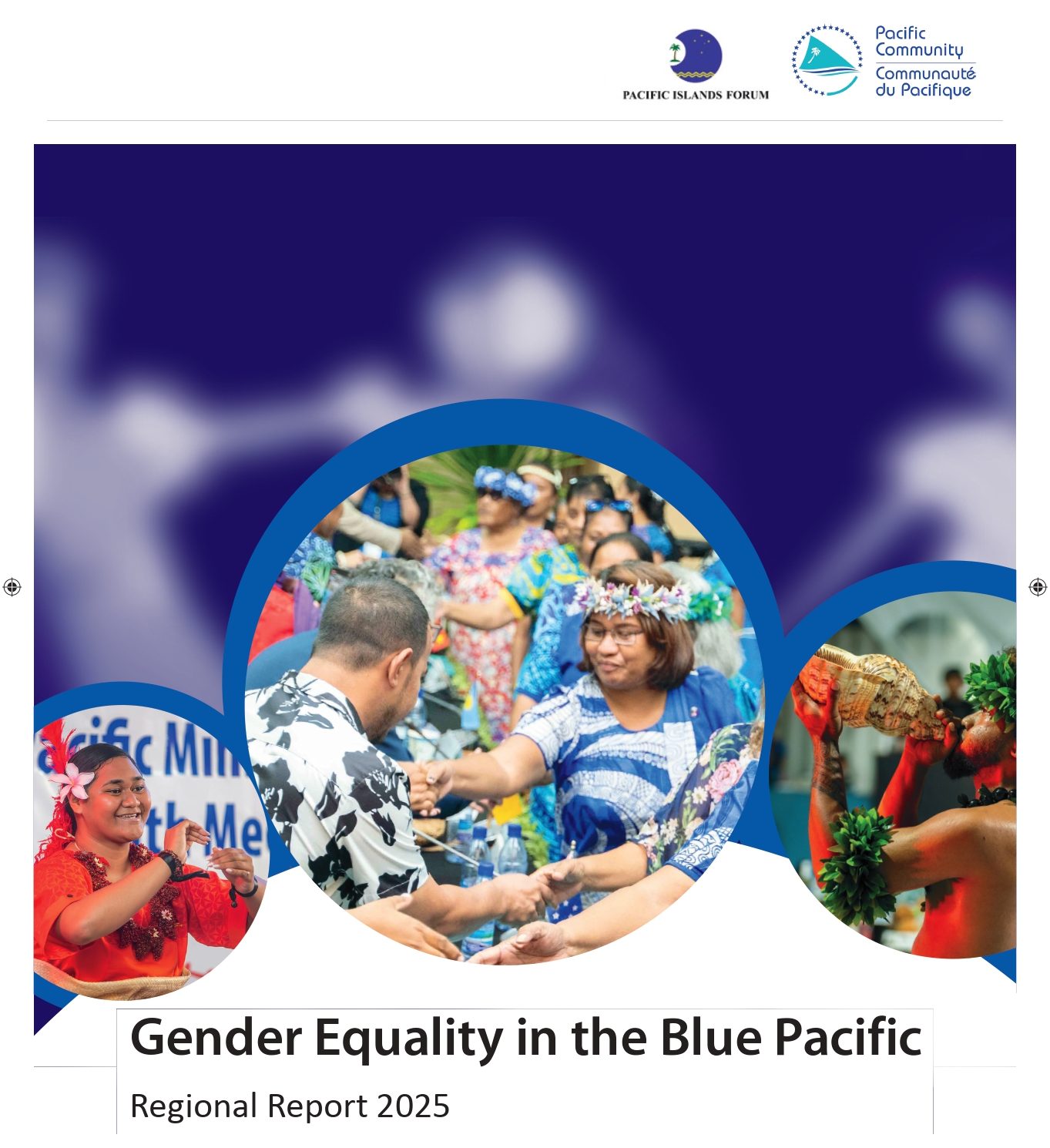
The Forum Gender Equality in the Blue Pacific: Regional Report 2025 has found that deep and persistent gender inequalities continue to shape the lives of women and girls across the Pacific, despite decades of commitments, policies and regional frameworks aimed at advancing equality.
The report, released by the Pacific Islands Forum, provides a comprehensive regional snapshot of gender equality outcomes across Forum member countries, examining progress and gaps in leadership and decision-making, economic participation, health, education, climate resilience and freedom from gender-based violence.
While the Pacific has made important strides in recognising gender equality as a regional priority, the report makes clear that progress on the ground remains uneven and, in some areas, slow.
Women across the region continue to be significantly underrepresented in political leadership and decision-making roles.
The report shows that women hold a small proportion of parliamentary seats in most Forum countries, with several still recording no women elected to national parliaments. Representation in senior public service roles has improved in some countries, but remains inconsistent and vulnerable to political and institutional change.
Economic inequality is another major concern highlighted in the report.
Women’s participation in the formal economy remains lower than men’s, with many women concentrated in informal, low-paid or insecure work. The report notes that unpaid care and domestic work continues to fall disproportionately on women, limiting their access to education, employment and leadership opportunities. These inequalities are further compounded by limited access to finance, land and productive resources.
Gender-based violence remains one of the most urgent challenges facing the region.
The report documents persistently high rates of violence against women and girls across the Pacific, describing it as a critical human rights issue and a major barrier to development. While many countries have strengthened legal frameworks and national action plans, the report notes ongoing gaps in implementation, resourcing, survivor services and access to justice, particularly in rural and outer island communities.
Health and education outcomes show mixed results.
The report highlights progress in girls’ access to education at primary and secondary levels in many countries, but points to emerging gaps in retention, transitions to higher education and skills training. In health, women face ongoing challenges related to sexual and reproductive health services, non-communicable diseases and access to quality care.
The report also highlighted the growing intersection between gender equality and climate change.
Women and girls are often among the most affected by climate impacts, disasters and environmental degradation, yet remain underrepresented in climate decision-making and access to climate finance. The report stresses that strengthening gender-responsive climate policies is essential for building resilience across Pacific communities.
Despite the challenges, the report highlights areas of progress and opportunity.
It points to stronger regional coordination on gender equality, improved policy frameworks, and growing recognition of the importance of gender data and evidence-based decision-making. Community-led initiatives, women’s movements and traditional leadership structures are also identified as key drivers of change when adequately supported.
The report calls for renewed political commitment, increased investment and stronger accountability mechanisms to translate regional and national commitments into tangible outcomes. It emphasises the need for sustained financing for gender equality programmes, improved data collection, and inclusive approaches that centre the voices and lived experiences of Pacific women and girls.
The Forum Gender Equality in the Blue Pacific: Regional Report 2025 concludes that achieving gender equality is not only a social and human rights imperative, but a prerequisite for sustainable development, resilience and prosperity across the Blue Pacific.