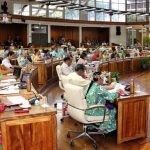


Fiji’s Minister for Defence and Veteran Affairs Pio Tikoduadua has told Parliament it’s time Fiji rethinks the scope and purpose of its peacekeeping operations, announcing work has begun on a new National Peacekeeping Strategy.
“I rise today in this Honourable House to speak on a matter that rests not only in the realm of foreign affairs and defence policy, but in the very heart of our national story,” said Tikoduadua in a ministerial statement this week.
“The subject of peacekeeping is often presented as a military duty, but it is, in truth, a moral and civic one.”
Tikoduadua drew on his own experience as a former peacekeeper to highlight the human cost behind the service.
“I have served in peacekeeping operations. I have stood under harsh suns in unfamiliar lands… carrying with me the quiet expectations of a nation that trusted me to act with restraint, courage, and dignity,” he said.
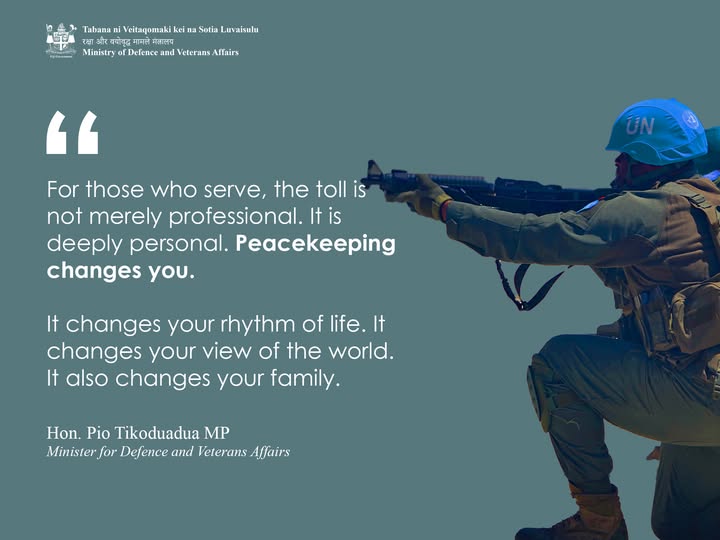
“To serve as a peacekeeper is to carry out duties under constant tension. You are armed but not aggressive. You are trained for combat but restrained by mandate… Peacekeeping changes you. It changes your rhythm of life. It changes your view of the world. It also changes your family.”
He paid tribute to Fijian peacekeepers who have lost their lives, saying their sacrifice is “written into the moral architecture of this nation.”
“They died not for conquest, but for calm. Not to impose force, but to uphold order. They stood between warring parties and held the line, often unacknowledged, often unnoticed, but always honourable.”
Since 1978, more than 50,000 Fijians have served in some of the world’s most volatile regions.
Tikoduadua said that while Fiji’s contribution is not defined by numbers, its presence and moral leadership have made a difference.
“When the world calls, Fiji answers. When others withdraw, we often remain. Our peacekeepers are trusted not because of our geopolitical influence, but because of our moral consistency and our institutional discipline.”
He pointed to the Sinai Peninsula deployment—now over four decades old—as a prime example of Fiji’s enduring commitment, but questioned whether that commitment still fits today’s strategic context.
“But the question must now be asked: should we still be there? And more broadly, should we continue our peacekeeping commitments in their current form?”
Tikoduadua warned that global peace operations have evolved, and Fiji must now ask tough questions.
“Should we continue to say yes to every request? Should we maintain the same size and scale of our deployments? Should we re-evaluate which missions align with our strategic priorities, our national interests, and the wellbeing of our people?”
He said the Government’s planned National Peacekeeping Strategy will be a serious and forward-looking framework—not just a “generic policy document.”
“It will establish clear criteria for the selection of missions… It will ensure that training is standardised and that all personnel are equipped with the tools and the knowledge they need before deployment… It will also include provisions for post-service care, family support, and reintegration.”
Tikoduadua also reaffirmed Fiji’s leadership role in the Pacific, pointing to RAMSI in the Solomon Islands as a successful regional model.
“RAMSI stands as a testament to what is possible when nations commit to the dignity of others. It remains a model of how peacekeeping and peacebuilding can be fused together.”
He also delivered a message of resolve and readiness to adapt.
“Let us not mistake consistency for complacency. Our legacy is worth defending, but it is also worth refining. We must adapt our contributions to match the world as it is, not as it was. That is the purpose of the National Peacekeeping Strategy.”
“We will do more than issue medals. We will offer real support. We will do more than praise their discipline. We will match it with policy. And we will do more than reflect on their past. We will plan for their future,” Tikoduadua said.