



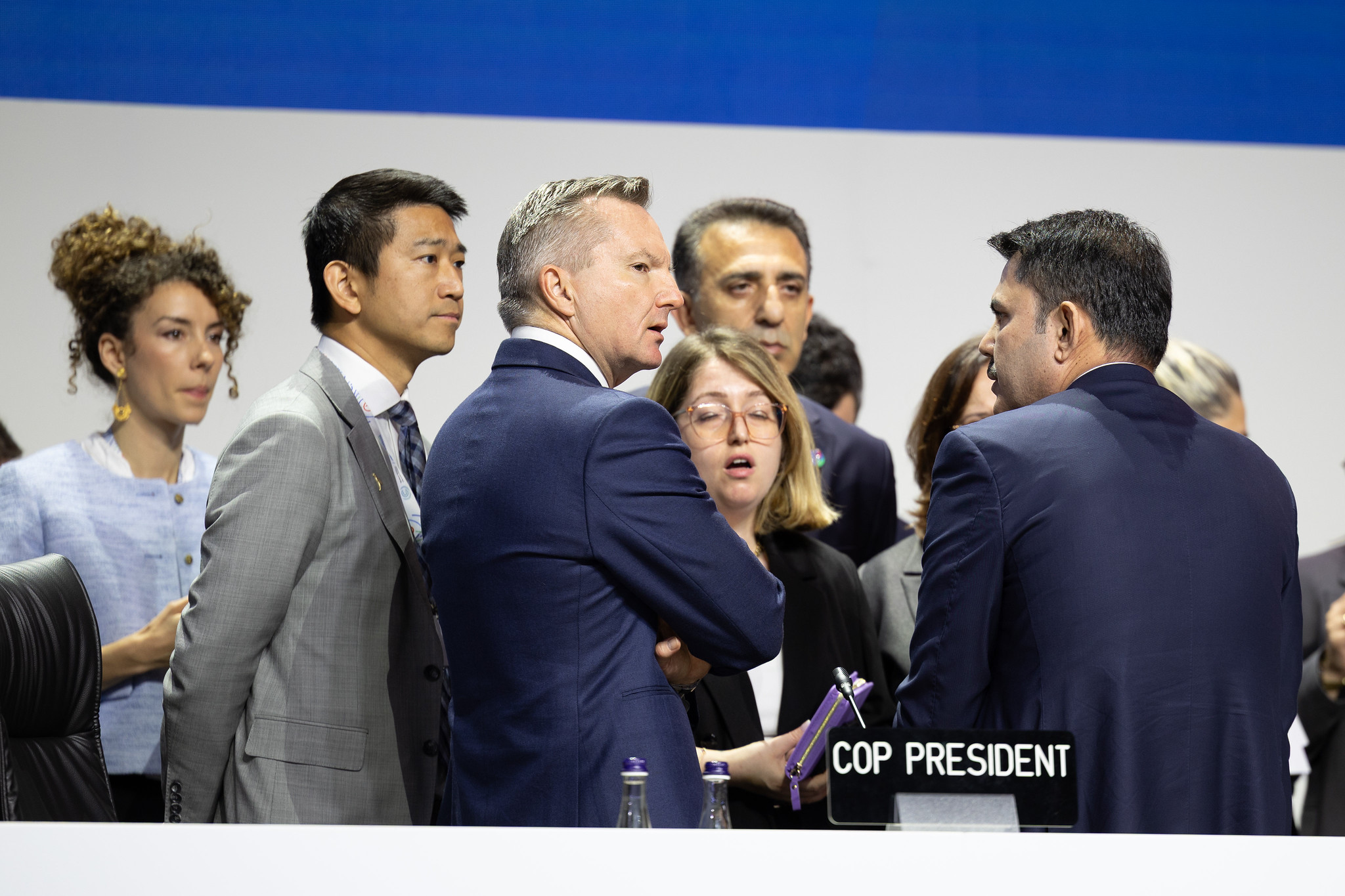
The Pacific Elders’ Voice (PEV) has accused Australia of undermining Pacific climate interests at COP31, saying its failure to secure a consensus outcome alongside Türkiye has widened a trust gap between Australia and Pacific Island countries.
In a strongly worded statement on the outcome of the UN climate conference, PEV expressed disappointment that Australia had failed to defend the region’s call for stronger action on climate change, despite using its Pacific relationships to support its bid to host the climate talks.
The group said Pacific countries had entered COP31 expecting progress on limiting global warming to 1.5 degrees Celsius, climate finance, a transition away from fossil fuels and recognition of scientific evidence on the impacts of climate change.
It said these were essential issues for Pacific Island countries facing rising sea levels, extreme weather events and threats to their survival.
PEV said Fiji and Tuvalu, which hosted the Pacific pre-COP process, had been given assurances that the concerns of small island states would be taken seriously.
However, the failure to reach agreement on a final outcome raised questions about the commitment of Australia and other developed countries to the region’s climate priorities.
“However, when it mattered, Australia has sided with the fossil fuel producers and lobbyists. There is clearly a ‘trust’ gap between Australia and the Pacific Island States,” the statement said.
PEV noted that Australia had signed bilateral agreements with Fiji, Naoero, Papua New Guinea, Tuvalu and Vanuatu while continuing to present itself as a defender of Pacific security and welfare.
The group said climate change had been repeatedly identified by Pacific leaders as the region’s greatest security threat and expected Australia to defend that position in the international negotiations.
It also criticised what it described as a significant retreat from commitments made at COP28 in Dubai in 2023.
“Petrostates and corporations appear to have hijacked the COP process,” PEV said.
The group questioned how a small number of countries could override scientific evidence and the demands of developing nations, particularly those most vulnerable to climate change.
PEV also called for recognition of the International Court of Justice (ICJ) advisory opinion on states’ legal obligations to address climate change.
It highlighted the Court’s position that all states must exercise stringent due diligence to prevent significant climate harm, guided by equity, common but differentiated responsibilities and respective capabilities.
The statement said countries must cooperate to protect the human rights of present and future generations.
PEV said Pacific countries were right to reject a weakened agreement rather than accept an outcome that failed to address the scale of the climate crisis.
It also warned against attempts by countries with vested interests to undermine climate science and the work of the Intergovernmental Panel on Climate Change (IPCC).
The group urged Pacific Small Island Developing States to maintain a firm position against global warming exceeding 1.5 degrees Celsius and continue demanding climate justice, including financing for losses and damage caused by extreme weather events and sea-level rise.
It said major greenhouse gas emitters, including Australia, must be held accountable for their contribution to climate change.