
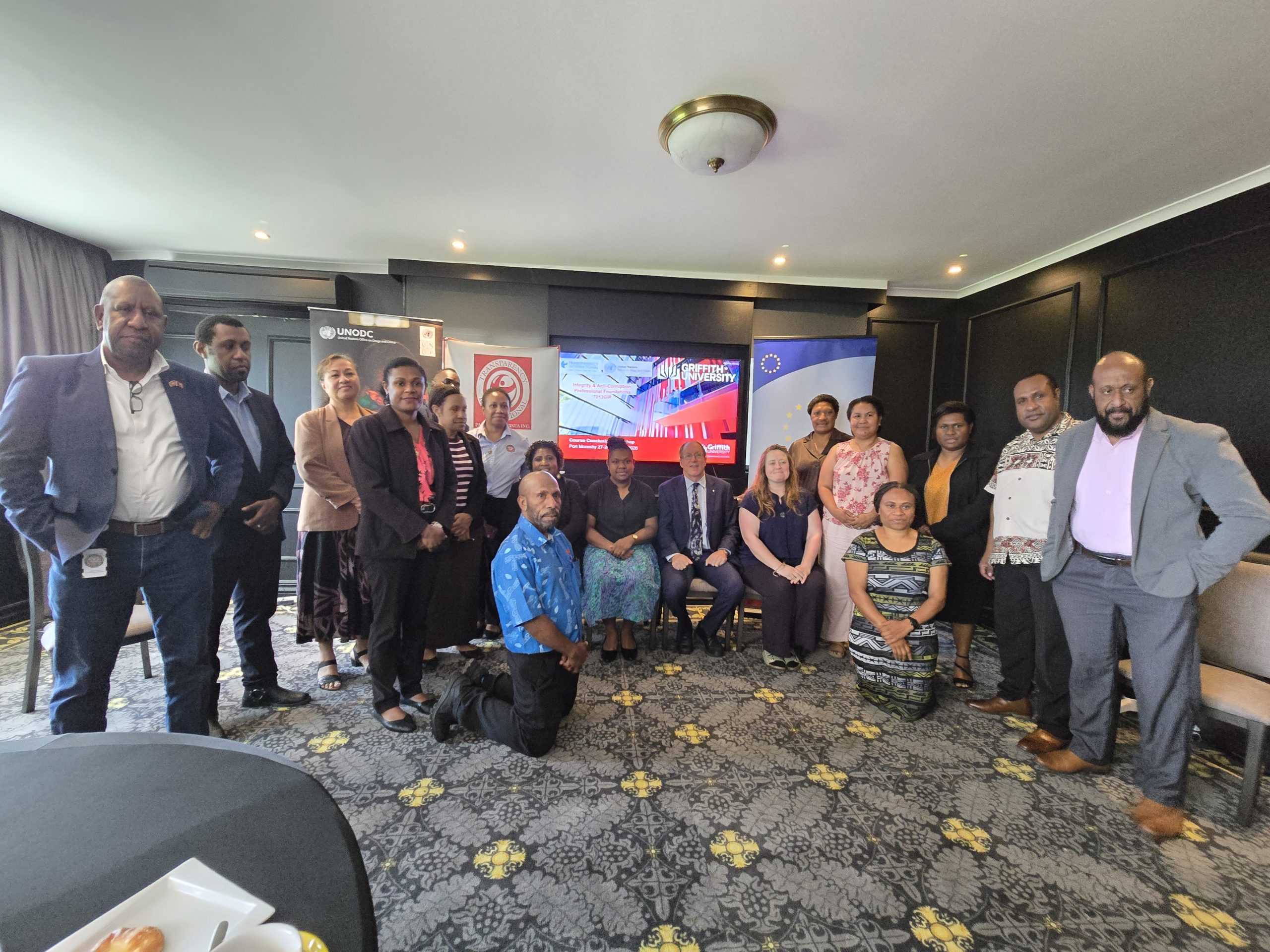
Sixteen officers from Papua New Guinea’s key accountability and oversight institutions have completed a specialised professional development course to strengthen their capacity to prevent corruption and promote integrity.
The officers completed a three-month postgraduate integrity and anti-corruption study program, equipping them with the knowledge and tools to identify corruption risks, strengthen institutional accountability, and promote ethical decision-making within their organisations.
Participants represented a range of key institutions, including the Ombudsman Commission, the Immigration and Citizenship Service Authority, Transparency International PNG, the Securities Commission, the Public Service Commission, the Office of the Public Prosecutor, and the Office of the Prime Minister and the NEC.
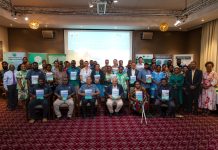
The 3-month study program concluded with a three-day workshop in Port Moresby, Papua New Guinea, held 27–29 October 2026. Facilitated by a team from Griffith University’s School of Government and International Relations, the workshop aimed to review and reflect on the course, discuss implementation, and support participants’ transition from theory to practice. PNG participants joined a global cohort of integrity professionals from 16 countries through Griffith University’s Asia Pacific School of Integrity.
Griffith University Australia, Transparency International Papua New Guinea (TIPNG), and UNODC partnered to deliver the study program, supported by the European Union (EU) Preventing and Countering Corruption in Papua New Guinea (PNG Anti-Corruption Project).
The project is part of the European Union (EU) and the Government of Papua New Guinea (GoPNG) Partnership for Good Governance, which supports key national institutions, civil society, and communities in addressing corruption. UNODC enhances the capacity of PNG’s key institutional anti-corruption partners to fight corruption.
Welcoming participants to the first day of the workshop, course facilitator Professor AJ Brown reminded students that the course was designed to build knowledge of integrity systems for regulatory agencies and integrity professionals. The students are the second cohort from PNG to study this course and have achieved a milestone, as successful completion includes academic credit from Griffith University.
As part of their course assessment, the students applied the integrity concepts they learned to real-world work situations. The thematic areas the students addressed in their project assessment included regulation and integrity in non-public-sector institutions, public-sector integrity, and public resources and anti-corruption.
Maryann Kai, Manager, West Papua, PNG Immigration and Citizenship Authority, said the course has deepened her understanding that integrity and anti-corruption require a whole-of-system approach, including strong leadership, accountability, transparency and collaboration among government agencies.
“I am looking forward to implementing stronger verification and monitoring processes, improving coordination between relevant agencies and promoting consistent enforcement of immigration laws to strengthen integrity, transparency and accountability in PNG”.
“Through this course, I am now more knowledgeable about the integrity risks associated with my daily duties,” said Mr Zomay Apini, Manager, Market Data, at the Securities Commission of PNG. He added, “I am building a regulatory integrity assurance model, and I am able to ensure and measure that integrity is implemented in every regulatory action.”
A highlight of the workshop’s closing and certificate awards was a visit from Grace Mungkaje, a participant from the study program’s first cohort. Grace shared her experience as a former first-cohort student who moved from the PNG Auditor General’s office to the PNG Independent Commission Against Corruption (ICAC).
She told participants that connections made during the course led to professional growth and shaped her work. Grace emphasised that building institutional partnerships beyond the classroom is essential to driving real accountability and change in PNG.
Congratulating participants on successfully completing the course, Marie Jane Fatiaki, UNODC PNG Officer-in-Charge, said strengthening professional capability and collaboration among integrity practitioners in PNG is critical to building accountable institutions and public trust.
In 2024, UNODC, in collaboration with Griffith University, piloted the first Integrity Professionals Foundation Course for early-career professionals in PNG and the Solomon Islands. Since its inception, 32 officers from PNG accountability and oversight organisations have completed the program. Positive feedback and evaluation of the program have led to ongoing discussions among UNODC, Griffith University, and the Somare Institute of Leadership and Governance (SILAG), PNG’s leading government training institution, to explore pathways for future cohorts to obtain formal qualifications and develop the competencies needed to effectively prevent, detect, and respond to corruption.
This year, the UNODC supported the second iteration of the Integrity and Anti-Corruption Professionals Foundations Course with Griffith University and collaborated with SILAG to pilot a Graduate Certificate in Integrity & Anti-Corruption for early career professionals in PNG.