





The Fiji Law Society (FLS) has criticised the public consultation process for the proposed Constitution amendment Bill 32 of 2026, saying insufficient time for public input risks undermining confidence in the review.
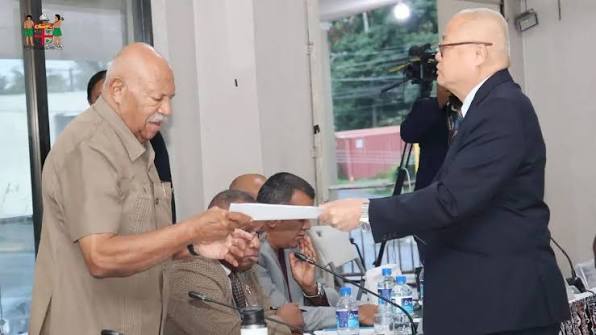
Society president Graham Leung raised the concerns in submissions to Parliament’s special committee Thursday, arguing that the process had not provided adequate opportunities for meaningful public participation.
“A two-hour consultation in Suva and a two-hour consultation in Lautoka was hopelessly inadequate,” Leung said.
He acknowledged that the parliamentary calendar and the approaching general elections had placed the Government under pressure.
However, he argued that starting the constitutional review earlier could have reduced the time constraints.
The Society said the rushed circulation of the Bill and the limited time available for public consideration had contributed to distrust and undermined the legitimacy of the process.
Leung urged decision-makers to listen to the public and learn from Fiji’s constitutional history.
“We all need to take a step back and listen to the voices of the people. Why? Because the voice of we the people matters. Let us learn lessons from history. Let us not make the mistake of imposing a constitution and ignoring the legitimate views of the people,” he said.
The Society said the constitutional review was an opportunity to strengthen Fiji’s constitutional framework while preserving stability, continuity and national cohesion.
It argued that the legitimacy of reform depended not only on the content of the proposed provisions but also on whether the public had a meaningful opportunity to consider and comment on them.
The Society called for constitutional reform to be guided by the rule of law, democratic accountability, institutional independence and respect for Fiji’s social and cultural foundations.
Meanwhile, the Fiji Law Society (FLS) has called for a constitutional provision preventing future coup-makers from receiving immunity from prosecution.
It warned that Fiji’s history of coups has severely damaged its democracy.
Society president Graham Leung raised the issue in submissions to Parliament’s special committee examining the proposed Constitution amendment Bill 32 of 2026.
The Society opposes any future grant or extension of immunity under clause 206 of the Bill, while recognising historical immunity provisions in line with the Supreme Court’s reasoning.
“The coup culture must cease. It has severely eroded Fiji’s democracy and has set the country back,” Leung said.
“The cost of the damage caused by the coups has been huge and continues to inflict wounds on the country.”
The Society argues that future unconstitutional seizures of power should not be shielded from legal accountability through immunity provisions.
It recommends a law making clear that immunity cannot lawfully be granted to anyone found guilty of treason or attempting to remove a government in the future.
The Society’s position is that permanent constitutional immunity sits uneasily with constitutional supremacy, equality before the law and the rule of law.
Leung said the country had gone through four constitutions, and Bill 32, if enacted, would result in a fifth.
“Frankly, the people of this country are suffering from coup fatigue. They are sick and tired of the constant changes to the supreme law, and rather than being a vehicle for national unity, the Constitution has become a fountain of division and discord,” he said.
The Society said constitutional reform should strengthen democracy, the rule of law and national unity, rather than create opportunities for future unconstitutional seizures of power to escape accountability.