

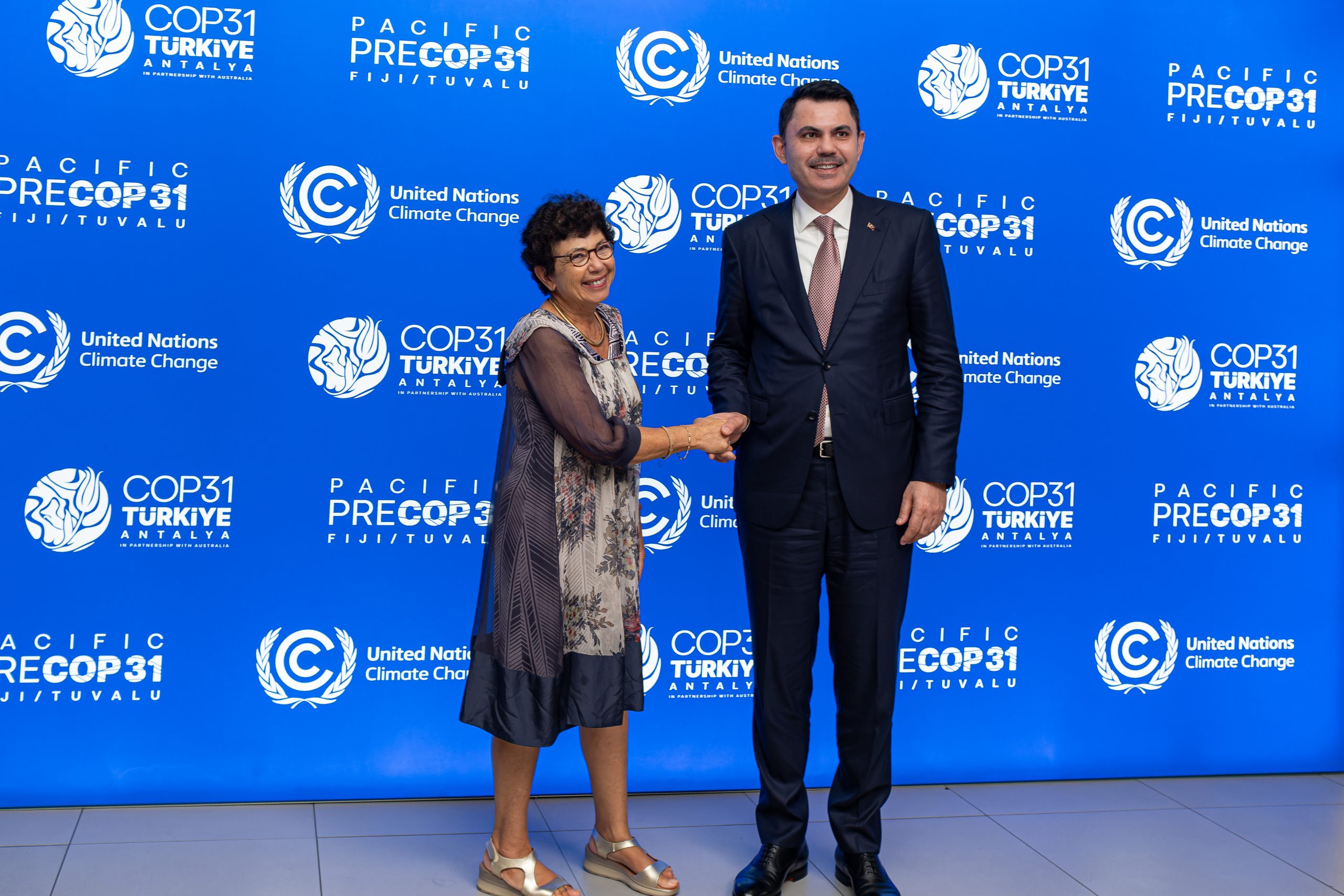
France has called on major emitting countries to accelerate emissions cuts and submit stronger climate plans, warning that a world heading towards 3 degrees Celsius of warming would leave little room for adaptation.
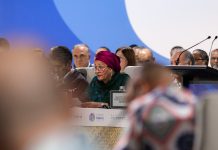
French Minister for Ecological Transition, Biodiversity and International Climate and Nature Negotiations, Monique Barbut, told Pacific leaders at the Pacific Pre-COP31 plenary in Nadi that climate impacts once seen as distant threats were now being felt across all regions, including Europe.
“Around the world, the impact of climate change is a daily reality. We are seeing it in the Pacific and we are seeing it all around the world.
“In France this summer, we experienced record-breaking and unprecedented heatwaves, droughts and wildfires. The urgent need for adaptation has reached France and, more globally, Europe,” Barbut said.
Barbut said adaptation alone would not be enough unless countries strengthened efforts to cut greenhouse gas emissions.
“In a plus-three-degrees world, there is no possible adaptation.
“This is why we urge all big emitters to accelerate their mitigation efforts, and the 40 countries which have not presented their Nationally Determined Contributions must do it now,” Barbut said.
She said the European Union was reducing emissions each year and called on other major economies to match that pace.
Barbut said France had already decarbonised 95 percent of its electricity sector and had adopted a legally binding roadmap to phase out fossil fuels, ending coal by 2030, oil by 2045 and gas by 2050.
France also backed the Turkish COP31 Presidency’s proposal to increase the share of clean electricity in global final energy consumption to 35 percent by 2035.
Barbut identified methane as another priority for COP31, describing action on methane emissions as one of the fastest and most cost-effective ways to limit short-term warming.
“Resolving this issue is the fastest, most effective and cheapest level of action to limit short-term warming.
“Methane must be dealt with in COP31 and should be written into the final decision of Antalya,” she said”
On climate finance, Barbut said developed countries had made progress in meeting commitments, with OECD figures showing climate finance flows to developing countries reached US$136 billion in 2024.
She said Europe remained the world’s largest provider of climate finance, while France contributed €7.3 billion (US$8.17 billion) in 2024, with 40 percent directed to adaptation efforts.
“At the international level, it is US$3.1 billion that we are putting into developing countries for adaptation,” she said.
But Barbut said all major emitters and economies must contribute more.
“It is time for all major emitters to step up and do their fair share,” she said.
She also called for adaptation to become a central political priority at COP31, noting that France itself was preparing infrastructure and public systems for a possible 4C temperature rise.
Barbut ended by stressing that climate decisions must continue to be guided by science and backed the work of the Intergovernmental Panel on Climate Change (IPCC).
“Our action must continue to rely on science.
“We must support the work of the IPCC rather than sabotage its calendar,” she said.
Pacific leaders are expected to sign the Taku Pakasoa Declaration following the conclusion of the Pre-COP31 meeting, setting out regional priorities on climate ambition, adaptation, oceans and finance ahead of COP31 in Türkiye.