

By Pita Ligaiula in Savusavu
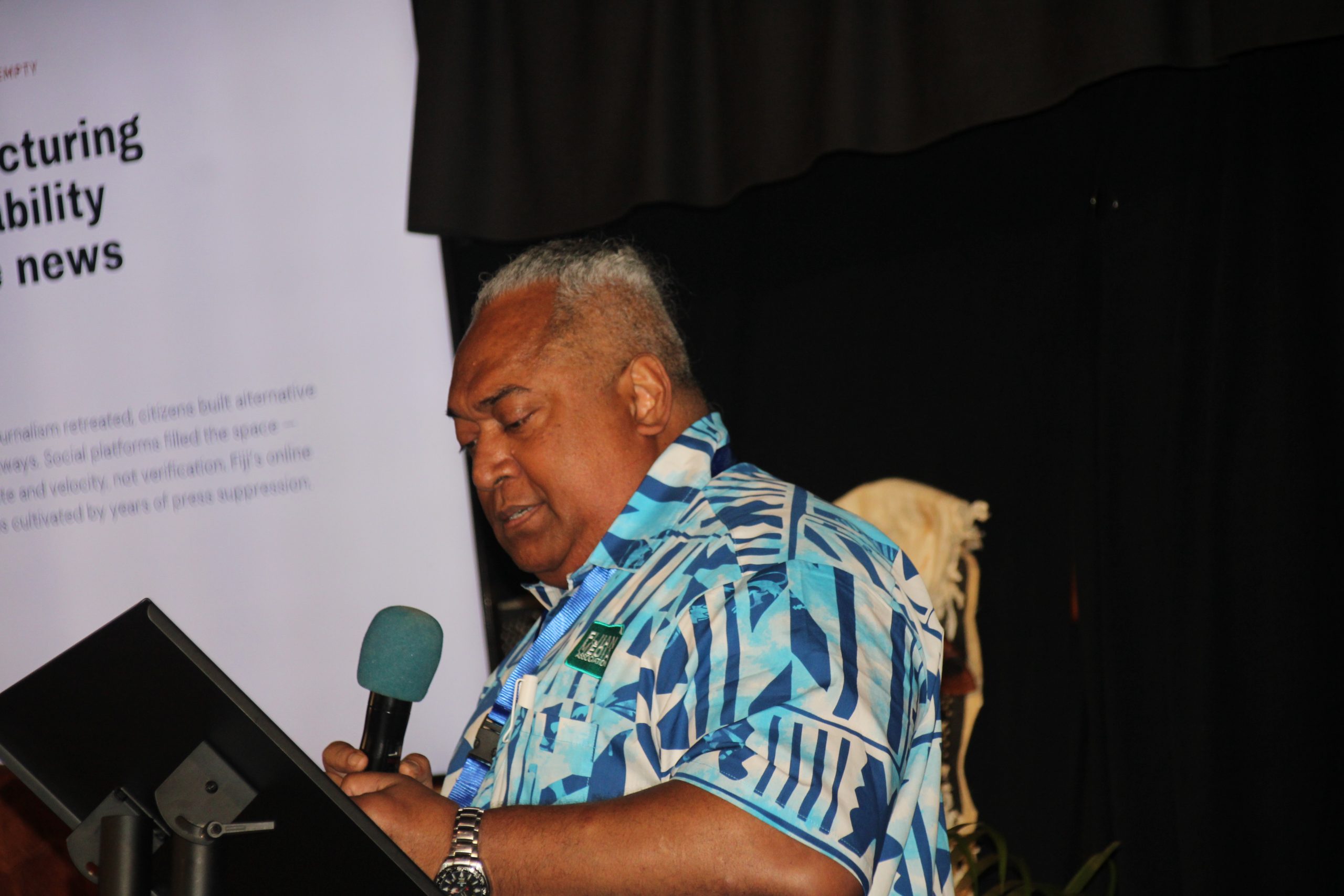
Fiji Times Editor Fred Wesley has warned that restoring press freedom is not enough if newsrooms do not rebuild the confidence to ask hard questions and engage directly with the public.
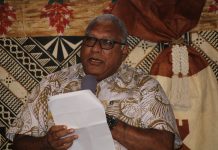
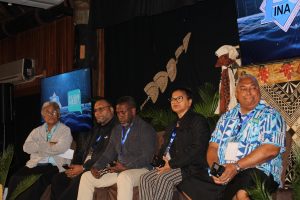
Speaking at the Pacific Media Summit plenary on Beyond News Coverage: The Role of the Media for Democratic Resilience and Engagement, Wesley said 16 years of media restrictions in Fiji had left lasting damage to journalism, public trust and the country’s ability to fight misinformation.
“Freedom that is not exercised is not freedom. It is only permission,” Wesley said.
He recalled the period after the 2006 coup when government censors were placed inside The Fiji Times newsroom to review stories before publication.
When stories were removed, the newspaper sometimes left blank spaces and told readers that the content had been censored.
“It was the only protest available to us,” he said.
Wesley said the impact of the restrictions went beyond censorship of individual stories.
“The decree never jailed a journalist. It did something far more efficient. It taught us to jail ourselves,” the Fiji Times Editor said in Savusavu.
He said journalists and editors became increasingly cautious about stories that could expose the newspaper or its staff to heavy fines, legal costs or possible imprisonment.
Over time, he said, self-censorship became part of newsroom culture.
“It cost us the second question.
“It cost us our editing. The most dangerous edit is the one nobody remembers making,” Wesley said.
He said the restrictions also weakened the relationship between mainstream media and its audience.
“We covered press conferences word for word and asked no hard questions.
We printed Government statements without challenging their authors,” he said.
As mainstream media became less challenging, audiences increasingly turned to social media for information and debate.
“We did not lose our audience because they stopped caring. Assisted by the strategic manipulation of the narrative, we lost them because we stopped being worth reading,” Wesley said.
He said Fiji’s current vulnerability to misinformation was partly created during those years when credible journalism was weakened.
“When credible journalism goes quiet, the public does not wait.
They build their own information supply, even if it has no standards, no quality control and not even truth as the aim,” he said.
Wesley said the repeal of the Media Industry Development Act (MIDA)in April 2023 was an important step, but removing the law did not immediately remove the culture created under it.
“You can repeal a law in an afternoon. You cannot repeal a habit of fear,” he said.
The challenge now, he said, was rebuilding newsrooms where young journalists feel safe and are expected to question politicians, public servants and business leaders.
He said this requires mentoring, retraining and senior journalists demonstrating that hard questions can be asked without fear.
Wesley also highlighted community town halls as an important way to rebuild trust between media and the public.
He said competing media organisations had begun co-hosting town hall forums, broadcasting them live and taking them into communities where people could question decision-makers directly.
The approach, he said, had helped turn audiences from passive consumers into participants.
“Our town hall forum in Levuka reached around two hundred and fifty thousand viewers, in a country of under a million people,” he said.
Wesley said the next initiative was Fiji’s first Pre-COP31 climate town hall, held in Nukubalavu Village in Savusavu, bringing climate discussions directly to a maritime community.
 He identified three lessons from the town halls: restoring hard questions, making journalism visible and turning audiences into participants.
“And a person who has taken part in a real public conversation is far harder to recruit with a false rumour,” he said.
Wesley said participation was one of the strongest tools media had found to counter disinformation.
“In our experience, that is the most effective answer to disinformation we have found. Not fact-checking alone — participation.”
However, he warned that Fiji’s progress remained fragile.
He said journalists had been summoned to court over their reporting, a journalist’s phone had been seized by police over a social media post, and journalists, particularly women, continued to face online harassment.
He also warned that financial pressure on newsrooms could undermine journalism just as effectively as censorship.
“A newsroom that cannot pay its journalists is just as silent as a newsroom that has been censored,” he said.
Wesley challenged political parties contesting Fiji’s next general election to recognise the importance of freedom of expression and democracy.
“I challenge you to factor this into your manifesto. Let us never deny the right of the people to be informed,” he said.