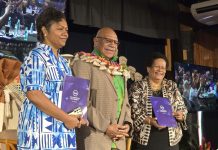

By Pita Ligaiula in Savusavu
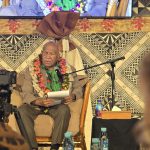
Fiji Prime Minister Sitiveni Rabuka has called for what he described as “Constructive Pacific Journalism”, urging media organisations to remain independent and fearless while helping connect Pacific communities and strengthen democracy.
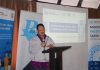
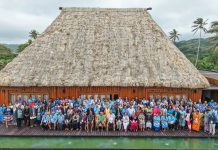
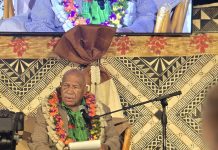
Speaking at the opening of the 8th Pacific Media Summit in Savusavu, Rabuka said constructive journalism should not mean less scrutiny of governments or public institutions.
“It does not mean less independent journalism.
“It means journalism that remains independent, fearless and questioning, while also recognising its ability to connect our people and strengthen our region,” Rabuka said.
Rabuka said the media, as the Fourth Estate, had a responsibility to ask difficult questions, investigate and hold institutions accountable.
“You must ask difficult questions. You must investigate. You must hold institutions to account and where the evidence demands it, you must expose corruption, abuse of power and failures in public administration.
“That is not a threat to democracy. It is part of democracy,” he said.
Rabuka highlighted the repeal of Fiji’s Media Industry Development Act as one of his Government’s early decisions, saying it was based on the principle that democracy requires a free media.
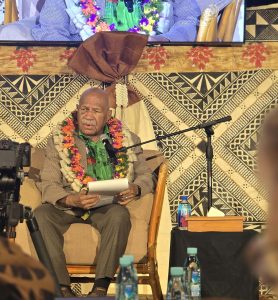
“We did so because we believe a strong democracy requires a media that is free to question, investigate, challenge and inform,” he said.
He also highlighted the expansion of the Public Service Broadcasting Grant to a wider range of media organisations.
Rabuka said the aim was to support content that educates and informs the public while ensuring important information reaches Fijians, particularly those in remote, rural and maritime communities.
“A pluralistic, financially resilient and independent media sector is important to a healthy democracy,” he said.
Rabuka said media freedom must be matched by professional responsibility, particularly as technology allows information to spread rapidly.
“A headline can reach thousands of people before the facts have been checked. A false claim can spread before the truth has left the newsroom,” he said.
He said artificial intelligence, synthetic content and digital manipulation were creating new challenges for journalists and the public.
“This is why professional standards matter more than ever,” Rabuka said.
He referred to a caution he had given the media in 1993 about exercising care when reporting events or comments that could inflame social tensions or incite conflict.
“This is not a call for silence. It is a call for responsible journalism,” he said.
Rabuka said digital innovation should improve public understanding and regional cooperation rather than fuel misinformation, disinformation and sensationalism.
He called for greater media literacy among citizens and urged newsrooms to adapt to new technologies while protecting professional standards.
“We need citizens who can question what they see and hear. We need journalists who can verify information and we need newsrooms that can adapt to new technologies while protecting professional standards,” he said
Rabuka also highlighted the Government’s SAUTU Counter-Disinformation Framework, launched at the inaugural Government Communications Conference in March.
He said the framework was designed to strengthen public trust, safeguard democratic institutions and improve Fiji’s capacity to identify and respond to false, misleading and deliberately manipulative information.
He acknowledged British Government support for Fiji’s work on government communication and information resilience, but said governments could not build resilient information environments alone.
“We need professional journalists. We need strong newsrooms. We need media-literate citizens and increasingly, we need cooperation across the Blue Pacific,” Rabuka said.
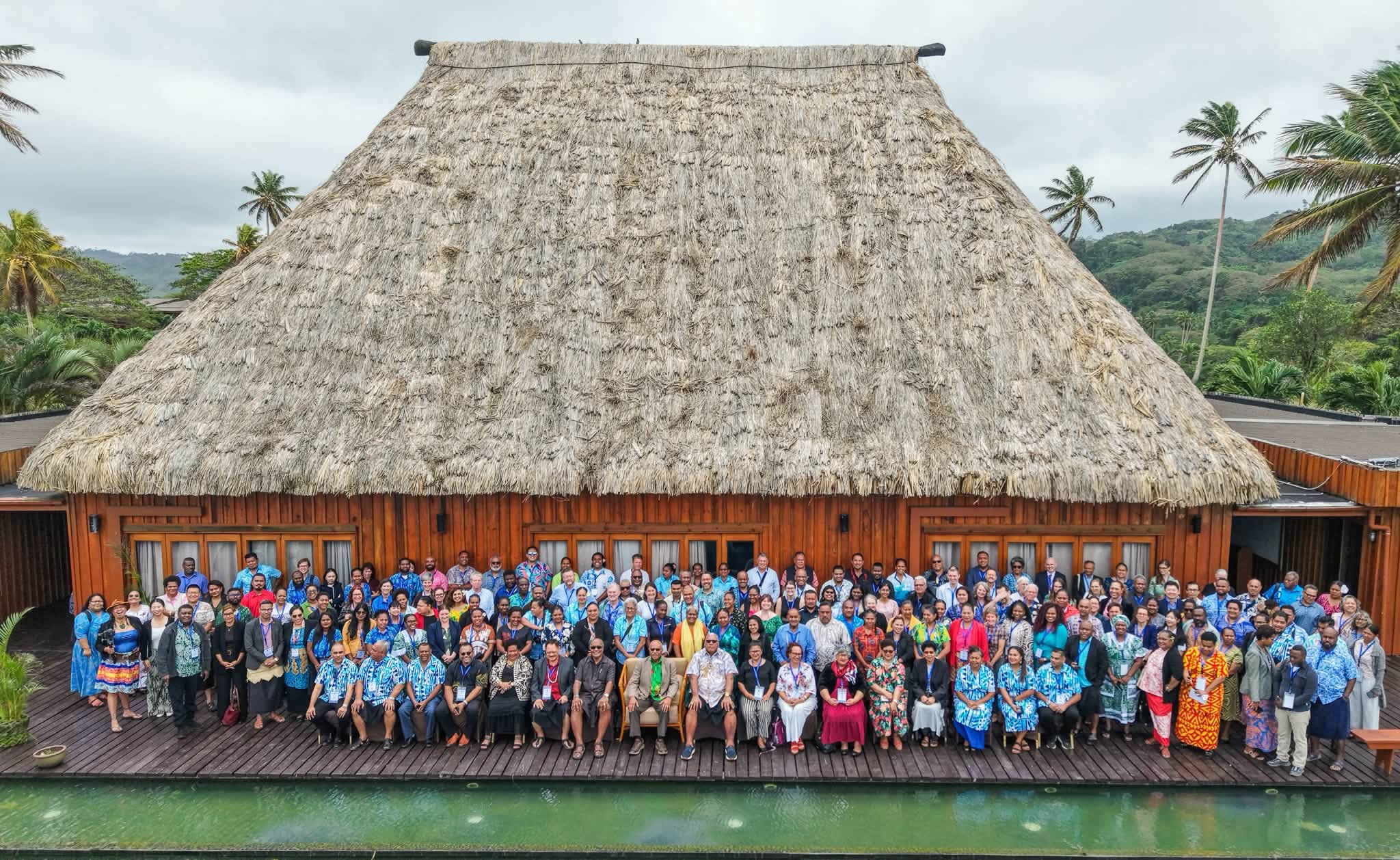
Rabuka said the summit theme, “Reaching the Remote: Media and Digital Innovation for a Connected Blue Pacific,” highlighted the information challenges faced by communities far from Pacific capitals and major centres.
He said access to information, education, services and economic opportunities remained affected by distance.
“This is why connectivity is more than a technological issue. It is a development issue. It is an inclusion issue and it is a resilience issue,” he said.
Rabuka said reliable information could save lives during cyclones, floods and other disasters, while journalism could bring the concerns of isolated communities into national and regional discussions.
“Reaching the remote means reaching the people,” he said.
Rabuka also called for Pacific media to strengthen the region’s voice internationally by reporting on issues affecting Pacific communities.
He higlighted climate change, oceans, fisheries, natural resources, poverty, inequality, economic pressures and transnational crime as issues requiring stronger Pacific reporting.
“These are not simply statistics. They are stories about people, families, communities and livelihoods,” he said.
“We need you to reach our distant coastlines. We need you to document what is happening to our oceans, our villages and our communities and we need you to take those Pacific stories beyond our shores.”
Rabuka said Pacific countries needed to tell their own stories rather than have the region defined by others.We must tell our own stories. The Pacific should not only be spoken about. The Pacific must also speak for itself,” he said.
He then officially declared the 8th Pacific Media Summit open.