

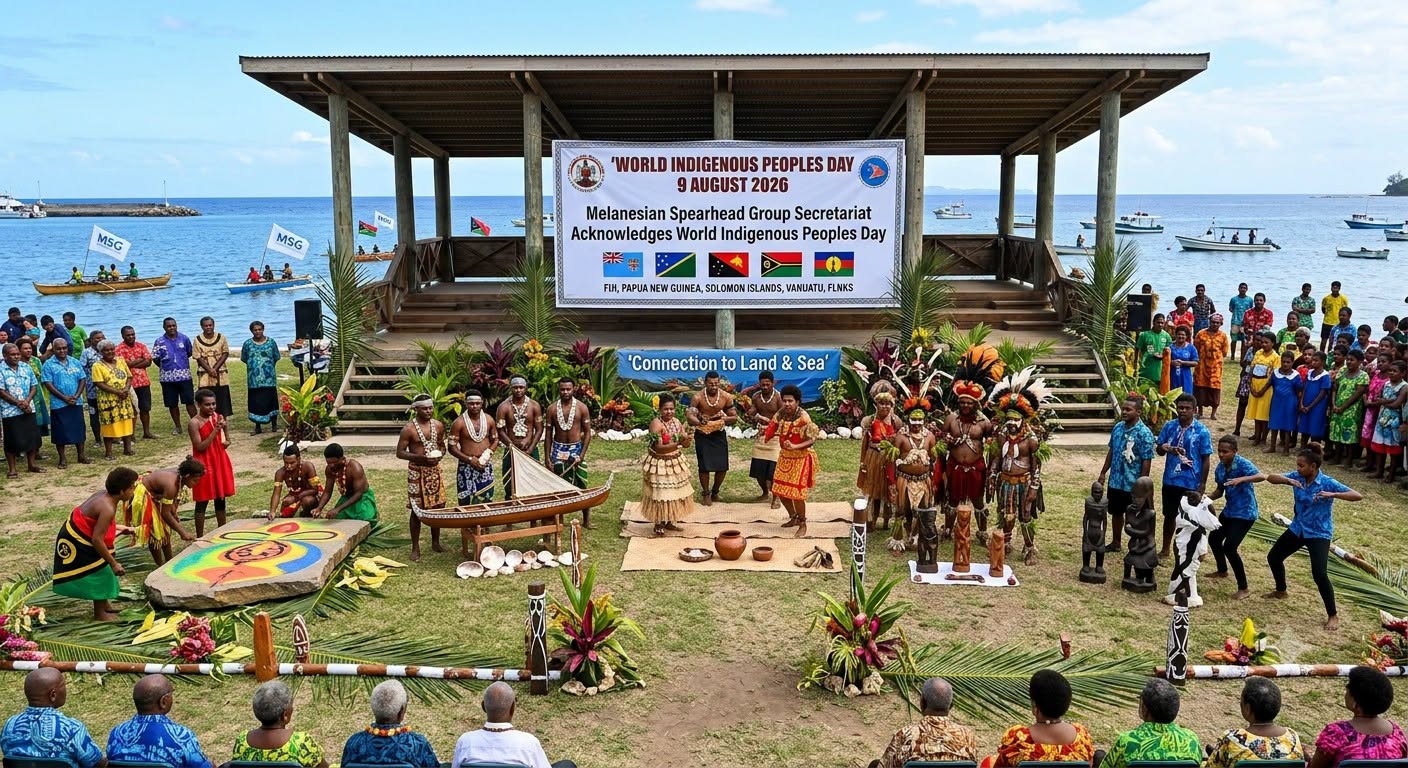
The Melanesian Spearhead Group (MSG) Secretariat has reaffirmed its commitment to protecting Indigenous rights, languages, cultures and traditional knowledge across Melanesia as the region marks International Day of the World’s Indigenous Peoples.
Observed annually on 09 August, the international day recognises the rights, cultures and contributions of Indigenous Peoples worldwide.
The MSG Secretariat said Melanesia is home to some of the world’s most diverse Indigenous cultures, with the Group’s five members — Fiji, Papua New Guinea, Solomon Islands, Vanuatu and the Front de Libération Nationale Kanak et Socialiste (FLNKS) of New Caledonia — representing more than 1,000 languages and thousands of years of connection to land and ocean.
The Secretariat said Indigenous identity in Melanesia is deeply linked to customary ownership and stewardship of reefs, forests and islands, as well as traditional practices and knowledge passed down through generations.
It highlighted kastom, sand drawing, traditional navigation, dance and traditional governance as examples of living cultural practices that continue to shape Melanesian communities.
The MSG also recognised the role of Indigenous knowledge in protecting biodiversity through practices such as tabu areas, seasonal fishing and community-based conservation.
The Secretariat highlighted marine conservation in Vanuatu, forest management in Solomon Islands, cultural revival in New Caledonia, Indigenous iTaukei communities in Fiji, and forest conservation and cultural sites in Papua New Guinea as examples of Indigenous-led efforts across the region.
The MSG Secretariat reaffirmed its commitment to upholding the rights of Indigenous Peoples under the United Nations Declaration on the Rights of Indigenous Peoples.
It also pledged to support its members in protecting Indigenous languages, cultures and traditional knowledge, while promoting Indigenous-led solutions to climate change and sustainable development.
The Secretariat paid tribute to Elders, young people and communities across Melanesia who continue to protect and strengthen the region’s cultural identity and way of life.